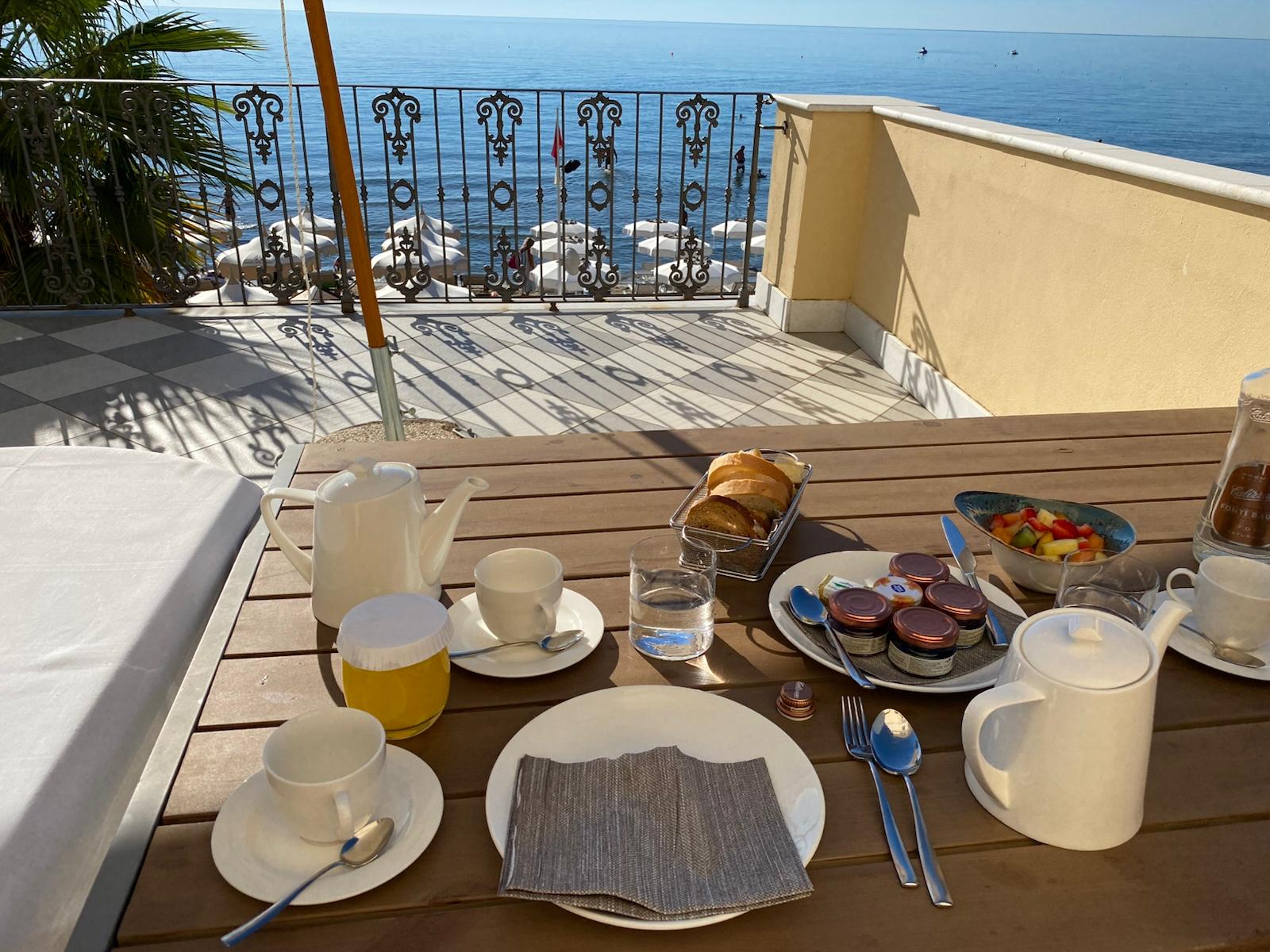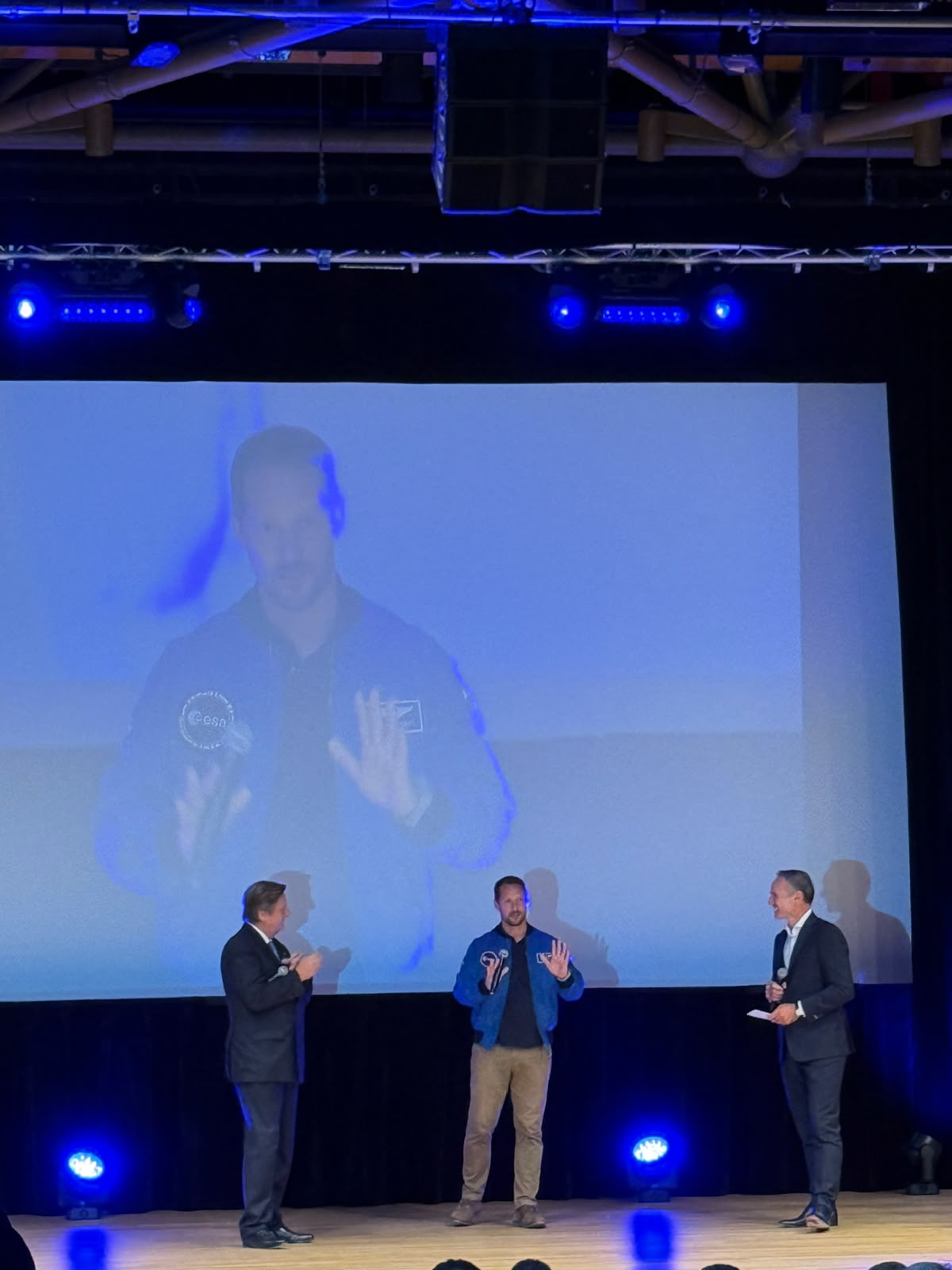
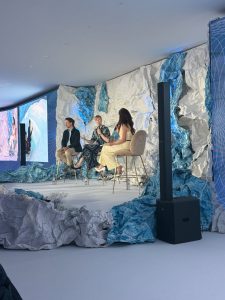
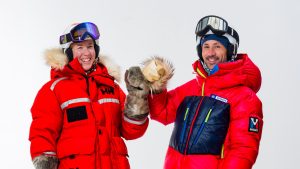
 On May 18, 2026, at the Maybourne Riviera, Rothschild & Co Monaco brought together an attentive audience for a rare conference. It was an evening suspended between sea and sky, almost echoing the infinite white of Antarctica. The setting seemed to extend the narrative. Facing the Mediterranean, Matthieu Tordeur, an explorer and member of the French Explorers Society, and Dr Heïdi Sevestre, an internationally renowned glaciologist, came to tell the story of an extraordinary expedition: Under Antarctica.
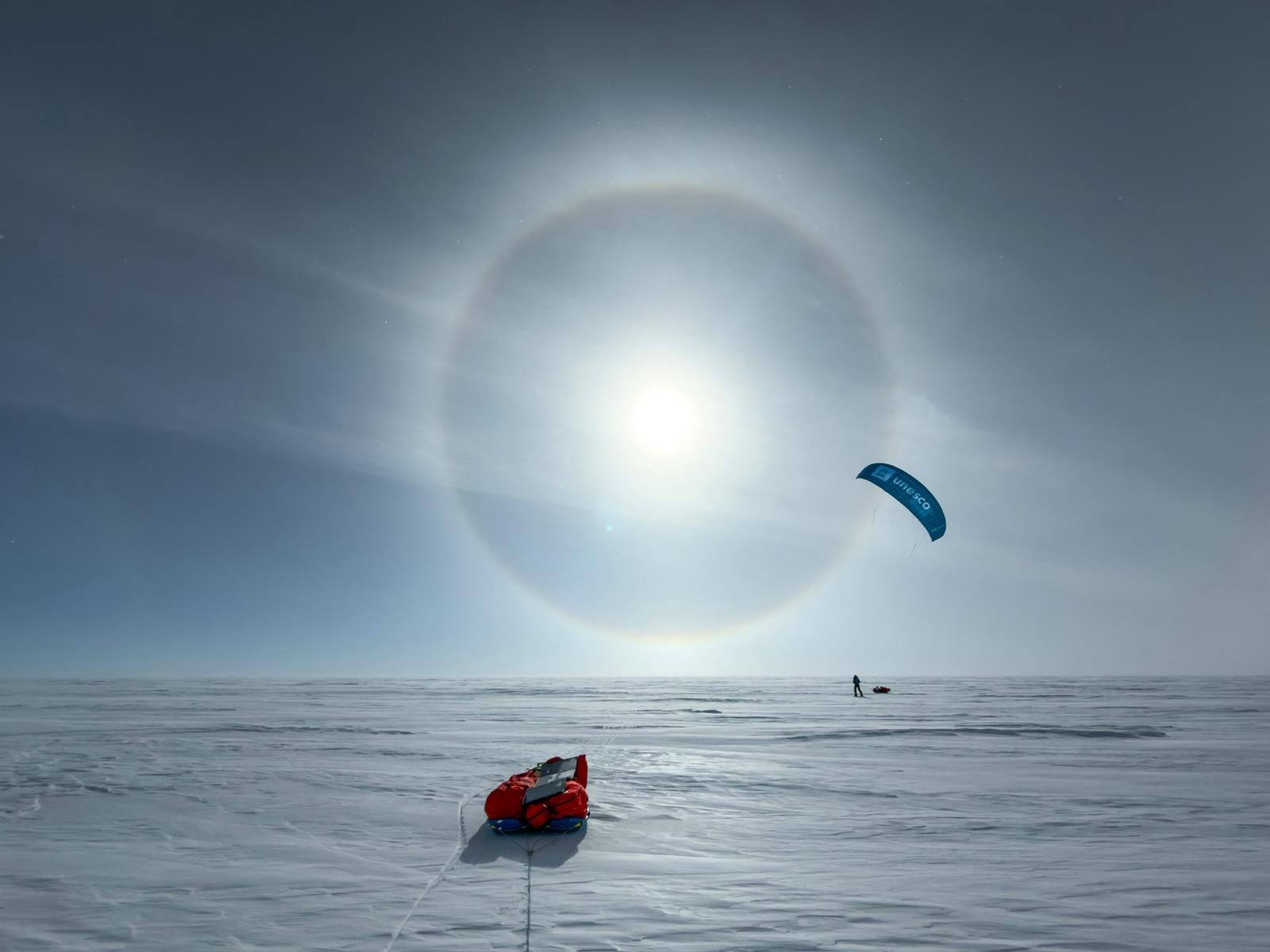
For 80 days, they crossed Antarctica autonomously, by kiteski, covering nearly 4,000 kilometers. Behind them, they had two pulkas loaded with scientific equipment, survival gear, food, batteries, solar panels, sails, and measuring instruments. Beneath their feet, they had several kilometers of ice. Around them, they had emptiness, cold, wind, sastrugi—those ridges of hardened snow like concrete—and the immensity of a continent that remains one of the last truly extreme spaces on the planet.
From the opening words, the conference set its framework. This expedition was not an isolated sporting adventure. It was part of a scientific, climatic, and human history. Rothschild & Co recalled that support for polar explorations is rooted in an ancient tradition. As early as 1908, the Rothschild family had supported Commander Charcot aboard the Pourquoi pas?. More than a century later, their commitment continues in a radically different context: that of climate change, the weakening of the cryosphere, and the need to produce scientific data accessible to the international community. Under Antarctica is based on a powerful idea: uniting adventure, science, and education. These three dimensions together give the expedition particular significance. Adventure enables crossing inaccessible spaces. Science transforms the feat into knowledge. Education transmits this knowledge to young people.
The figure is striking: 300,000 children in more than 40 countries followed the expedition thanks to the educational program carried out with Témoins Polaires. Each week, educational workbooks, video conferences, and adapted content enabled them to understand the scientific, climatic, and human stakes of this crossing. In a world where eco-anxiety affects many young people, this educational choice is essential. Beyond the planet’s fragility, this initiative highlighted women and men committed in the field to observe, measure, understand, explain, and transmit the realities of climate change. Antarctica, in the narrative of Heïdi Sevestre and Matthieu Tordeur, never appears as a simple backdrop. It is a central actor. It is a continent of superlatives. Twenty-five times the size of France. It is the continent with the highest average altitude: the coldest, the windiest, a territory almost entirely covered in ice. A space governed by an international treaty that dedicates it to peace and science.
This point is fundamental. At a time when geopolitical tensions are reshaping power dynamics around natural resources, Antarctica remains a unique case. A continent preserved, at least legally, from classical appropriation logics. Heïdi Sevestre emphasized this forcefully: if the Antarctic Treaty were renegotiated today, nothing guarantees that such a consensus would still be possible. The scientific focus of the expedition concerned the Antarctic ice sheet. This ice mass contains enough water to raise sea levels by approximately 58 meters if it melted entirely. This hypothesis is not that of the immediate present, but it gives the order of magnitude of the phenomenon. It also reminds us that what happens 16,000 kilometers from Monaco directly concerns Mediterranean coastlines, coastal cities, ports, island territories, and future generations.
Ice is a memory. It preserves traces of past climate. Each layer of accumulated snow, compressed, transformed into ice, tells part of Earth’s atmospheric history. The deeper you go, the further back in time you travel. Understanding the structure of this ice, its thickness, its transitions, its variations, means better anticipating Antarctica’s reaction to global warming. To achieve this, the two explorers carried two radars. One, more compact, integrated into Heïdi Sevestre’s pulka, allowed them to study the first few dozen meters, between surface snow and deeper ice. The other, much longer, reached 100 meters once deployed. It enabled them to gather data from several kilometers deep. But in the field, science is far from abstract. It weighs. It slows. It breaks. It requires deployment, repair, recharging, protection. It transforms each day into a constant arbitration between progress, safety, and data collection.
 This is one of the great strengths of the narrative. The conference never romanticized the expedition. The two speakers spoke of beauty, but also of fear. Of joy, but also of fatigue. Of courage, but also of vulnerability. They described pulkas weighing nearly 200 kilos, abrasive snow, contrary winds, the long hours required to set up and take down camp. They had to melt snow, recharge batteries, repair equipment, protect radars, and prepare sails. Polar daily life is a school of slowness and rigor. Nothing happens quickly. Getting dressed takes time. Eating takes time. Sleeping requires precise organization. Liquid water doesn’t exist. It must be produced from melted snow. Fuel is limited. Hygiene becomes minimal. Meals consist mainly of freeze-dried dishes, noodles, rations calibrated to last.
Inside the tent, the temperature can drop to minus 28 degrees. Mattresses puncture. Batteries drain. Clothes layer upon layer. Wipes must be kept warm to prevent freezing. The body becomes a permanent measuring instrument. An unprotected cheek can become frostbitten. A finger exposed too long can become an emergency. Concentration never relaxes. The major danger is not always spectacular. It can arise from a detail. A malfunctioning binding. A poorly tensioned rope. A cracked pulka. A sail too large for increasing wind. An invisible crevasse beneath a snow bridge. Loss of visibility in a whiteout. In these conditions, fear is not a sign of weakness. It becomes information. Heïdi Sevestre expressed it aptly: in polar regions, experience develops a kind of sixth sense. Fear, when not paralyzing, can protect.
Sastrugi occupied a major place in the narrative. These ridges of snow, sculpted by wind, transform the surface into a frozen sea. Their visual beauty contrasts with their physical violence. For explorers pulled by kites and dragging heavy pulkas, they become a constant obstacle. Sleds get stuck, bodies are thrown, radars jam. Matthieu Tordeur recounted his experience when he was lifted 7 meters high when his system suddenly tensioned. The image is striking. It speaks to the power of wind, but also human fragility in these environments. The Pole of Inaccessibility marked a first symbolic stage. This point, among the most remote from any Antarctic coast, remains one of the most extreme places on the planet. At 3,707 meters altitude, in a rarefied atmosphere, with felt temperatures that can drop to around minus 50 degrees, it represents a form of geographical absolute. The presence of the Lenin bust, a vestige of an old Soviet base buried under snow, adds an almost surreal historical dimension. Antarctica, here, becomes simultaneously a climatic archive, a geopolitical archive, and a scientific terrain. But the expedition did not stop at this point. They had to continue toward the geographical South Pole. Again, the two speakers described a progression made of contrasts. Fast days, sometimes exhilarating. Motionless days, for lack of wind. White days, where sky and ground merge. Moments of euphoria, like Christmas, celebrated under the tent with a few carefully prepared gifts. Moments of tension, like when Heïdi Sevestre’s pulka cracked, letting in snow and compromising progress. Reaching the geographical South Pole was a turning point. After more than two months of isolation, encountering humans, a scientific base, a table, a chair, heated toilets, a hot meal, becomes an almost overwhelming experience. The story of cookies offered by the American base’s cook gives this arrival a profoundly human dimension. After the cold, the violence of wind, and the austerity of ice, a simple warm cookie becomes a sign of civilization.
The expedition’s final part, toward Union Glacier, was no easier. Winds sometimes allowed impressive speeds, up to over 50 km/h. But at this speed, with pulkas, sastrugi, and scientific equipment, excitement mixes with danger. The Transantarctic mountain range appeared on the horizon as a promise of exit. Then, a few kilometers from arrival, the wind dropped. Antarctica refused to deliver its conclusion too easily. The last kilometers had to be wrested.
On January 21, after 80 days of expedition, Heïdi Sevestre and Matthieu Tordeur reached Union Glacier. They had crossed Antarctica, collected thousands of kilometers of radar data, and brought hundreds of thousands of children along on their adventure. They thus demonstrated that field science—lighter, more sober, more agile—could open new perspectives.
This point deserves attention. The expedition does not claim to replace major classical scientific campaigns, often conducted with heavy resources. But it raises an essential question: can we imagine complementary forms of polar science, less carbon-intensive, less expensive, more mobile, capable of reaching little-studied areas? Heïdi Sevestre now wants to work on this methodology, compare carbon footprints, analyze data quality, and show the scientific community what kiteski can bring to research. Scientific results will take time. Two to three years, perhaps, before consolidated publications. This is the normal pace of science. Data must be verified, cleaned, cross-referenced, interpreted. The small radar will notably study snow accumulation inside the continent. A key question arises: can this accumulation compensate, even partially, for ice losses observed at Antarctica’s margins, where the ocean is warming? The deep radar interests British and Scottish teams for mapping the ice sheet’s thickness and traveling back through climatic history.
Beyond future results, the conference has already delivered a major lesson: Antarctica is not far away. It is physically distant, but climatically close. Its transformations resonate all the way to European coastlines. Its ice conditions part of our future. Its preservation depends on decisions made here, in our economies, our businesses, our energy policies, our daily practices. The conference also carried a message of hope. Not naive hope, but active hope. Heïdi Sevestre stated it clearly: science knows the cause of climate change. Every kilo of CO₂ emitted impacts ice. Solutions exist. Sobriety in fossil fuel use, development of renewable energies, engagement by citizens, elected officials, businesses, and scientists can shift trajectories.
Matthieu Tordeur added an essential idea, borrowed from Jean-Louis Étienne: being active in one’s sphere of influence. This phrase perhaps summarizes the spirit of the evening. Not everyone will cross Antarctica. Not everyone will become glaciologists. But everyone has a space for action. A company can fund science. A school can transmit. A researcher can measure. A journalist can tell stories. A child can ask a question. A citizen can modify choices. An institution can support a project that goes beyond immediate interest.
This is why this conference organized by Rothschild & Co Monaco was not merely the story of an exploit. It was a meditation on responsibility. Responsibility toward science, which needs resources. Responsibility toward youth, which needs to understand without being crushed by anxiety. Responsibility toward the planet, whose most distant zones sometimes reveal our most direct dependencies. The speakers were enlightening because they never separated knowledge from emotion. Fascinating, because they made complex science intelligible. Passionate because they spoke of Antarctica not as an abstract territory, but as a living, fragile, powerful, demanding world. Their narrative showed that adventure, when placed in service of a cause greater than itself, can become a formidable tool for understanding.
Under Antarctica leaves a powerful image: two tiny silhouettes on a white immensity, dragging behind them radars, provisions, sails, but also a collective question. What do we want to preserve? And how far are we willing to go to better understand what we risk losing? This question, ultimately, does not concern only the poles. It concerns us all.