
Interview conducted by Pascale Caron
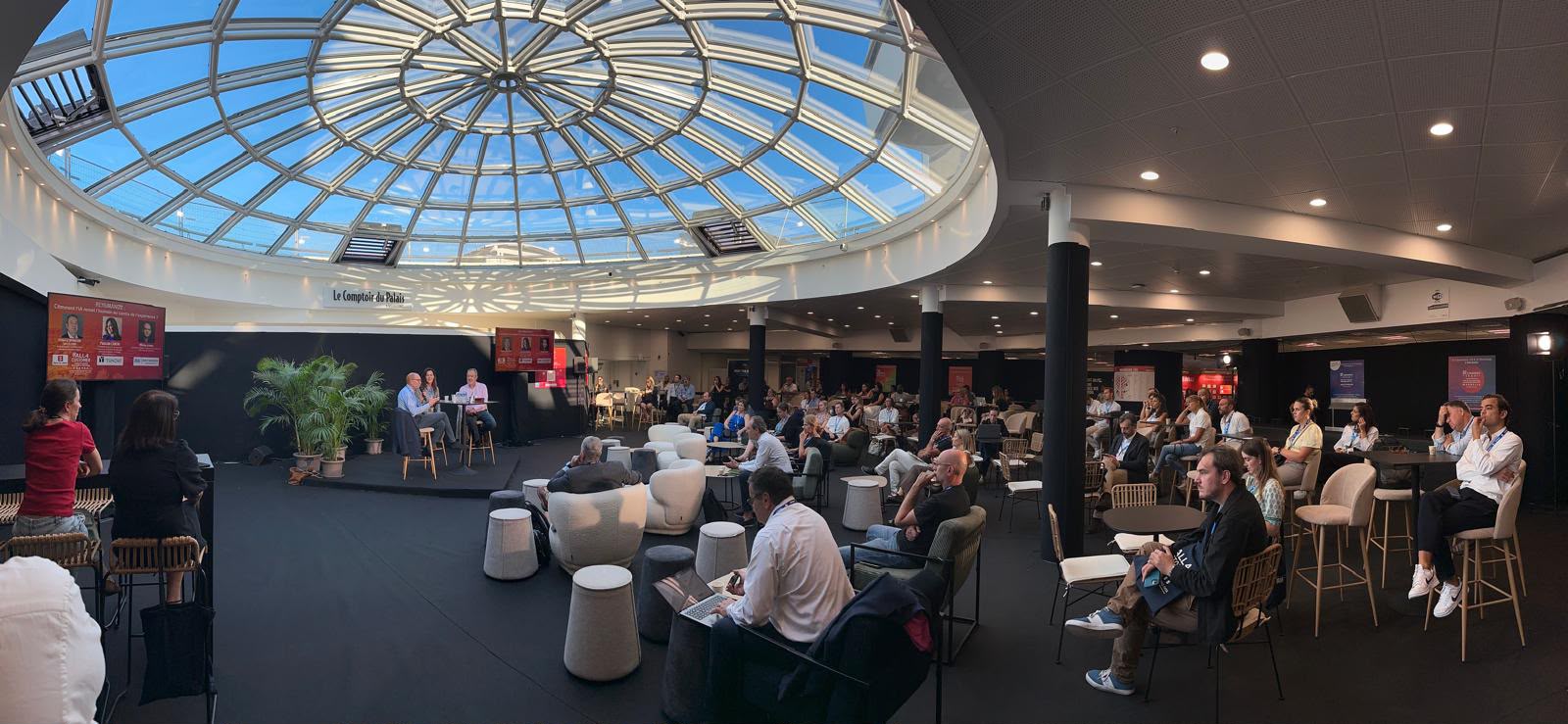
Vivatech 2025 — Paris
At the heart of the technological buzz at Vivatech 2025, an unexpected moment took place at Les Échos’ booth. Not a demonstration of AI or robotics, but the launch of an ambitious editorial project, simply titled “Machiavel.” Far from being just another newsletter, this weekly “strategic briefing” represents an editorial and economic turning point for the French business media outlet. It stands as a response to global geopolitical confusion, at the intersection of technological, industrial, and diplomatic issues.
An Editorial Response to a World in Flux
The Machiavel project was born from a dual observation: on one hand, geopolitical news has become abundant, complex, and shifting; on the other, strong demand from Les Échos’ readership for distinctive, international coverage grounded in rigorous economic expertise.
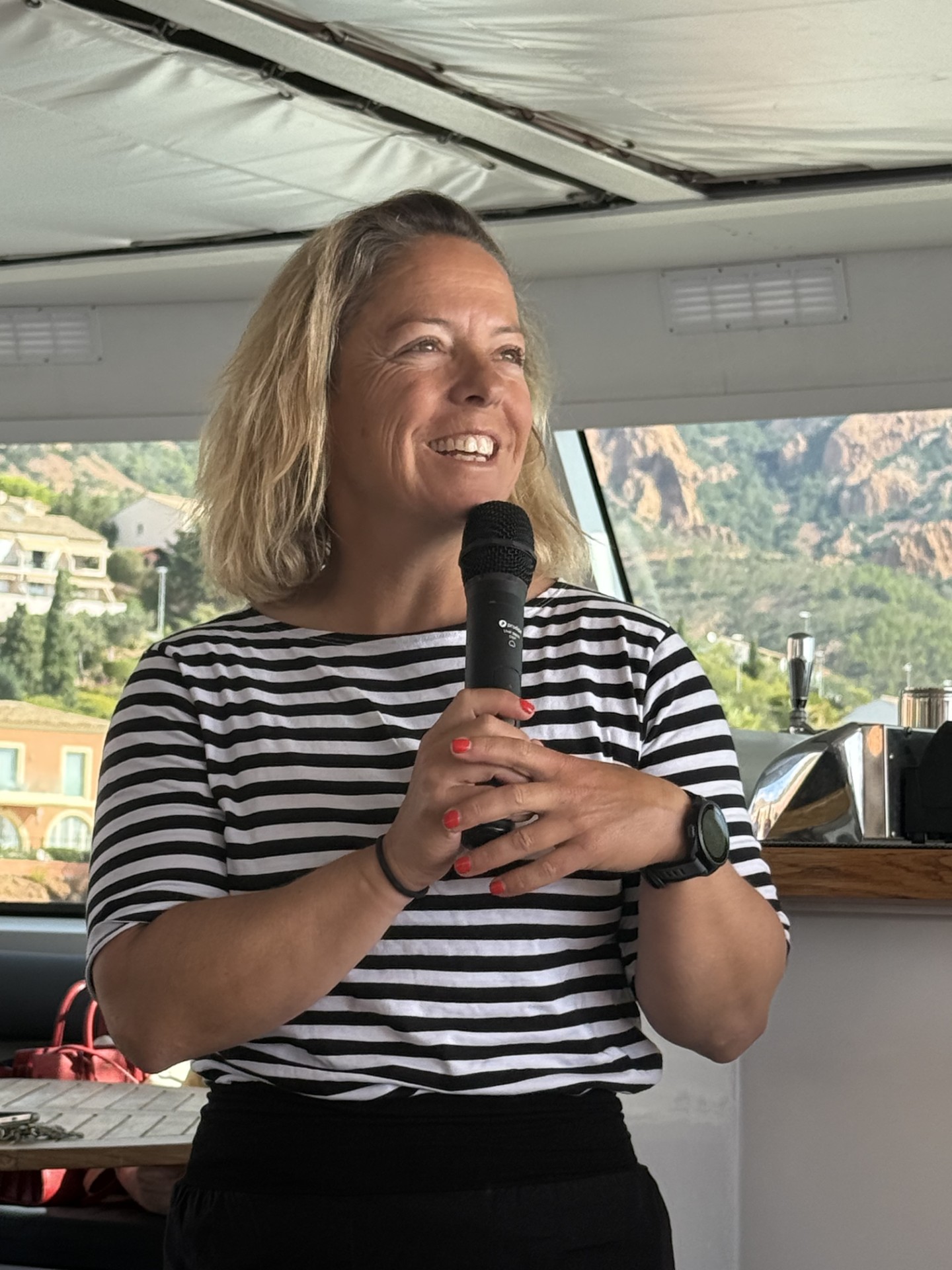
“The ambition is to go beyond dominant narratives,” states Bérénice Lajouanie, deputy director, in her opening remarks. The newsletter positions itself against the grain of national editorializations. It aims to offer an analytical prism unfiltered by Western interpretive frameworks. This is where Benaouda Abdeddaïm comes in, a seasoned editorialist known for his rigor and encyclopedic knowledge of international dynamics.
A Name Laden with Meaning
Calling this initiative Machiavel means embracing a lucid, even disenchanted view of the power games that govern the world. In the Machiavellian tradition, understanding realpolitik, deciphering power relationships, unstable alliances, and domination strategies becomes essential.
This choice is embodied in an original methodology: no French sources, as a principle. “To preserve originality and avoid the hexagonal prism,” specifies Benaouda Abdeddaïm. This methodological radicalism marks a determination to maximize information objectivity. His credo: listening to voices from around the world without European or American mediation.
A Weekly Strategic Format
Machiavel is a newsletter published every Wednesday at 6 a.m. — although the first issue was exceptionally unveiled at noon, as a preview at Vivatech. It offers three structural sections:
- A major feature (approximately 20,000 characters) on a significant geopolitical theme.
- A review of weak signals, spotted in media, think tanks, or regional newspapers.
- An opening toward academic resources, institute reports, international bibliographies.
This hybrid format — between investigative journalism, applied research, and strategic intelligence — targets a demanding readership. At the intersection of executives, political decision-makers, researchers, diplomats, and industrial strategists.
Deliberate Verticalization
For Christophe Jakubyszyn, Les Échos’ editor-in-chief, Machiavel is part of a strategic expansion logic for the brand: creating high-value-added editorial verticals. These are premium content modules, integrated into the subscription offer, available on dedicated mini-sites starting in September.
In other words, Machiavel is not simply editorial enrichment: it’s an economic lever, a monetization model through specialization. This logic, already proven by players like the New York Times or Politico, positions Les Échos in a strategy of retention through expertise.
First Issue: The Geopolitics of Semiconductors
For its launch, Machiavel tackles a burning issue: the new geopolitics of global tech, through the prism of semiconductors. A subject that crystallizes Sino-American tensions, European interests, and cross-dependencies.
TSMC: Taiwan’s Sacred Mountain
The heart of the analysis revolves around TSMC, the Taiwanese chip giant. For Taiwanese people, this company is far more than an industrial flagship: it’s a strategic shield. The local term used, “sacred mountain,” reflects this centrality.
Benaouda describes TSMC as the island’s “best life insurance” against China. With a quarter of national GDP and a technological lead of several years, TSMC embodies both an economic and diplomatic bulwark. Its existence indirectly protects Taiwan from Chinese armed invasion, as the economic fallout of an attack would be global.
Planned Destruction Scenarios
The newsletter reveals that within the Trump administration, a plan had been developed to destroy TSMC facilities in case of invasion. The idea, as radical as it is Orwellian: trigger a global technological catastrophe to stop China. This doctrine of “deterrence through ruin” illustrates the potential violence of contemporary power relationships.
Nvidia: Between Diplomacy and Domination
Another key figure analyzed: Jensen Huang, Nvidia founder, of Taiwanese origin. Considered in Taipei as a prodigal son of the country, he embodies in Beijing’s eyes a projection of American power.
Nvidia’s influence over global AI is such that Xi Jinping himself ordered China to break free from it, launching a strategic autonomy program. The Biden administration’s ban on exports of certain processors further reinforces polarization around this technological champion.
ASML: Europe’s Strategic Dilemma
Finally, the analysis focuses on ASML, a Dutch company that produces lithography machines essential for semiconductor manufacturing. Between Chinese dependence (36% of its revenue) and American alignment, ASML is caught in a geopolitical vise.
The former Dutch government had tried to defend a sovereign position. But, as Benaouda notes, Pentagon pressure prevailed over this stance. Today, the possibility of a complete ban on sales to China threatens tens of thousands of jobs in the Netherlands, as well as an entire segment of European economic stability.
The UAE Case: Eastern Temptation and American Red Line
TSMC, once again, finds itself at the center of a strategic confrontation. Attempts to establish operations in Abu Dhabi were blocked by the Trump administration, concerned with reserving the most critical technologies for America. An extraterritorial doctrine that imposes itself on foreign companies under threat of implicit sanctions.
A Pluralistic and Decentered Geopolitical Vision
Beyond the inaugural dossier, Machiavel intends to offer a polyscopic reading of the world. By refusing the implicit hierarchization of events according to Western criteria, the strategic briefing gives voice to Indian diplomats, Uzbek journalists, Botswanan researchers.
The example given by Benaouda — the Indian minister questioned by European media about Ukraine, who responds by discussing Kashmir — illustrates this tension. Far from diplomatic relativism, the goal here is to understand geopolitical otherness, without filtering or judging it according to Western categories.
A Hybrid and Rigorous Editorial Model
Machiavel operates within a journalism of knowledge rather than opinion. It refuses partisan commentary, binary simplifications, and moralizing postures. Its ambition: to provide facts, analyses, perspectives, to enable readers to construct their own interpretive hypotheses.
This model recalls that of think tanks or certain economic intelligence letters: dense, demanding, based on cross-referenced and documented readings. It’s also a way for Les Échos to assert their elite positioning in a media market often saturated by short and instant formats.
An Intellectual Weapon Against World Disorder
By launching Machiavel, Les Échos are betting on a dual requirement: editorial, through content quality and originality, and economic, through innovation in their subscription model. It’s also a bet on their readers’ intelligence, on their appetite for in-depth, non-Manichean geopolitics, anchored in complexity.
This project could well establish itself as a foundational building block of a new era of strategic information. At a time when data is everywhere, but structural understanding of events is becoming scarce, Machiavel offers an antidote: thinking about the world without illusion, but with precision.
Here is the very first issue: https://externals.lesechos.fr/e-mailing/cx/lesechos-expert/geopolitique/nl_geopolitique-202505.html