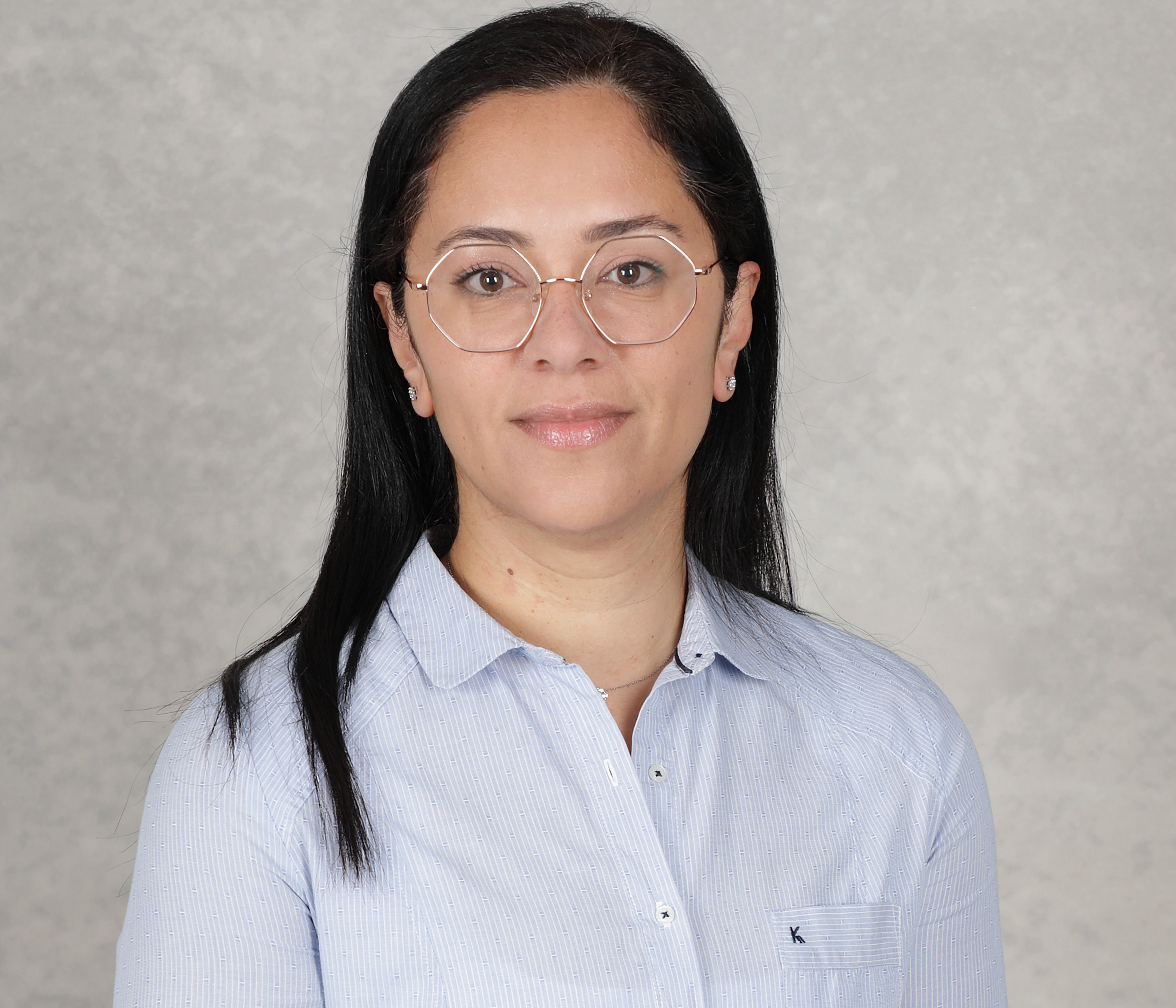
Hala Najmeddine, Director of Research and PhD in Artificial Intelligence at Active Asset Allocation: From AI for Energy to AI for Finance
Hala Najmeddine, a doctor in artificial intelligence, shared during our interview her unique career path and her vision on applying AI to finance at Active Asset Allocation. She will be present at our event, “Digital Woman Day” organized by MWF Institute and Monacotech.
We had the opportunity to interview her for AAA, alongside Adina Grigoriu, Founding President.
Hala Najmeddine began her career in academia. Her doctoral thesis, conducted in collaboration with EDF, focused on developing a smart meter capable of analyzing energy consumption through non-intrusive methods applied to the tertiary sector. This work enabled her to advance applied research in energy management.
Subsequently, she joined the Atomic Energy Commission (CEA) for five years, where she specialized in non-destructive analysis of nuclear power plants. Her role involved modeling signals to assess infrastructure wear, particularly in areas inaccessible to physical inspections.
A Transition to Finance Through AI
Following these experiences in energy modeling, a move to Nice marked a decisive turning point. Hala joined Active Asset Allocation, a company specialized in financial engineering that offers digital solutions for savings professionals. This transition, though surprising at first glance, proved natural thanks to her expertise in modeling and prediction. She quickly assimilated financial concepts and adapted her AI skills to asset management.
A Family Environment Conducive to Science
Hala Najmeddine did not choose the scientific path by chance. Coming from a large family, she was influenced by her father, an engineer at Thales. This family heritage facilitated her immersion in technical and scientific fields. However, she acknowledges that this is not available to all young women who wish to pursue scientific careers.
Moreover, she recalls her years of study when women were largely a minority in scientific programs. “We were 50 boys for only three girls,” she recounts. It took perseverance to carve out a place in this environment.
AI: A Cross-Cutting and Adaptive Tool
Her experience shows that artificial intelligence skills are highly transferable. Whether in energy or finance, modeling and prediction techniques remain similar. This ability to adapt is essential in a world where technologies are constantly evolving. “What our studies teach us above all is how to learn,” she emphasizes, insisting on the importance of adaptability.
Hala Najmeddine encourages young women to pursue scientific careers. She believes that the popularization of artificial intelligence makes it more accessible, including for non-specialists. “It is crucial to demystify AI to enable more women to take an interest in it,” she concludes.
Her journey perfectly illustrates how science and technology can be applied to various fields, thus offering multiple opportunities for professional development.