When we talk about Artificial Intelligence, we don’t imagine it affecting ancestral construction trades and renovation in iconic locations. Since the 2000s, Ateliers de France has brought together specialized craft houses in heritage restoration and high-end craftsmanship. With over 2,000 qualified artisans, they work on prestigious projects such as Notre-Dame de Paris, the Palace of Versailles, and the Opéra Garnier. They are recognized for preserving traditional know-how while meeting modern needs. In 2023, the founders and managers invested in the company, strengthening their involvement in its governance. Ateliers de France promotes French artisanal excellence internationally.
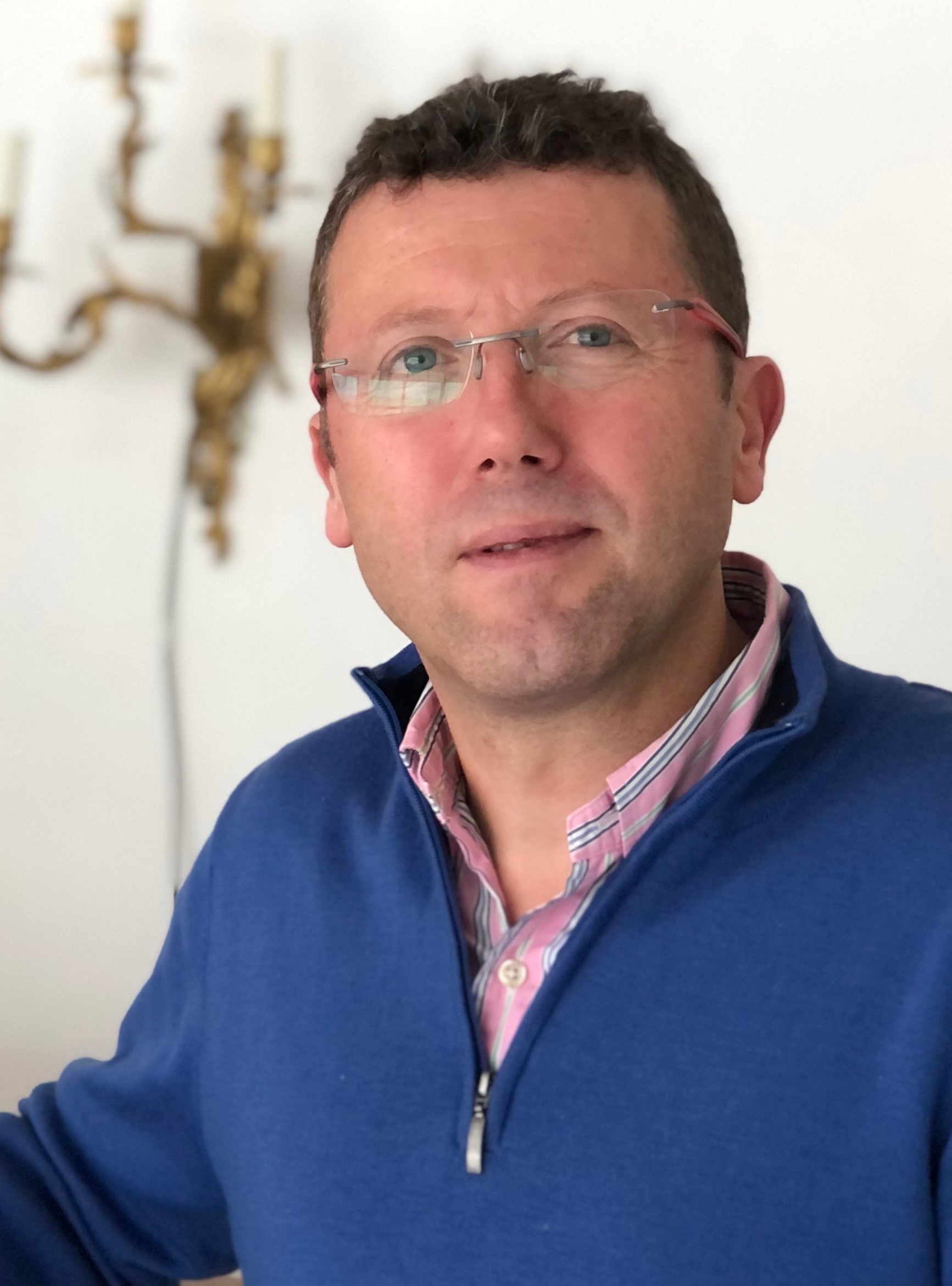
Here is an interview with Sébastien Cossin, who explains how Artificial Intelligence has become established and is now an integral part of this company’s processes. I share with you our fascinating conversation.
Can you introduce your group to us?
Our mission is to protect French architectural heritage and promote this know-how through exceptional projects internationally. One of our mottos is “not transmitting is stealing.” Among our achievements in France, we have had the honor of working on iconic monuments such as Notre-Dame, the Grand Palais, and the Palace of Versailles…
In parallel, we also work for very high-end private clients in prestigious locations such as Monaco, Cap Ferrat, Paris, London, Dubai, and New York. This dual activity—between historic monument renovation and private projects—relies on an essential balance, as the two areas enrich each other mutually.
For example, renovating a private mansion classified as a Historic Monument using traditional techniques dating back several centuries requires considerable investment and exceptional artisanal know-how. Carved woodwork and windows manufactured using ancestral methods will never have the same cost or requirements as if they were produced with modern tools.
The group consists of 55 SMEs divided into specialized divisions, each covering specific skills. Our divisions include All Trades, Building Envelope (stone cutting, joinery, and carpentry), marble and stone, decoration (painting, gilding… art restoration), wood and metal, which I oversee. Each of these entities brings together experts with unique know-how, often manual. In our field, 80% of artisans work with their hands. It is unthinkable to replace these skills with artificial intelligence. Moldings, sculptures, or metalwork require precision and sensitivity that remain beyond the reach of machines.
What aspect of your sector prompted you to integrate AI, and how has it transformed your operations?
AI plays a strategic role for us, particularly in preparing and transmitting knowledge. It enables us to optimize project planning and ensure better communication of traditional techniques to new generations. In this sense, AI is not a replacement but a valuable complement that contributes to the efficiency and sustainability of our trades. We recruit many young people (journeymen, apprentices) or less young people (career changers) to secure the transmission of our artisanal know-how. These new recruits, curious and inventive, have introduced tools and practices related to AI into our processes.
We often work with a partial vision of the overall project. Let’s take a specific example: we are currently working on the renovation of an entire wing of a castle, a colossal project worth several hundred million euros. In this context, a small company of 40 employees is responsible for traditional forged window railings, with hand-made ornaments (star, golden sun). This operation is part of a large-scale project where over 1,000 people will work simultaneously. The question then is: how can such a modest structure integrate effectively into such an organizational behemoth?
Administrative management is heavy and complex, requiring dedicated teams for meetings and coordination. For a small structure, it’s impossible to mobilize a full-time employee to carry out this type of mission.
Every week, voluminous 50-page reports are generated during site visits. Thanks to AI, comparison is easy; we adjust our actions in real time. This gain in responsiveness helps us become more efficient and integrate harmoniously into large-scale projects while maintaining our artisanal activity.
AI is not a replacement for our human skills but a strategic tool that helps us optimize our resources, adapt to complex environments, and remain true to our artisanal excellence.
Which AI solutions have you selected?
An artificial intelligence was developed for our needs. Our philosophy is based on complementarity: exceptional artisans, truly manual workers, and a team of brilliant young graduates. The latter collaborate with their networks to design AI tools adapted to our constraints.
These programs optimize site monitoring. For example, by automatically comparing two reports, the AI identifies discrepancies or anomalies. If no difference is noted between meeting reports and previous ones, we save time. On the other hand, if a point of concern is flagged, we can react quickly thanks to the generated report.
A second phase under consideration is to connect AI to the design office. The idea is to apply AI to plans, so missing or unvalidated elements are detected in a report. The AI analyzes the clues and must be able to find the plan, see where it’s blocked (missing validation, etc.), and integrate this information into the report. The action is simplified, and our responsiveness surprises our partners.
In a context where the lack of skills is glaring and where we struggle to recruit, AI helps us. A supervisor can therefore oversee more projects with improved working conditions. AI, far from replacing human expertise, acts as a lever that enhances its efficiency.
How long have you been implementing AI?
We started using these AI tools a few years ago for report analysis. Now we’re enriching it thanks to new technological opportunities that arise.
What are your future projects?
Our goal is to develop an application for transmitting our know-how, one of our core values. For routine tasks, skills transfer happens naturally: a veteran works with an apprentice or someone in career transition. They work together, observe, and reproduce gestures until they become fluid and precise. Adjustments are made according to physical differences, but the final result is always faithful.
However, for specific gestures, the challenge is greater. Certain techniques can disappear in case of retirement. We have therefore identified these at-risk know-how in our processes and begun documenting them.
Videos, photos, explanations, and detailed procedures enrich a knowledge bank. Thus, even if the expert is no longer present, we can reconstruct and transmit their gesture through digital models. This ensures the sustainability of our know-how. It’s a valuable aid for creating rare and infrequent pieces. A tutorial will help the journeyman. This process perfectly illustrates the marriage between tradition and modernity. We combine exceptional craftsmanship with AI capabilities to preserve and transmit rare know-how while adapting to unique requirements. This balancing act between manual work and technology is both fascinating and essential for our evolution.
What positive changes have you observed in your team’s dynamics thanks to AI?
Teams perceive AI integration as genuine help and not as a threat. A real dynamic operates between generations. Young people are particularly enthusiastic. They see in this project an opportunity to enrich their learning and feel valued internally and externally. It also creates an inspiring and dynamic work environment where each generation finds its place.
What advice would you give to SMEs hesitating to integrate AI into their processes?
First, it’s essential not to get lost in AI’s complexity. You must remain pragmatic and focused. Before anything else, clearly identify the time-consuming tasks in your company. Take the time to analyze: which operations are the most repetitive or tedious? Once these problems are identified, consult AI experts to find suitable solutions.
It’s not about adopting AI for all your projects but starting with a concrete and controlled case.
Then, carefully prepare the ground. Provide AI experts with clear and organized data. This initial work is crucial for obtaining relevant results. Poor or imprecise configuration will provide unusable answers, which risks discouraging the team.
We also use it to revive abandoned projects. For example, for a project left pending for three years, AI is great for gathering data (communication, reports, plans…). The AI produces a summary that’s 80% complete. We can resume the project quickly without starting from scratch.
Finally, it’s crucial to start with very specific and controlled cases. Work on projects where you already know the expected answer. This allows you to refine AI parameters and adjust results. Once this process is fine-tuned on a few examples, it becomes easy to reproduce and extend it to other areas.
In summary, start small, be precise, and test AI on concrete cases you know. This is how you’ll maximize your chances of success while minimizing the risks of getting lost or wasting time, a precious resource for SMEs.