
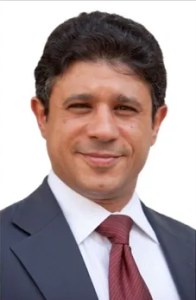
 Interview with Bassem KAMAR Chief Executive Officer GEFIC—Global Economics and Finance Consulting
With a career in international economics and macroeconomics, Bassem Kamar stands out for his unique path combining leadership, strategic consulting, and teaching. Currently CEO of GEFIC — Global Economics and Finance Consulting, based between France, Abu Dhabi, and Monaco, he advises governments, decision-makers, and companies in implementing economic strategies for the future. As former Chief Economist at the Central Bank of the United Arab Emirates, he spent three years contributing to the definition of monetary strategies to address regional challenges. His expertise was also established at the EBRD (European Bank for Reconstruction and Development), where he led initiatives for the development of Southern and Eastern Mediterranean countries. All while sharing his knowledge as a professor at the International University of Monaco (IUM). A career marked by constant commitment to excellence, transparency, and innovation.
Can you tell us about your background?
I grew up in Monaco before leaving for Egypt to pursue my studies and learn Arabic. Subsequently, I completed a DEA and a Doctorate in international economics in Nice. Since 2001, I have been teaching at the International University of Monaco (IUM).
In 2006, I joined the IMF in Washington D.C. as an economist. I stayed there for several years and returned to Monaco in 2011. Upon my return, I founded Global Economics and Finance Consulting (GEFIC), a consulting firm specializing in economic forecasting and supporting states. At the same time, I continued teaching at IUM and collaborating with the IMF, which asked me to develop a training center for the Middle East, located in Kuwait. I held this position for two years. In 2018, I was recruited by the EBRD as Chief Economist for the Middle East region. I contributed to transferring the regional economic office from London to Cairo and oversaw the economic development contribution of a team of 80 people. We managed projects representing approximately 17 billion Euros in investments during those three years.
In 2021, I joined the Central Bank of the United Arab Emirates as Chief Economist. For three years, I developed strategic programs and integrated advanced technologies. This mission recently concluded.
Currently, I am a strategist in future economics, which allows me to collaborate with governments and companies from several countries. I alternate between Paris, Monaco, Abu Dhabi, and other regions depending on my clients’ needs.
What was your experience with artificial intelligence in your teams?
During my years at the Central Bank of the Emirates, we integrated AI tools for economic forecasting. We exploited real-time data, including satellite images and text analysis, to anticipate economic performance indicators around the world. For example, these AI tools developed in collaboration with our partners allowed us to monitor agricultural harvests and anticipate price fluctuations. These analyses enabled us to assess the impact on inflation and interest rates in different countries, with 95 to 99% accuracy.
We also used AI to model oil prices, taking into account geopolitical shocks. Thanks to satellite imagery, we analyzed in real time the repercussions of attacks in the Red Sea on maritime transport costs and measured the impact on global inflation.
These AI tools allow us to anticipate economic scenarios, thanks to factors such as demand, supply, and energy policies. We could thus accurately predict the decisions of major central banks, whether the FED or the ECB.
How did your teams adopt these technologies?
We encouraged them to take training courses on platforms like Coursera or EDX. We organized brainstorming sessions to share learnings. Everyone understood how to manipulate these tools within the framework of their missions.
We also streamlined the applications used. The goal was to focus on results without multiplying software. Data security was paramount. For example, certain platforms were not authorized to avoid any risk related to banking secrecy.
The implementation of AI in my projects has transformed organizational practices. By reducing the need for manpower for certain tasks, particularly summary reports, AI has enabled a reallocation of talent toward higher value-added activities. However, this transition requires continuous training of teams to maximize their understanding and mastery of technologies.
Have you encountered cultural challenges in adopting these technologies, particularly resistance?
In the finance and economics sectors, professionals are generally open to new technologies. We discovered these tools together, identifying our needs and exploring what was presented at AI-related scientific conferences. We also invited specialized companies to come and do demonstrations within the bank. Gradually, the team embraced these technologies, fascinated by the possibilities they offer, particularly for accomplishing tasks previously impossible.
We must also consider a particular context: in many countries, such as those in the Gulf, databases as we know them in the West are very limited. These nations being relatively young, they have not had time to develop these traditional data infrastructures. This is where new technologies, particularly artificial intelligence, offer an exceptional opportunity. They allow for a “leapfrog,” a great leap, and make informed decisions without depending on complex conventional models requiring long historical data.
Do you think AI can deepen inequalities and what impact do you see on the economy of Gulf countries?
Beyond companies and institutions, AI raises cultural and technical challenges, particularly in regions where access to technology remains limited. While some Gulf countries fully exploit these tools, others, for example Egypt or Tunisia, are at the initiation stage: AI is reserved for an educated elite. The general public manipulates digital technology for simple tasks, such as mobile payments, but does not use advanced applications. This creates a digital divide. Training is essential to democratize the use of AI.
In Gulf countries, AI is already transforming the economy, given that their economic development depends heavily on importing labor. However, we know that AI has an impact on the substitution of certain jobs, and consequently, on the demand and need to import labor in the coming years.
The Emirates and Gulf countries, with their fixed exchange rate against the US dollar, must remain competitive on price to sell services such as tourism or transportation. This is within the framework of their economic development needs and diversification of non-oil exports. The cost of labor thus becomes a key factor. For example, in a McDonald’s, the raw materials (bread, tomatoes, meat) necessary for a Big Mac are subject to international prices, but the final cost is linked to the price of local labor. This is why a Big Mac is cheaper in China than in France.
To maintain stable wages, the supply of labor must exceed its demand. This depends on economic sectors. We make sectoral forecasts for the next 10 years using models based on real-time data and AI. These forecasts constitute the baseline scenario, around which we also integrate alternative scenarios to anticipate economic fluctuations.
Once growth is estimated, we calculate the number of jobs to be created to support this expansion. For example, in the construction sector booming in Dubai or in the finance sector, we identify particular labor needs. We assess how AI could transform job demand in these sectors. In some cases, AI could replace up to 40% of existing jobs, while creating new opportunities requiring different skills. We collaborate with researchers around the world to refine our projections and advise governments. The goal is to anticipate the needs for qualified labor, whether recruiting locally or importing talent.
The Emirates are preparing strongly for this transition. They have created a ministry of AI and launched a university offering one of the best AI masters in the world. This dynamic allows them to remain competitive globally.
What do you see as the ethical issues and opportunities for the future?
I am convinced that AI can be a powerful lever for economic development, provided it is used responsibly. The establishment of a regulatory framework, such as the AI Act in Europe, is essential to frame its use while preserving innovation. The example of the Emirates, with their ministry dedicated to AI and their world-renowned university, demonstrates the importance of alignment between strategic vision and technological investment.
AI is a powerful tool, and when used well, it can transform organizations and improve our societies. But we must also remain vigilant, because regulation is necessary to avoid abuses and ensure that it serves the collective interest. States must work together to establish international standards. As I often say, “trust and expertise carry the values of the future.” Trust in our abilities to master AI, and the development of our expertise to derive maximum utility from it will carry the values of a prosperous future for humanity.
Artificial intelligence will revolutionize our ways of living and working by making them more fluid and rapid. This transition will be accompanied by new skills to acquire. As an example, in the past, when typewriters disappeared in favor of photocopiers, secretaries were able to adapt and retrain.
Similarly, the future of education will need to evolve. The classic university model, where one follows four years of studies on multiple subjects, some of which are not very useful for a specific career, will be replaced by an approach centered on skills. One will train according to the concrete needs of a profession.
However, there will be a distinction between those who invest time to acquire this knowledge and those who choose not to. This will accentuate the division between skilled and unskilled employees. Nevertheless, even positions requiring fewer skills will have better access to information, opening unprecedented opportunities for all.
What advice would you give to companies hesitating to adopt AI?
It’s a train we must not miss. The sooner they familiarize themselves with these technologies, the better they will be able to take advantage of them to increase their productivity and competitiveness. AI is not a replacement for humans, but a tool to optimize processes and free up time for strategic activities. There is no reason to hesitate: it is an essential ally to remain competitive. Companies must start by training and experimenting themselves. It is an opportunity to gain efficiency, reduce costs, and improve decision-making. Ignoring AI would be like missing an essential turning point, like the internet in its time.