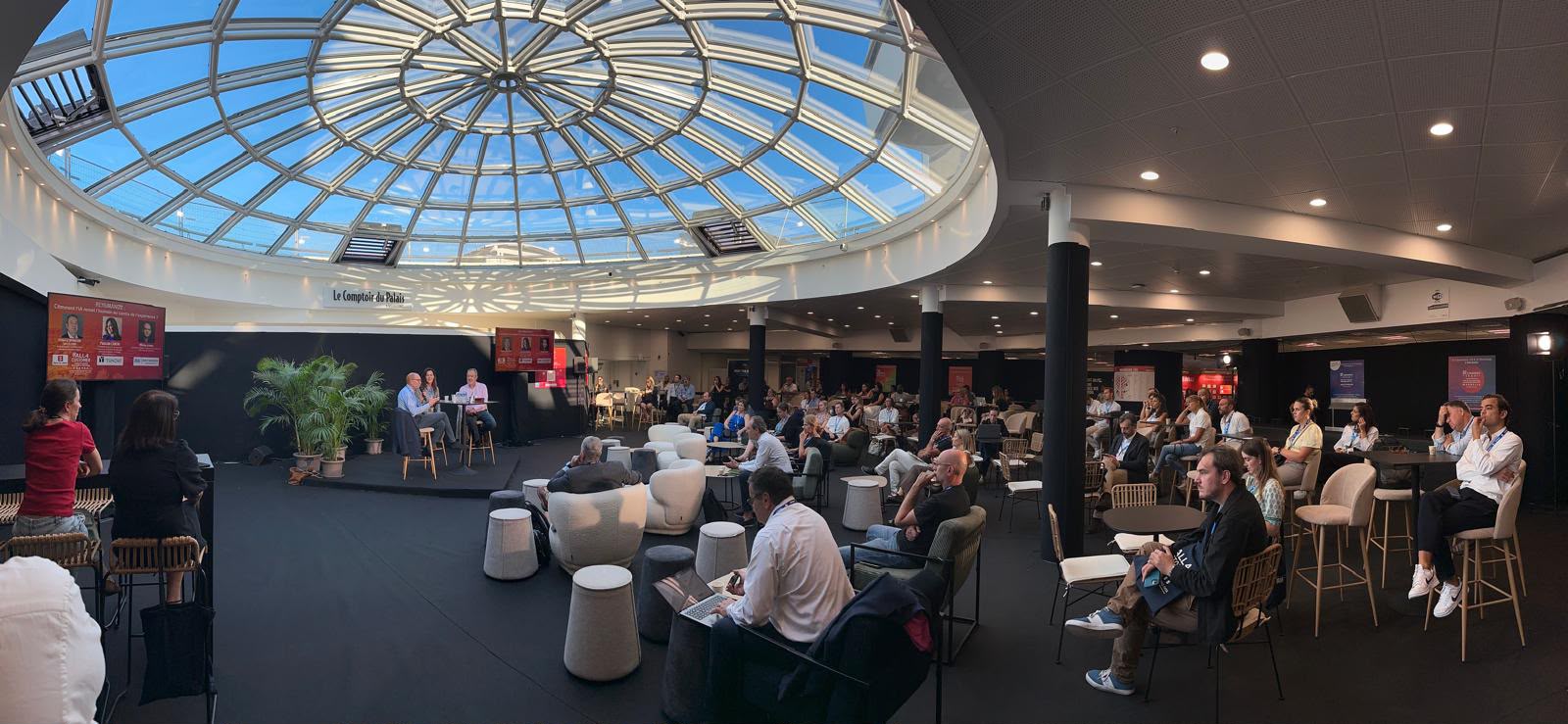
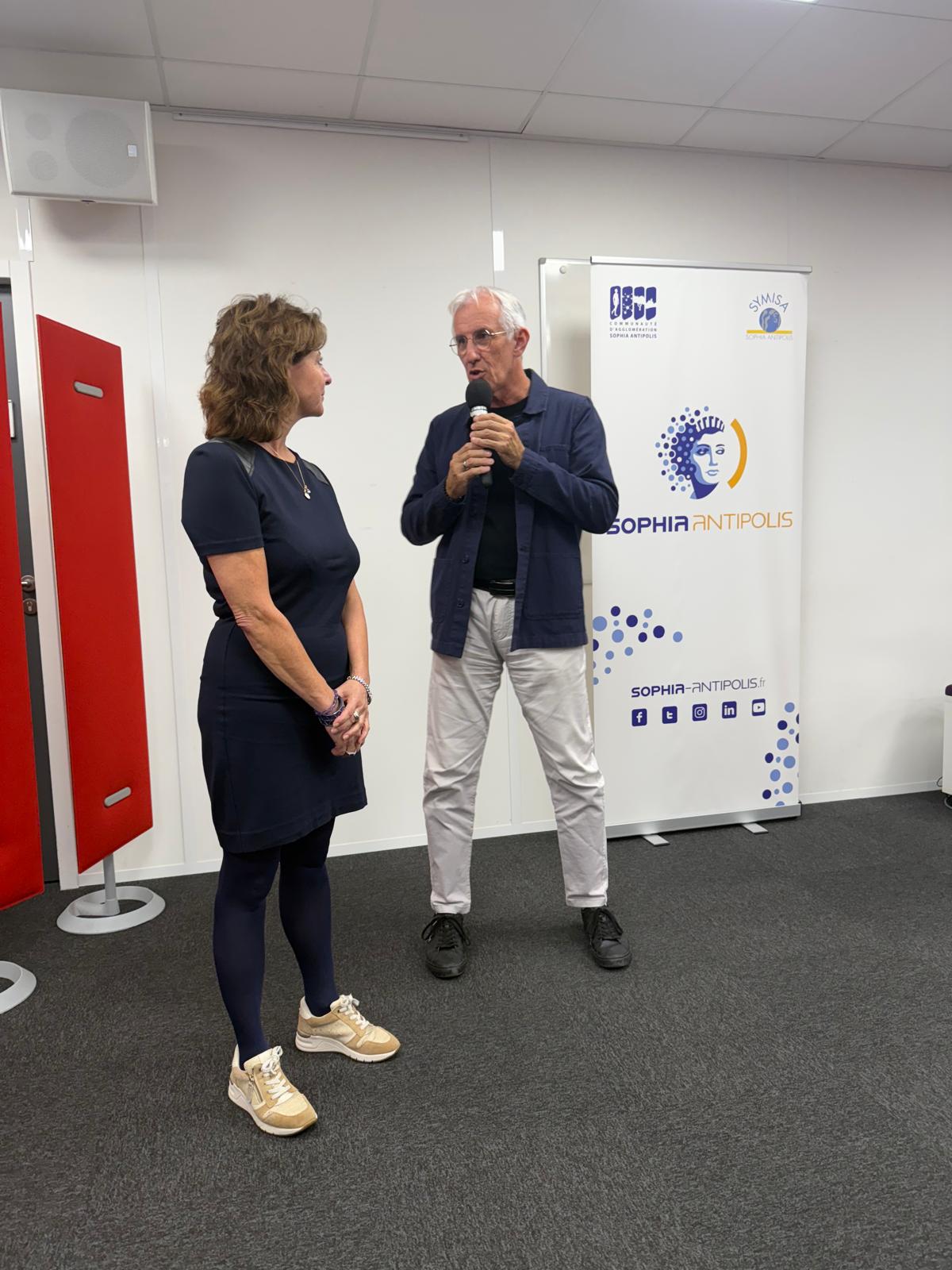
The AI Tour de France organized by MEDEF and Numeum kicked off in Sophia Antipolis on November 4th for an evening rich in exchanges and insights. This stop brought together experts and key players in the field of artificial intelligence (AI) to explore the transformations that AI brings to businesses of all sizes, from large multinationals to local start-ups.
The session was led by Florence Tressols PhD, an artificial intelligence expert, and Frédéric Bossard, president of WACAN agency and scientific director at SKEMA Business School for the MSc “Digital Marketing and Artificial Intelligence.”
Discussions focused on integrating AI into business processes, the associated technical and ethical challenges, as well as the central role of humans in this digital transformation. Speakers shared concrete use cases of AI, highlighting the benefits and necessary precautions for successful adoption.
Three complementary visions of AI: from giants to innovative start-ups
The panel brought together representatives from three companies with varied profiles, each bringing a unique perspective on AI use. The panel included Pablo Fernandez, CEO and founder of ArtinLeap, a start-up incubated in Sophia Antipolis; Emmanuel Genard from IBM Nice, a historic player and pioneer in AI innovation; and a duo from the SME Coopteo, represented by Camille Casimiri and Mallaury Sottero.
Pablo Fernandez created ArtinLeap to help companies make a “leap forward” with AI, particularly through solutions designed to be sustainable and human-centered. Emmanuel Génard from IBM presented Iris, a signbot (or chatbot in sign language) for deaf and hard-of-hearing people, demonstrating the ambition to make technologies accessible to all. For their part, Camille Casimiri and Mallaury Sottero explained how Coopteo, an innovation consulting firm, uses AI to improve its consultants’ productivity. They optimize the tax credit application process for their clients.
AI serving internal processes and productivity
 For Coopteo, AI is an opportunity to redefine and optimize the company’s processes. They have set up working groups to integrate AI into Coopteo’s daily tasks, such as drafting technical documents. These documents require compiling complex studies to obtain research or innovation tax credits. AI makes it possible to automate certain stages, such as documentary research or analysis of a specific field, which reduces working time while increasing the comprehensiveness of results.
The company has also designed a web application where key information can be entered, allowing AI to generate a market study related to each client’s project. This innovation has resulted in a significant productivity gain for Coopteo, while ensuring human control over the outputs. AI is used as an assistant for consultants, not as a replacement for employees.
 ArtinLeap and the vision of sustainable AI
Pablo Fernandez, founder of ArtinLeap, is a player in sustainable digital transformation. The name “ArtinLeap” — for Artificial Intelligence Leap — reflects this start-up’s mission: to support companies in their AI adoption in an environmentally respectful and human-centered way.
One of ArtinLeap’s development focuses is the use of Small Language Models (SLMs), which consume fewer resources while offering performance comparable to traditional large language models. ArtinLeap also relies on a distributed cloud infrastructure to pool resources and reduce energy consumption. By emphasizing AI that is “intelligent” but also sustainable, it demonstrates that it is possible to innovate while limiting the ecological impact of technologies.
 IBM and the accessibility challenge: the Iris Signbot
Emmanuel Genard presented Iris, a signbot designed by IBM to help deaf and hard-of-hearing people access digital services. This sign language chatbot allows users to interact with their phone through gestures, with AI translating these signs into text understandable by hearing interlocutors. This project highlights the complexity of sign language interpretation, which relies as much on hand gestures as on facial expressions and body posture.
Iris illustrates how AI can facilitate inclusion, and Emmanuel emphasized the importance of this humanistic approach. Behind this technology, several types of AI cooperate: first computer vision to analyze behaviors, language models to understand and decipher user intentions, and algorithms to transcribe text into sign language. Through partnerships with over 200 companies, IBM aims to deploy Iris in various sectors, from customer service to e-commerce, to expand its social impact.
Towards ethical and responsible AI: Governance and Data Confidentiality
The panel also highlighted crucial questions of governance and confidentiality. For Coopteo, using AI in consulting poses particular challenges in managing sensitive data. Coopteo has taken precautions by developing a best practices guide for its employees. This guide distinguishes between authorized and prohibited uses, to protect their clients’ sensitive information and ensure responsible use of AI.
He mentioned the need for traceability and transparency in AI systems, by monitoring AI decisions and avoiding biases. This aligns with increasing regulatory requirements, with the European Union’s AI Act which will require companies to rigorously govern AI.
AI is a powerful tool, but it must be mastered, governed and adapted to each organization’s objectives. AI-based systems will not replace humans, but they will augment their capabilities by eliminating repetitive tasks and assisting them in increasingly complex areas.
At the end of the panel, a strong message emerged: AI must serve humanity and collective intelligence. He emphasized the importance of co-creating solutions with end users to ensure their relevance and positive social impact.
Training and soft skills
To support businesses, MEDEF provides a website centralizing practical resources and AI training. At SKEMA Business School, an MSc in digital marketing has evolved to include courses on AI, aimed at training students to leverage these technologies in commercial and communication strategies.
Speakers emphasized the need to train professionals, even those not from AI backgrounds, to understand and apply these technologies appropriately. Adaptability, critical thinking and a rebellious spirit were highlighted as key skills to get the best out of AI in businesses.
 Alexis Kasbarian, head of the digital and innovation division at MEDEF, closed the debates by reaffirming their commitment to inclusive and effective digital transformation in France. For him, AI is a strategic lever for business competitiveness, but its adoption must be supported by appropriate training and committed management. The challenges include funding, with mechanisms such as research tax credits. He addressed inclusion, emphasizing the place of women in technology.
MEDEF remains attentive to societal feedback and is convinced of the benefits of responsible AI with positive impact. Through this Tour de France, MEDEF brings together economic players to build together an AI that respects human values and supports collective progress.
Remarks collected by Pascale Caron