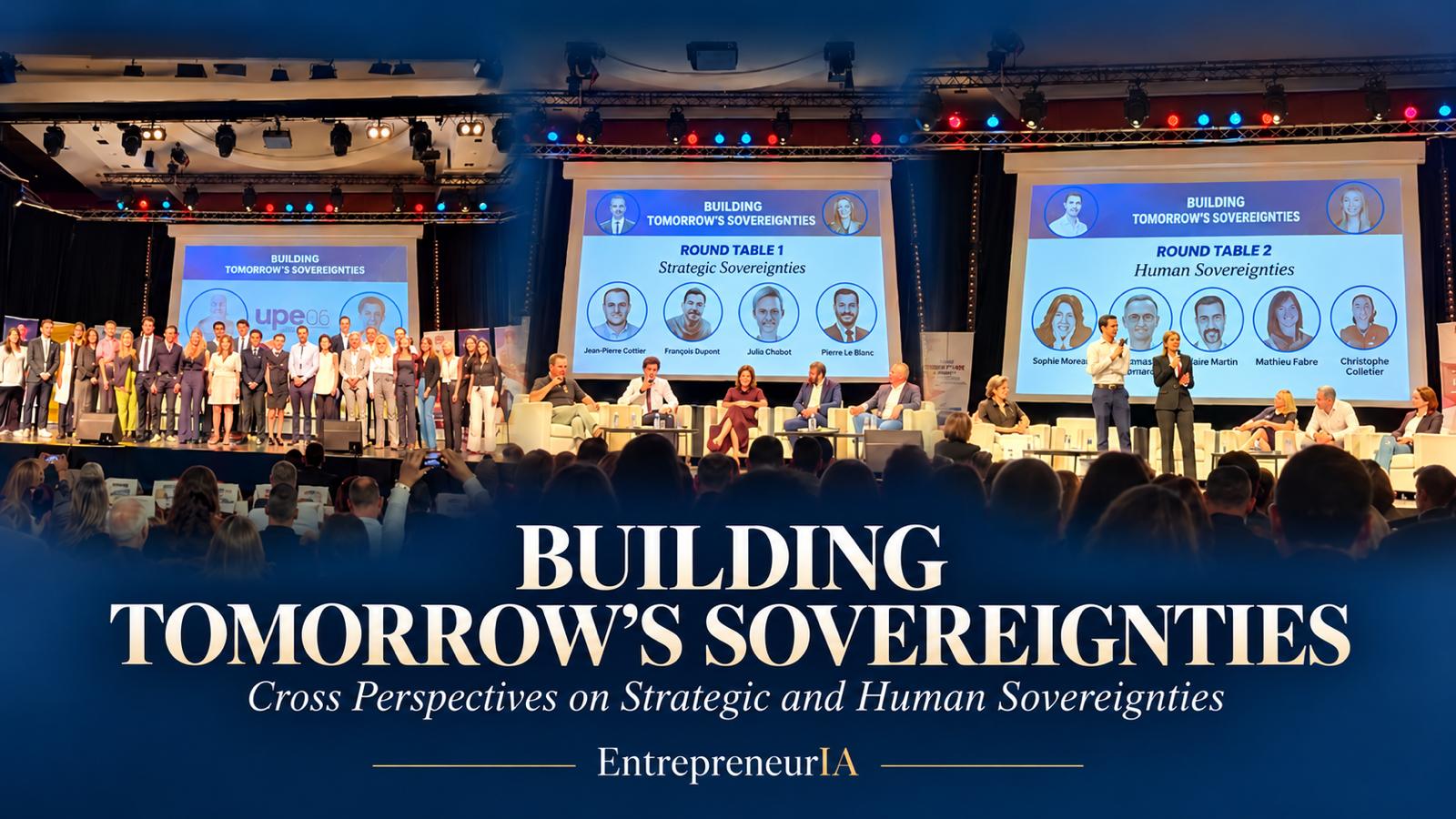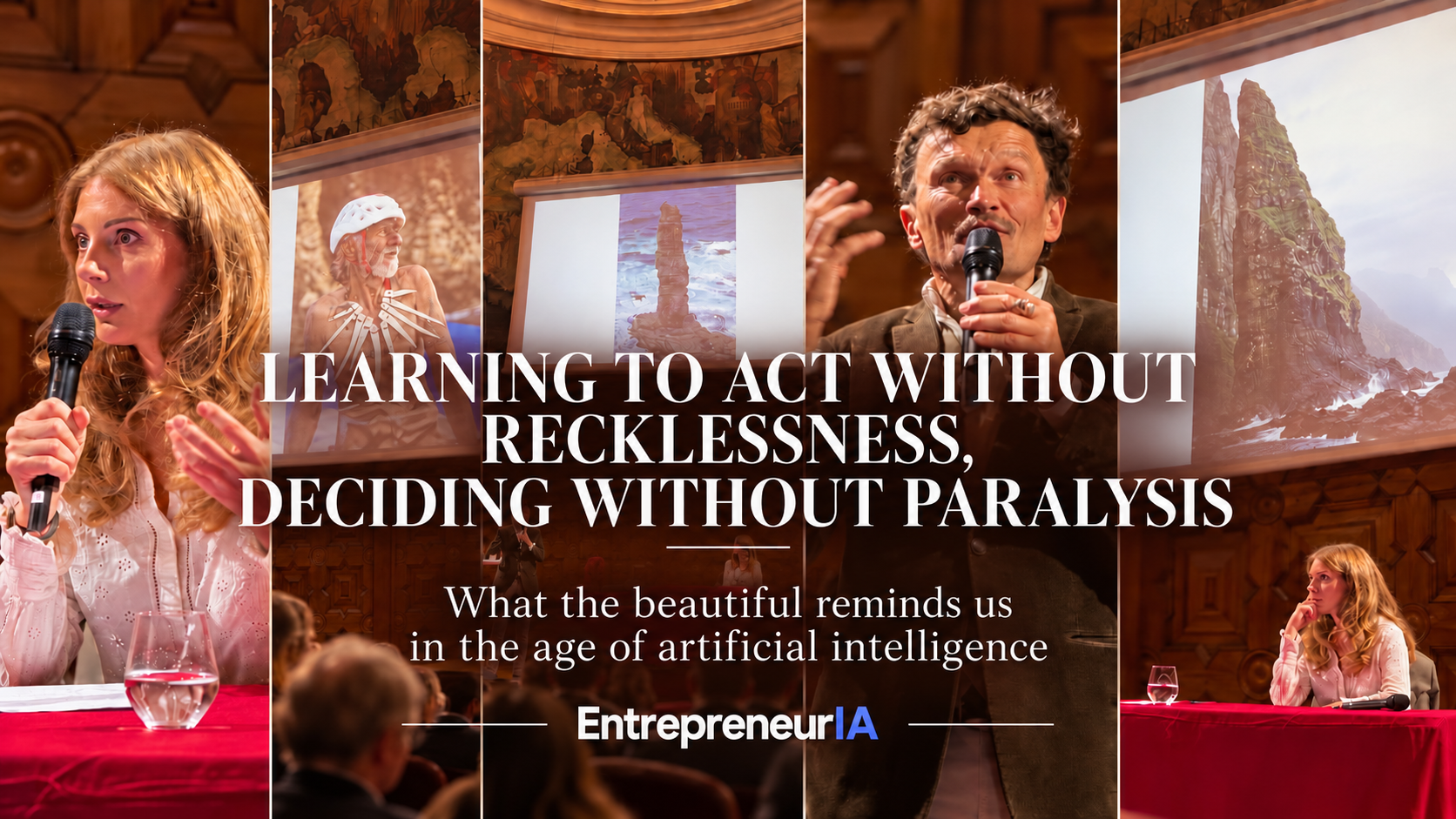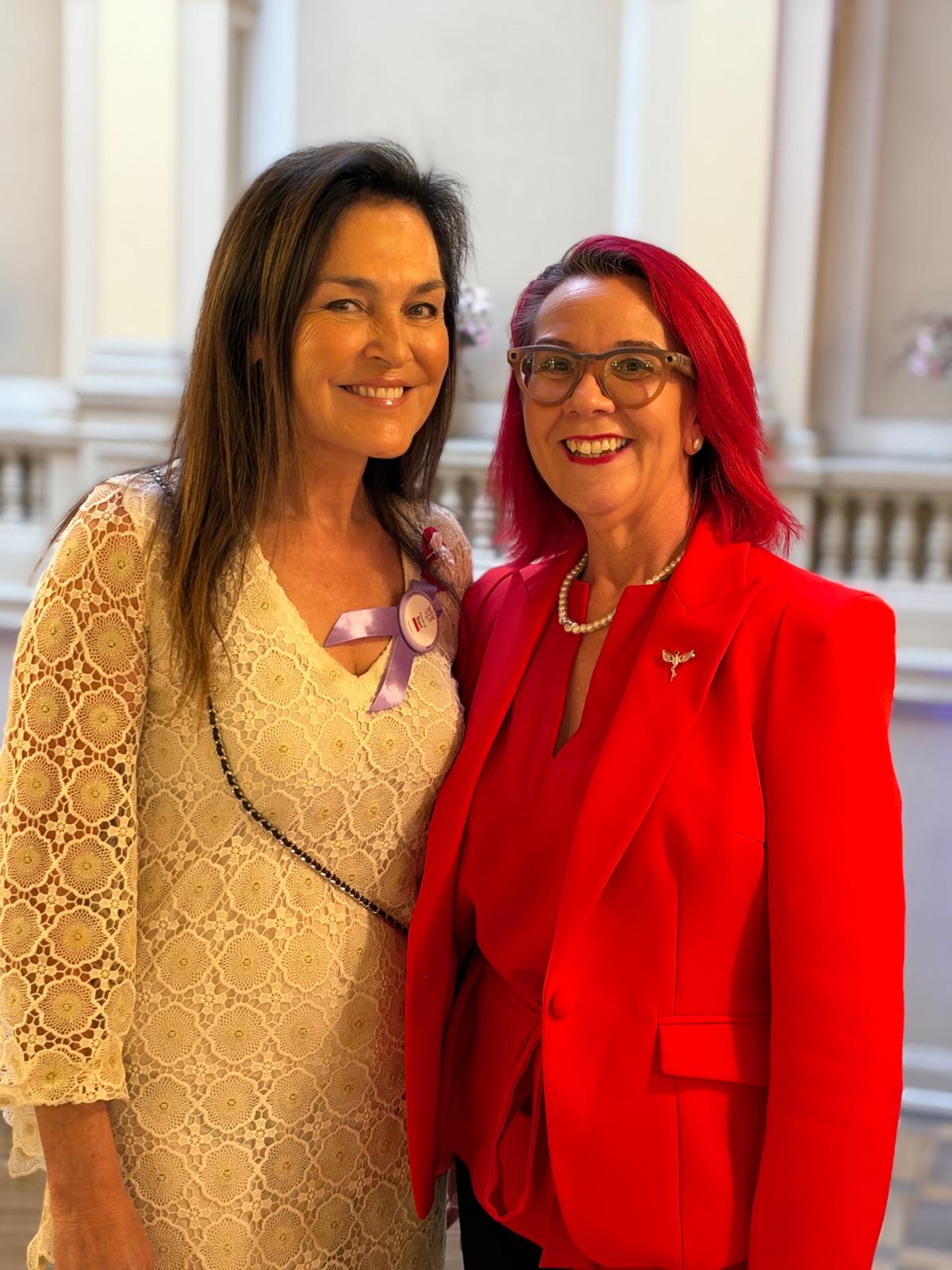
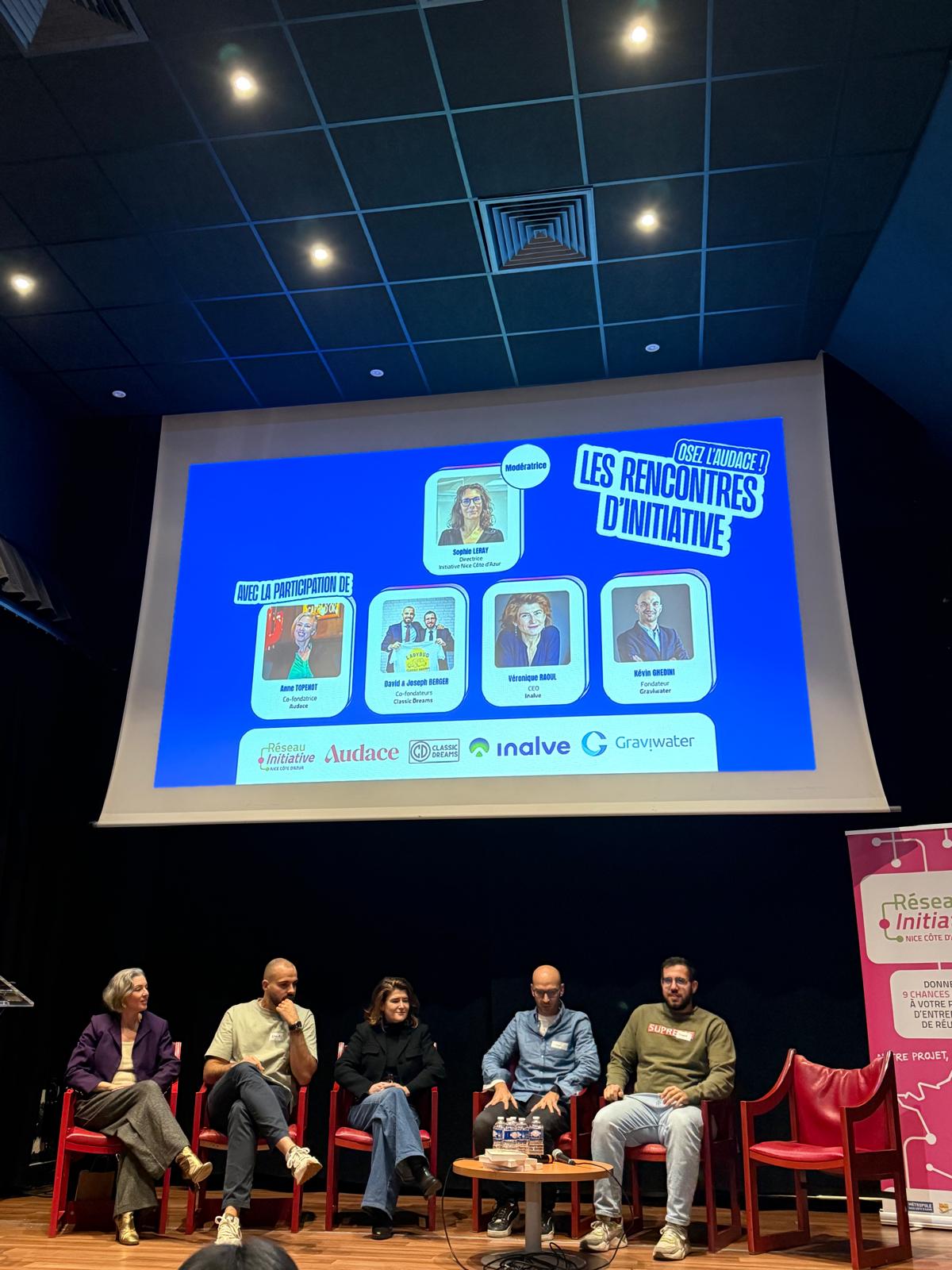
On the stage of the “Initiative Meetings” in Nice, boldness took on very concrete faces.
That of Anne, co-founder of the Ose l’Audace (Dare to Be Bold) movement.
Those of David and Joseph Berger, entrepreneurial brothers behind Classic Dreams.
That of Kévin Ghedini, founder of Graviwater.
And finally, that of Véronique Raoul, CEO of Inalve.
Under the gaze of moderator Sophie Leray (Initiative Nice Côte d’Azur), we explored boldness not as a slogan, but as a daily practice, made up of risky choices, overdrawn accounts, calls to the banker… and tenacious convictions.
From self-connection to the public stage
Anne first introduces herself as a “connection enthusiast.” Her journey begins with public speaking, a means of connecting with oneself and others. With Alexia, she created Ose l’Audace, a movement that helps everyone “know, recognize and share their uniqueness on stage.”
Their starting point is simple: to dare to speak, you must prepare your story, structure your message and be accompanied. Boldness is not a magical disposition, but a guided path. Behind the storytelling, there is demanding work on the coherence between what we live, what we feel and what we dare to expose to others’ eyes.
Fundamental question: in a country where we mainly train in writing, how can we restore to oral communication the place it actually occupies in professional life?
Classic Dreams: from the barracks to the screen-printing workshop
Next come Joseph and David Berger. Joseph, 24, co-founded Classic Dreams with his brother, a clothing brand that offers chances to win classic cars. Starting from a simple observation—classic cars generate strong appeal, but remain reserved for an elite—they decide to democratize access through a model combining textiles and prize draws.
The project is now evolving toward a screen-printing workshop intended to produce their own t-shirts, then to serve “the entire Côte d’Azur, and beyond.”
David’s journey adds another layer to boldness. A former officer from Saint-Cyr military academy, ten years in uniform, he chose Nice to finally work with his brother. Joseph, meanwhile, began training as a seminarian to become a priest. Two highly structured paths that pivot toward textile entrepreneurship.
This shift illustrates a strong idea from the evening: no path is linear and boldness often arises from accepting a radical change in vocation.
Graviwater: walking in the void to bring drinking water
Kévin Ghedini says of himself that he is “passionate about water” and Africa. During his studies, he encountered a figure he considered intolerable: between 800 million and one billion people lack access to drinking water. Where we turn on a tap without thinking, some travel hundreds of meters every day to reach a water point, sometimes contaminated.
He founded Graviwater, based in Saint-Laurent-du-Var, which designs autonomous water disinfection systems, without electricity, using only gravity. The company deploys its solutions both in Africa and in France, where isolated hamlets remain without connection or suffer from bacterial pollution.
Kévin summarizes boldness with an image: walking on a path that doesn’t yet exist, “stepping into the void telling yourself it will land somewhere.” As long as your foot touches solid ground with each step, the path forms behind you. Boldness then becomes an irreversible movement rather than a character trait.
Inalve: reinventing global food with microalgae
At 56, after 25 years in Brittany then 25 years in Paris, Véronique Raoul decides to settle alone in Nice. She describes her arrival as a feeling of “vacation every day,” but what follows is anything but smooth sailing.
The teenager who was promised a technical vocational certificate—”hopeless,” according to her teachers—has actually held a dozen different jobs. Her driving force: the conviction that 90% of jobs involve project management, and that education should open up possibilities rather than fix destinies.
She took over Inalve, a start-up born in Villefranche-sur-Mer, which exploits microalgae for food and aquaculture. In the oceans, these microorganisms produce 50% of the oxygen we breathe and form the base of the food chain. Inalve has developed a method to produce large quantities of microalgae in very little water, with little energy. A unique innovation in the world, capable of feeding fish and shrimp larvae and supporting the development of more sustainable aquaculture.
When Véronique takes over the company, the situation is critical: no successful fundraising, very little cash flow, many warning signs. Everyone advises her against the operation. Yet she sets clear limits: financial contribution, time, acceptable risk level. She decides that “the stakes are worth it,” both for the team, the innovation and the potential impact on global food security.
What exactly is boldness?
Asked about their definition of boldness, the speakers converge on one point: boldness is first and foremost an action.
For Anne, it’s a “spectrum” ranging from nerve to courage. We all experience micro-moments of courage; they become boldness when we share them publicly. Boldness requires a mirror—an audience—that reflects our image back to us and allows us to recognize what we have accomplished.
David summarizes in two words: “doing despite.” Doing despite fear, despite calls for caution, despite negative opinions. Without taking action, boldness remains an intention.
Kévin insists on movement: around him, everyone says “don’t go.” He goes anyway, driven by something stronger than fear. His body sometimes moves forward before his head is ready.
Véronique adds the dimension of trust: trust in oneself, in others, in the future. Without naivety, but with constant risk assessment, conscious or not.
Throughout the exchanges, boldness thus appears as a combination of confidence, carefree attitude and intuition, structured by a minimum of rationality: knowing your limits, your priorities, your values.
Nature or nurture: can you learn to be bold?
The classic question arises: is boldness innate or acquired?
The answers nuance the cliché of the “bold temperament.”
Yes, some seem to have grown up with it. Kévin mentions someone close who said of him as a child: “he’s capable of walking on a path that doesn’t exist.” Anne recognizes a form of carefree attitude, an ability to act before even having time to be afraid.
But all insist on the acquired part:
- Family role models, like Véronique’s mother who refuses to confine her to technical work.
- Mentors, like those from Initiative or support networks.
- Accumulated experiences, successes and failures alike, which gradually expand the field of what we allow ourselves.
One idea emerges: boldness can be strengthened. You can learn to ask, to make yourself visible, to speak up, to handle a “no” without defining yourself by that refusal. How can we change education, both in school and in business, so that we learn earlier to exercise this muscle?
The role of “why”: when mission transcends ego
On the question of inner resources, Kévin returns to a simple principle: never forget your “why”.
Why create this company? Why persist with this specific project? In his case, the “why” lies in the faces of the 50,000 people in Kigali waiting for a water treatment station. Even if, objectively, other actors could do it, the responsibility he feels is personal, almost missionary.
Véronique, for her part, set a course very early: contribute to the happiness and health of others, rather than endlessly selling beauty creams. This course allows her to live two years with a business account oscillating between 0 and 10,000 euros, without losing sleep.
Boldness then becomes coherence between mission and action. When the meaning is clear, sacrifices seem bearable, provided you don’t drag others into irresponsible risk-taking. Véronique sets herself a rule: pay small suppliers first, so as not to threaten their own survival.
Failure: micro-events on the path
All recognize that boldness doesn’t always “work.” Banker refusals, trademark registration attempts by others, abusive legal threats, projects that fall through… Examples abound.
For Anne, the essential thing is not to hastily stick the “failure” or “success” label on each event. These are pebbles in the shoe that, once integrated, change how we run.
Kévin speaks of “friction”: these frictions that burn, but that you must accept if you want to pass through the atmosphere without disintegrating.
Véronique proposes a simple discipline: quickly analyze what didn’t work, integrate the learning, then turn the page. Looking back too long, David warns, leads to depression; looking only forward can fuel anxiety. Balance consists of learning without letting yourself be trapped.
Open question for each reader: what past “failures” contain, in hindsight, the seeds of an unexpected opportunity?
The real obstacles: money, education, loneliness… and self-censorship
Beyond funding, unanimously denounced as a major obstacle in France, the speakers point to other barriers.
- French education, still heavily marked by the logic of the mold, guilt and fear of error.
- The loneliness of the leader, which amplifies fears and limits perspective.
- The difficulty of asking for help, especially in talking about one’s project, as David recounts before his brother took him to knock on a Monaco collector’s door.
- Self-censorship, perhaps the most powerful obstacle: that little voice that repeats “you have no right,” “you’ll be a bother,” “you’ll fail.”
Faced with this, all describe the same strategy: surround yourself, seek mentorship, activate networks, don’t hesitate to solicit advice—and sometimes contacts—from those who offer their help. Boldness, they emphasize, doesn’t justify playing the solitary hero.
Spreading boldness within the company
On the question of internal culture, the Berger brothers’ experience is enlightening. Their way of managing ideas—especially regarding creative content—rests on an implicit rule: most doors you open must be able to close. You try, you observe, you go back if needed. This reversibility reassures, thus encourages experimentation.
Kévin regularly reminds his teams of the “why” so they dare to step outside the framework, even if they don’t see themselves as bold. Véronique insists on the leader’s responsibility: protect collaborators from excessive risks while giving them space for creativity and decision-making.
Anne, finally, is already planning the next stage of Ose l’Audace: bringing this work of public speaking and self-connection into companies. The goal is no longer just to get a few individuals on stage, but to lastingly anchor a culture where everyone has the right—and the tools—to express their uniqueness.
And now?
The projects continue.
Classic Dreams is taking over a screen-printing workshop and preparing, eventually, to open a gym.
Graviwater is fitting out its own factory in Saint-Laurent-du-Var.
Inalve is preparing to launch its industrial pilot, after three years of battling to find land.
Ose l’Audace wants to enter organizations to transform ways of communicating.
Ultimately, the panel discussion showed that boldness is neither a privilege reserved for a few “strong temperaments,” nor a luxury of media-hyped start-uppers. It’s work. A set of decisions, sometimes discreet, that consist of knowing yourself, listening to your intuitions, asking for help, accepting the risk of failure… and continuing.
The real question, leaving this meeting, might be this:
On what small concrete action, here and now, is each of us ready to exercise our own boldness muscle?