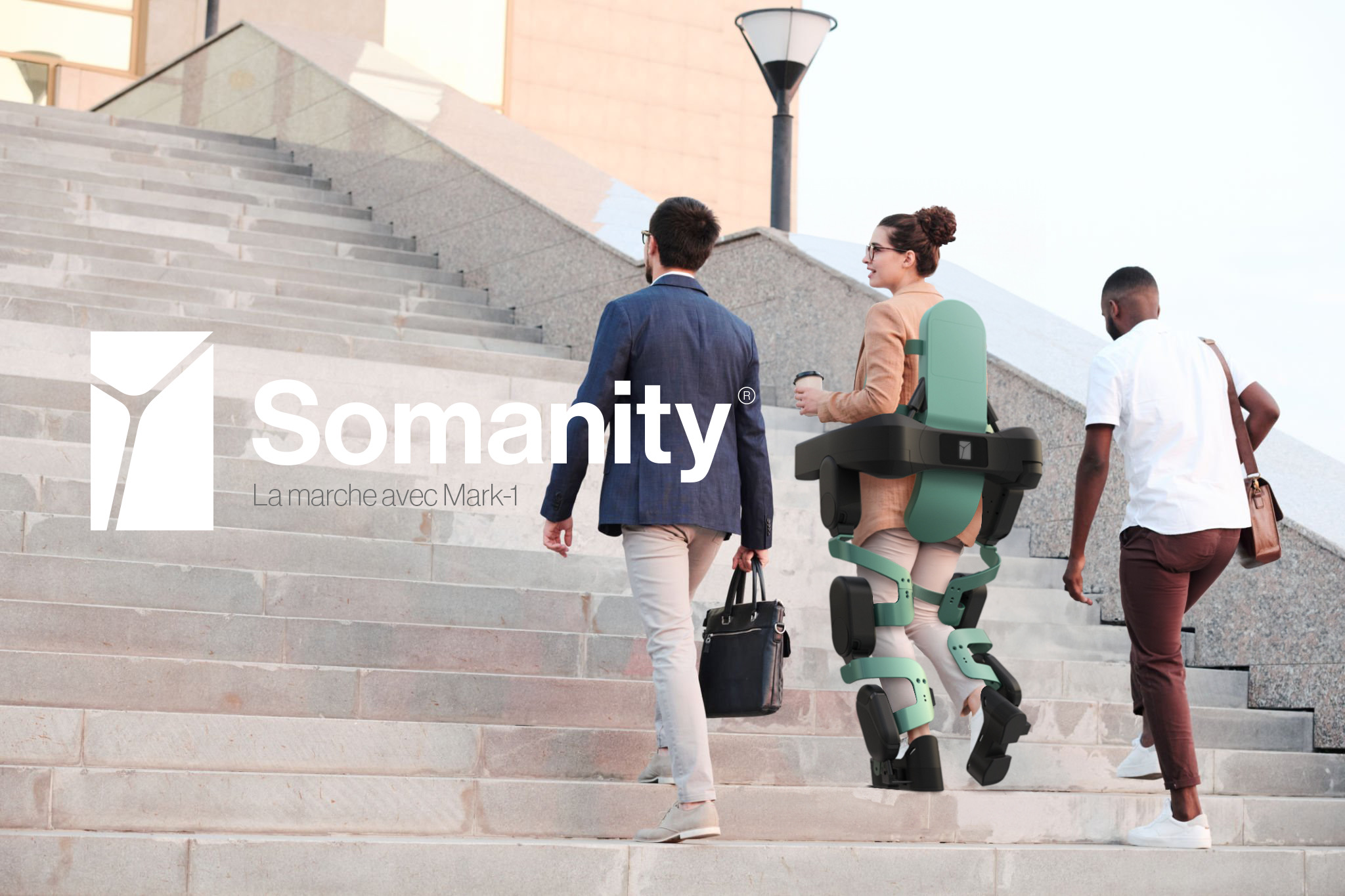
 Mathieu Merian, a 23-year-old entrepreneur, is behind an ambitious project: Somanity. This French start-up, specializing in the development of 3D-printed exoskeletons, is committed to restoring lost mobility to people with motor disabilities. The story of this initiative began in 2021, inspired by a close friend of Mathieu’s who suffers from multiple sclerosis. Faced with the limitations of devices available on the market, he decided to design accessible and individualized solutions. Somanity benefited from the support of SKEMA Entrepreneur, the incubator of SKEMA Business School. Under his leadership, Somanity has won several distinctions, including the first prize at the Victoires by GARANCE in November 2023, recognizing the innovation of its exoskeletons. A finalist in the BFMTV Academy in 2024, the company is now recognized as a key player in the field of cutting-edge technologies applied to health and industry.
Somanity’s main objective remains to make its exoskeletons more affordable and personalized, in order to improve users’ quality of life and prevent musculoskeletal disorders among workers.
 A Dual Strategic Positioning
Somanity’s distinctive feature lies in its two-pronged approach. The first part of its activities concerns the distribution of exoskeletons for industrial use. They are designed to relieve employees during the handling of heavy loads, aiming to prevent musculoskeletal disorders and reduce sick leave.
“We are not manufacturers in this segment, but distributors. Each profession has specific needs, and we select the best devices according to our clients’ expectations,” explains Mathieu. Among these companies are major names such as DHL (in testing), as well as Leroy Merlin (in testing), but also small and medium-sized enterprises.
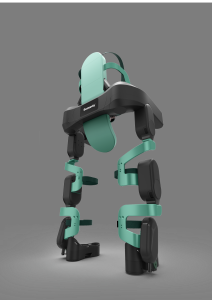
The second aspect, and the heart of Somanity’s mission, is the research and development of medical exoskeletons. The goal is to enable people with motor disabilities to regain a certain degree of autonomy. “The idea is to manufacture accessible devices adapted to each patient, while maintaining reasonable costs for products of this magnitude,” he specifies.
Artificial Intelligence at the Heart of Solutions
In this company, artificial intelligence occupies an essential place, both for industrial and medical solutions. Regarding industrial devices, AI-driven systems are being developed to monitor their use. These tools make it possible to measure the weight lifted, verify proper movements, and anticipate risks related to improper handling.
On the medical front, AI offers a multitude of possibilities. “We are working on an exoskeleton that adapts to each user’s specific disability. Even for an identical pathology, needs vary from one patient to another. Thanks to AI, the device can learn from previous users and refine its settings accordingly.”
Environmental analysis is key. Exoskeletons equipped with artificial intelligence automatically determine obstacles, such as stairs, and adjust their movements without the user having to worry about it. They are considering empathetic features to support people with disabilities in their daily lives, for example by detecting signs of fatigue or stress.
“In the industrial sector, the unique aspect is linked to the need to protect employees while being profitable. The non-motorized exoskeletons we distribute are equipped with sensors connected to an AI platform. This allows us to precisely track their handling: how much weight was lifted, whether movements were performed correctly, or whether the user followed safety protocols. This preventive monitoring helps companies reduce sick leave related to musculoskeletal disorders and evaluate the effectiveness of equipment in the field. Developments are underway and will be ready by the end of 2025.”
AI Solutions Used
“We have developed our own specialized language models to avoid depending on external tools such as ChatGPT. On the technical side, we analyze gait cycle data to optimize the development of exoskeletons.”
Challenges and Funding
Like any innovative start-up, Somanity faces numerous challenges, particularly that of funding. Mathieu admits that finding investors in France remains complex. “We are too advanced for seed funding, but not yet ready for Series A financing. We are in this ‘valley of death’ where it is difficult to convince investors.”
The duality of Somanity’s activities nevertheless helps overcome this difficulty. The revenue generated by the distribution of industrial exoskeletons helps support research on medical devices. However, the cost of necessary certifications in the medical field remains high. Obtaining CE markings and regulatory validations can represent up to one and a half million euros, which constitutes a significant obstacle for a young company.
For Mathieu, Somanity’s mission goes beyond simply seeking profitability. “We want to make these technologies accessible to people who really need them, even if it means selling certain products at very low margins.”
This positioning drives the company to innovate in its management. Internally, artificial intelligence tools are used to optimize operations and reduce costs. For example, specific language models allow for quick analysis of complex data from clinical trials. “Before, analyzing a gait cycle required processing Excel files with millions of rows. Today, it takes us 30 seconds,” Mathieu says with satisfaction.
An Open Source Philosophy
Accessibility of technologies is a priority for Somanity. Part of the exoskeleton shells will be available as open source, allowing users to 3D print them and customize them according to their needs. “We believe that technologies that change the world should be affordable for everyone, not only in terms of price, but also in terms of use.”
This choice reflects a collaborative vision, where innovation is shared to accelerate progress.
Perspectives and Advice for Entrepreneurs
Asked about the next steps, Mathieu mentions the active search for funding and the development of functional prototypes. Collaborations with university hospital centers make it possible to test exoskeletons in real medical environments and refine their design.
For SMEs hesitant to integrate artificial intelligence into their business, Mathieu advises not to be afraid to take the plunge. “AI can seem complex at first, but it frees up time by automating repetitive tasks, allowing teams to focus on what really matters.”
A Human and Technological Commitment
Somanity embodies this generation of companies where innovation serves a profoundly human mission. Through solutions combining 3D printing, artificial intelligence, and medical expertise, this start-up is redefining what mobility means, while reminding us that technology must above all serve real needs.
“This project is a passion. The challenges are numerous, but the satisfaction of seeing people regain part of their autonomy surpasses all difficulties,” Mathieu concludes with conviction.