 Fabrice Morenon is CEO of SNCF Hubs & Connexions. This SNCF subsidiary oversees international development and strategic management of train stations, including Monaco–Monte-Carlo station. In December 2024, he was awarded the Legion of Honour for his remarkable contributions to public service and railway innovation. Under his leadership, Monaco station has been transformed into a laboratory for modern solutions, integrating artificial intelligence (AI) to optimize its operations.
AI to Rethink Passenger Flow
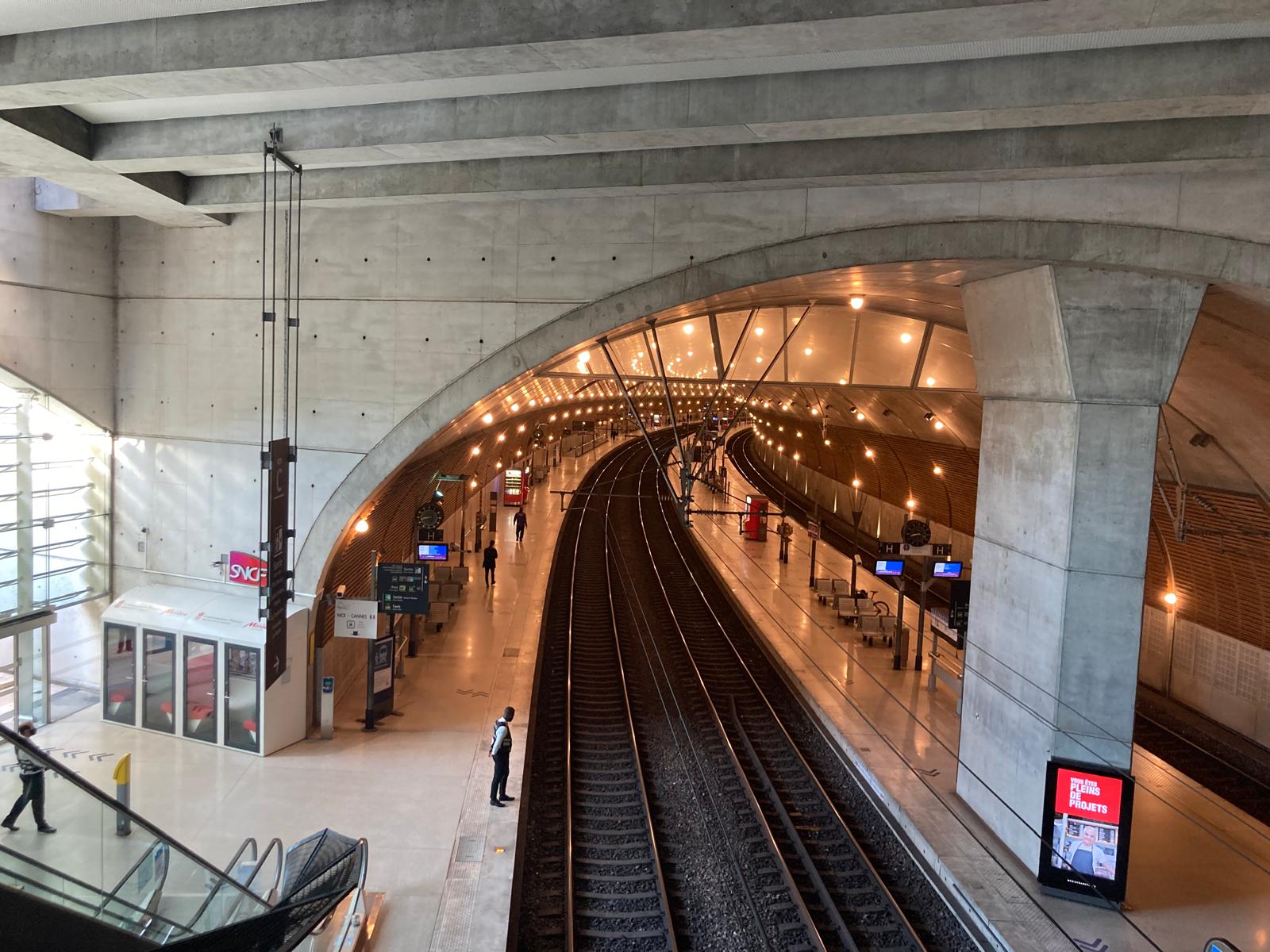
Monaco station, the third largest station in the southern region, welcomes approximately 8 million passengers per year. Managing these flows represents a daily challenge, particularly during major sporting events such as the Monaco Grand Prix. To meet these requirements, Fabrice Morenon introduced a real-time counting system based on an artificial intelligence algorithm.
Developed in partnership with the Princely Government and XXII Group, this system enables precise measurement of passenger density and movements. In less than a year, he carried out an initial deployment on part of the station. After validating the results, he extended it to the entire site. This solution offers remarkable precision, with a margin of error of approximately 5%.
XXII, a French start-up founded in 2015, specializes in computer vision applied to artificial intelligence. It develops real-time video stream analysis solutions in sectors such as security, retail, industry and logistics.
The company places great emphasis on respecting strict ethics in the use of artificial intelligence, notably excluding facial recognition from its features, in order to avoid any discriminatory drift.
AI-Based Flow Counting
The initial objective addressed two major issues: security and space optimization. The system uses sensors installed throughout the station to capture data on passenger movements and density. This data is subsequently analyzed by an algorithm that provides accurate and up-to-date information to the second. It can detect how many people are on a specific platform or in a defined area, measuring density per square meter. It tracks entries and exits, making it possible to know the number of people in the station at any time.
These features are integrated into a proactive vision where data is used to make real-time decisions to ensure user safety and optimize their experience.
Concrete Applications
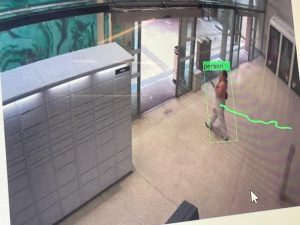 During events such as the Grand Prix or sporting competitions, the station can be saturated. The system automatically signals when the maximum capacity of an area is reached, allowing for rapid intervention. Information is transmitted to firefighters and law enforcement to coordinate security measures, such as restricting entries to the station.
They also carry out continuous monitoring: regular tests are performed to validate data reliability. Teams compare AI results with manual counts to ensure consistent accuracy.
Flow counting is the foundation of a set of strategic applications that transform the daily management of the station.
The collected data enables better resource adjustment based on actual needs. For example, for preventive maintenance: The most frequented areas, identified through counting, are prioritized for maintenance. It also allows for continuous improvement of signage: passenger movements are analyzed to identify friction points or poorly signposted areas. This will lead to a redesign of signage to guide passengers more effectively.
The system also offers the possibility of determining the most frequented locations, which is essential for commercial partners. This data therefore influences the location of shops and passenger services and the positioning of advertising panels, ensuring they are visible where flows are most significant.
Additionally, the system helps verify train occupancy, a crucial aspect for performance monitoring. This automation provides reliable and rapid information, thus facilitating reporting to authorities and partners.
A Digital Twin for Integrated Management
Another key project supervised by Fabrice Morenon is the development of a digital twin, in collaboration with the industrial company Akila. This station model aims to centralize all operations on a single digital platform. Each piece of equipment, such as elevators and escalators, is integrated into the digital twin.
One of the digital twin’s objectives is to reduce the administrative burden on teams. For example, if a problem is detected on an escalator, the AI produces a detailed report and proposes a solution. This saves several hours per week for employees, who can focus on higher value-added tasks.
AI in Service of Security
Artificial intelligence is not only used for flows and equipment management. Fabrice Morenon also envisions uses in security matters, particularly to prevent dangerous behaviors or quickly identify incidents.
Several use cases are under development, such as flame or smoke detection: AI is capable of detecting the first signs of a fire by scanning camera images in real time. Track surveillance: If a person crosses the tracks, the system triggers an immediate alert, allowing for instant intervention. In the long term, AI could be used to analyze suspicious behavior and alert security teams to reduce criminal activity.
A Collaborative and Inclusive Approach
Fabrice Morenon emphasizes the importance of co-construction in these projects. AI solutions have been developed in partnership with local authorities, technical experts and station employees. This collaboration ensures that the tools meet the real needs of users.
Employees have been trained from the beginning to understand how the tools work and participate in their design. For example, interfaces and dashboards were designed taking into account feedback from field agents to create an intuitive user interface, adapted to their daily needs. Agents now have real-time access to data on their tablets. This simplification improves their efficiency and allows them to focus on higher value-added tasks.
By collaborating with experts, training his teams and placing people at the center of innovation, Fabrice Morenon is making Monaco station a model of modernity. His initiatives show that with a well-thought-out strategy, AI can become a major asset in the railway industry.