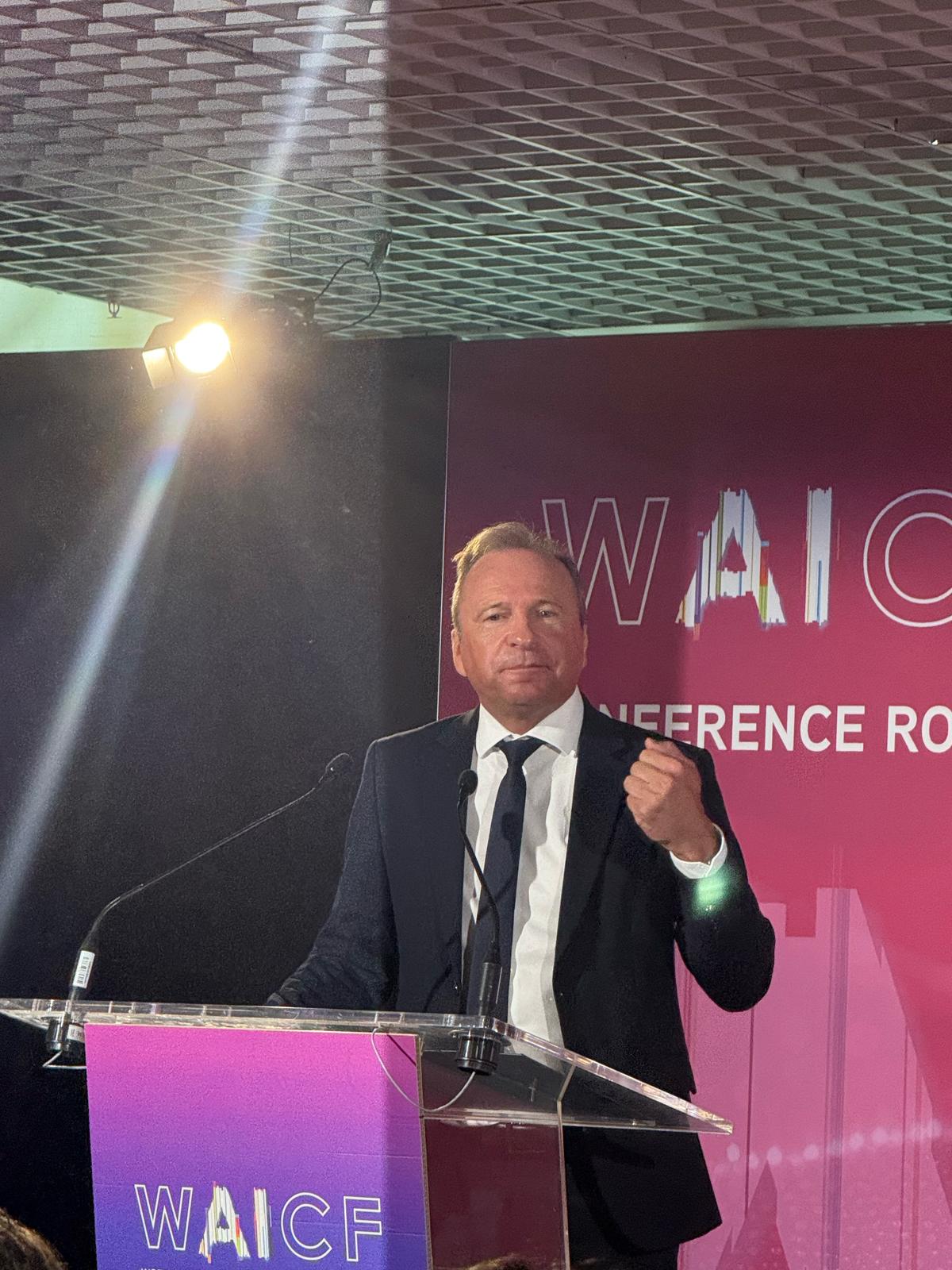
Gilles Roth, Luxembourg’s Minister of Finance, emphasized an often underestimated aspect of AI development in Europe: funding. Faced with fierce international competition, where the United States and China are investing massively, Europe must urgently bridge its gap in venture capital and public and private funding. In his speech, Gilles Roth stressed the importance of a proactive and bold approach to make Europe a true driver of AI innovation. He highlighted the key role that Luxembourg can play as a financial hub capable of channeling investments toward high-potential AI projects. Here’s a look back at the main points of his intervention and the challenges Europe must overcome to remain competitive in the race for artificial intelligence.
A Worrying Investment Gap for Europe
The Luxembourg Finance Minister’s intervention began with a stark observation: Europe has a worrying lag in AI investments. Yann LeCun, AI pioneer and Chief AI Scientist at Meta, had already raised the alarm at the AI Action Summit in Paris earlier this week. He denounced the lack of available funding for European startups and research laboratories.
According to him, Europe faces an annual deficit of 800 billion euros in investment in innovation and infrastructure. This lag is all the more concerning as, during this time, the United States and China are deploying colossal amounts to accelerate their AI advances. Elon Musk himself recently pointed out European timidity in risk-taking and funding. Far from denying these criticisms, Gilles Roth instead calls for transforming this fear into confidence and boldness. He reminds us that AI is not just a tool for economic transformation, but a strategic lever for European competitiveness and sovereignty. He thus advocates for a more ambitious investment policy to create an environment conducive to innovation and the development of companies in the sector.
Luxembourg, a Financial Hub Serving European AI
If Europe wants to close its gap, it must structure an ecosystem capable of attracting and mobilizing capital. This is where Luxembourg intends to play a central role. With a financial sector managing nearly 6,000 billion euros in assets, the country has a major advantage in directing investments toward artificial intelligence. The minister emphasized the need to develop financial vehicles suited to the needs of AI startups, particularly by facilitating access to venture capital and growth equity funds. According to him, Europe must relax its regulations to allow investors to take more risks, without compromising market stability. He also discussed the growing role of AI in finance itself. In Luxembourg, several initiatives have been implemented to integrate AI into asset management and financial market analysis. The Commission de Surveillance du Secteur Financier (CSSF) has, for example, adopted the Clarence cloud platform, which optimizes financial supervision through artificial intelligence. Other collaborations between universities and banks aim to develop advanced algorithms for risk management and investment optimization.
Removing Regulatory Barriers to Foster Innovation
Another key point in Gilles Roth’s speech was the need to rethink regulation in Europe. While the AI Act adopted by the European Union guarantees an ethical and secure framework for the development of artificial intelligence, it must not hinder innovation. The minister acknowledged that Europe has often tended to prioritize regulation over competitiveness. He emphasized that, while data protection and transparency are crucial, they must not prevent European companies from competing with their American and Asian counterparts. He thus calls for a reduction in bureaucracy and a simplification of procedures for startups in the sector.
According to him, Europe must find a balance between regulation and economic dynamism. He proposes the establishment of a single venture capital market, allowing AI startups to access funding more easily, regardless of their country of origin. He also advocates for tax incentives favoring investments in future technologies.
Essential European Cooperation
One of the strong messages from the Luxembourg minister was the importance of European cooperation in AI development. He insists that innovation must not be confined to a single country, but must be part of a collective dynamic. He takes the example of France, which has established itself as a major AI hub in Europe thanks to its network of research laboratories and dynamic startups. Germany, for its part, excels in integrating AI into the industrial sector. Luxembourg, meanwhile, offers unique expertise in financing and investment. By combining these strengths, Europe can truly compete with the world’s major powers. The minister also discussed the need to intensify public-private partnerships. He calls for strengthening synergies between research centers, companies and investors to accelerate the development and adoption of AI in Europe.
AI and Finance, an Inseparable Duo for Europe’s Future
In concluding his speech, Gilles Roth reminded us that AI and finance are intrinsically linked. For Europe to become an AI leader, it must absolutely remove the financial barriers hindering its development. Investment in AI must not be perceived as a mere expense, but as a driver of economic growth and sovereignty. He urges European leaders to show boldness and to believe in the continent’s ability to innovate. He reminds us that AI is a unique opportunity to shape the future and that Europe must seize it without fear. “We must not approach the future with fear. Europe must regain the audacity to believe in itself.” This optimistic and proactive message reflects well the spirit of WAICF 2025. Europe wants to play a central role in the artificial intelligence revolution, by mobilizing all its forces—human, technological and financial—to build an ambitious and competitive future.
The challenge is clear: without funding, no innovation. If Europe wants to establish itself in the global AI race, it must absolutely structure an ecosystem favorable to investment and risk-taking. Luxembourg positions itself as a key player in this transformation, ready to channel capital toward the most promising AI projects. But this dynamic can only work if all European countries unite their efforts. The future of AI in Europe will therefore depend on its ability to combine smart regulation, entrepreneurial boldness and financial mobilization.