
 In Monaco, a conference laid bare the legal, political, and criminal tensions within the digital ecosystem
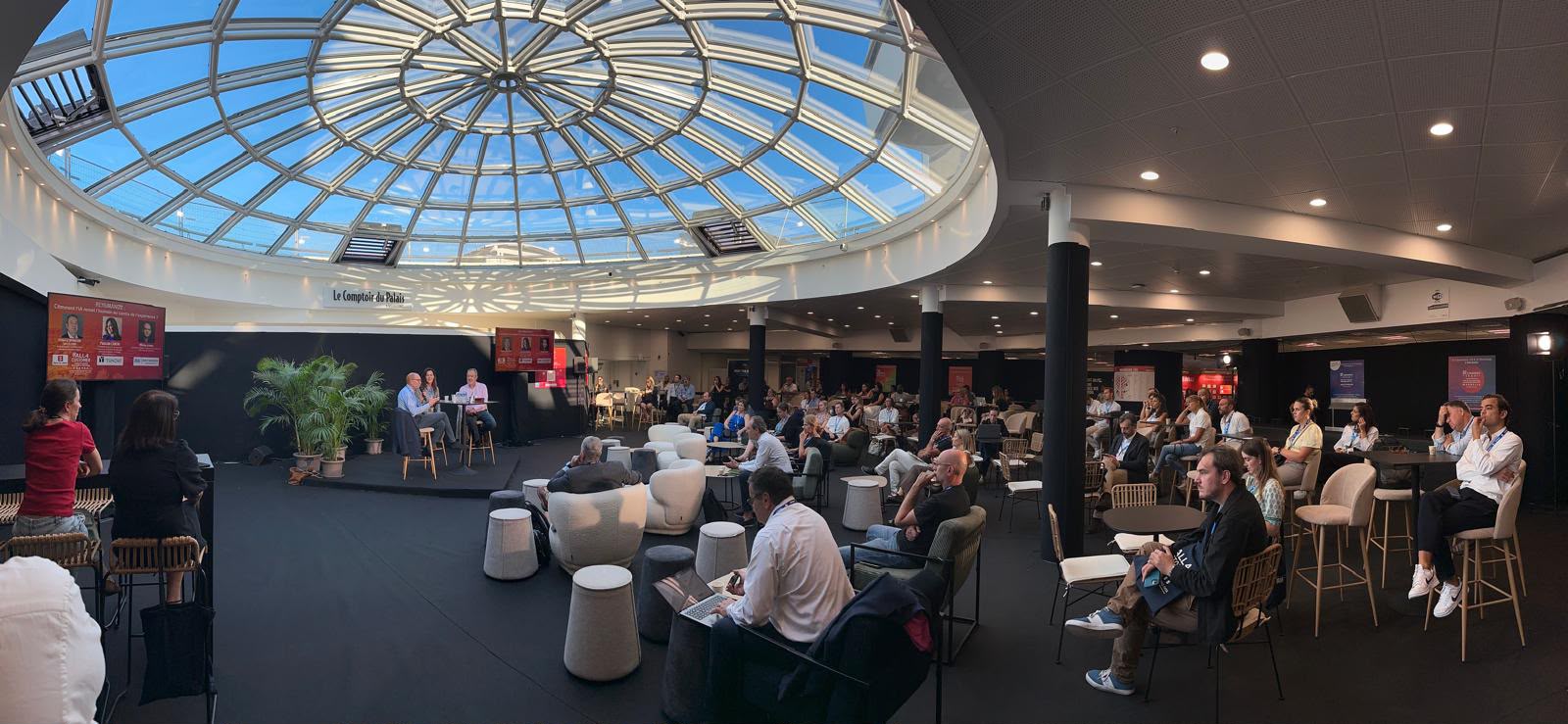
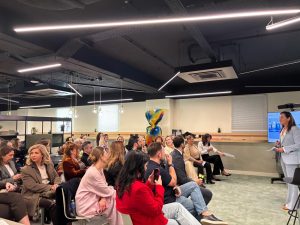
On March 19 in Monaco, a conference dedicated to social media brought together a panel distinguished by its diversity. A legal expert, a tech entrepreneur, an academic specializing in the political effects of platforms, and a senior police official in charge of cybercrime issues shared their perspectives. Are social media still simple communication tools, or have they become power infrastructures capable of reshaping public space, influencing democracy, increasing social vulnerabilities, and reconfiguring crime?
The meeting, moderated by Pascale Caron, was part of the MWF Institute’s ongoing work—an association committed for nearly five years to knowledge transmission and organizing conferences on major contemporary issues. Behind the apparent ordinariness of the theme lay a much deeper question: who now owns our conversations, our emotions, our data, our reputations, our beliefs, and sometimes even our fears?
From the introduction, the tone was set. Social media can no longer be described as mere channels of exchange. They now structure daily life on a global scale. They shape visibility, modulate interactions, hierarchize information, and guide behavior. This shift is decisive. It is no longer just about connection. It is about influence. A video can trigger a social movement. A message can ruin a reputation in a matter of hours. An algorithm can alter how millions perceive reality. The conference was therefore not a technical debate reserved for specialists. It touched the very heart of democratic and social life.
From Connection to Attention Capture
One of the conference’s first merits was to recall an often-forgotten truth: platforms are not neutral. Each is based on its own logic, on a grammar of engagement, and on a particular economy of attention. Facebook, Instagram, LinkedIn, TikTok, X, and WhatsApp do not organize exchanges in the same way. Behind each interface lies a system of prioritization, selection, and content promotion.
The issue is not merely technological. It is economic. Major platforms thrive on captured attention. Their implicit goal is not to circulate quality information but to extend screen time, provoke reactions, and keep users in a continuous behavioral loop. In this economy, emotion often trumps reflection, conflict over nuance, impulse over deliberation.
The case of X, formerly Twitter, was cited as particularly revealing. The platform tends to favor controversies, punchlines, antagonisms, and the most polarizing comments. This structural bias is not trivial. It helps establish the idea that public debate is inherently conflictual, that visibility is earned through provocation, and that consensus is less effective than indignation. The problem is therefore not only moral. It is architectural.
LinkedIn, on the other hand, was presented as a relative counterexample. The platform would ostensibly value expertise, professional relevance, and individual credibility over mere virality. This observation, which deserves to be nuanced over time, nevertheless reveals an important truth: platforms do not all encourage the same behaviors. They do not produce the same quality of exchange or the same social effects. In other words, design influences debate.
 Law Facing a Moving Target
Invited to open the analysis segment, Maître Ilène Choukri, a Paris bar attorney specializing in digital regulation issues, delivered one of the conference’s most structured presentations. Her approach first consisted of moving beyond simplistic views. Social media, she recalled, cannot be thought of solely in terms of good or evil. They have enabled unprecedented access to speech, information, culture, and certain forms of transparency. They have also given rise to new forms of harm, harassment, manipulation, and violence.
The great legal challenge lies in the fact that social media are not simple platforms. They blend container and content, technical architecture and cognitive dynamics, software infrastructure and human behavior. Users pour their digital identity, personal data, private interactions, and public statements—sometimes those of their loved ones—into them. Publication abolishes distances, compresses temporalities, blurs boundaries between intimate and public space, and complicates the question of anonymity.
Can social media then be regulated with traditional legal tools? The answer given was cautious but firm: yes, partly, and increasingly so. The law is progressing. Actions are now possible to identify authors of illegal content. Accounts can be deactivated, platforms can be compelled to cooperate, blocking or filtering measures can be obtained, and the liability of those who allow illegal content to proliferate on their digital spaces can be engaged. Public authorities, courts, and regulators now have more robust tools than a few years ago.
The European DSA was mentioned as a major milestone. It does not solve everything, but it establishes a more demanding framework for large platforms. The central question then becomes that of their responsibility. Are they mere technical hosts, or are they becoming complicit in an addictive and potentially harmful system? The comparison with the tobacco industry in the 1990s was posed bluntly: if a company knows its system increases addiction and promotes harmful behaviors, can it still hide behind the neutrality of the tool?
This question is no longer theoretical. Ongoing lawsuits in the United States, revelations from internal documents, debates around TikTok’s addictive effects or algorithmic recommendation mechanisms show that litigation is only beginning. The law is no longer absent. It is entering the machine. Slowly, but genuinely.
 The Gamble of an Action-Oriented Social Network
Amid this often bleak diagnosis, the intervention by Axel Sategna, founder of the startup InTouch, introduced a more forward-looking perspective. His project rests on a simple but ambitious intuition: the next generation of social media should no longer maximize attention alone, but action.
His reasoning starts from a widely shared observation: current platforms exploit powerful psychological biases. Notifications, variable rewards, social inclusion, fear of missing information, search for symbolic recognition, dopamine surges linked to likes or collective approval: an entire behavioral arsenal fuels engagement. The problem, according to him, is that this psychological engineering is deployed in service of content that is often unhelpful, even deceptive.
His platform’s ambition is different. It would aim to connect the digital to real life, helping users know what to do, where, when, and with whom, based on their needs, context, and immediate environment. The application would not seek to trap individuals in an empty consumption routine but to reduce the gap between digital promises and concrete real-world possibilities.
The approach may seem idealistic in an already saturated market. Yet it raises an essential strategic question: are current giants the definitive horizon of social media? Digital history suggests otherwise. Latecomers have often supplanted established pioneers by improving usage, interface, or service logic. The debate raised by InTouch is therefore not anecdotal. It questions the possibility of a different design for digital interactions. It also poses a broader question: can platforms be built that are economically viable without being psychologically predatory?
 Social Media and Democracy: The Era of Political Infotainment
The intervention by Vanessa Landaverde, PhD and academic at the Université Côte d’Azur, shifted the debate to particularly sensitive ground: that of democracy. Her remarks powerfully demonstrated that social media do not merely disseminate politics. They profoundly alter its form, rhythm, reception, and sometimes even its nature.
Politics, she recalled, has always had a spectacular dimension. But platforms accentuate this trait by favoring the most emotional, most visible, and most immediately shareable content. The algorithm does not reward the solidity of a program or the depth of an argument. It favors content that provokes a reaction. Consequently, the logic of infotainment prevails: political information becomes an entertainment product.
The consequences are major. First, the relationship to information is transformed. A growing share of younger people no longer go through traditional press or even classic journalistic formats. News reaches them via Instagram, TikTok, or other personalized feeds. The problem is not only the loss of editorial bearings. It is the capture of attention by systems that trap users in an algorithmic bubble consistent with their initial interactions.
The cited example of a TikTok account quickly saturated with content of a single political tendency illustrates this phenomenon. Once the behavioral profile is initiated, the platform reinforces certain preferences, sometimes radicalizes perceptions, and makes access to a plurality of viewpoints more difficult. Users believe they are exploring the world. They are often exploring a filtered version of themselves.
The Romanian case cited during the conference gave this analysis very concrete scope. A political candidate with little visibility in traditional circuits reportedly saw his notoriety explode through a finely orchestrated strategy on TikTok, relying on influencers, precise social targeting, and cultural codes adapted to certain audiences. Here, the platform is not just a channel. It becomes an operator of political construction.
Disinformation completes this picture. Fake news has always existed, but it has become industrialized. Thanks to generative tools, instant dissemination capabilities, and the increasing visual credibility of falsified content, it becomes more massive, faster, and harder to contest. The danger is not only making people believe falsehoods. It is also making them doubt the truth. In democracy, this shift is formidable. It undermines trust in institutions, the media, judicial arbitration, and the very possibility of a shared fact.
 When Crime Invests the Platforms
The most striking segment was delivered by Commissioner Émilie Moreau, head of judicial police in Monaco, with extensive experience in France in cybercrime, counterterrorism, and cases involving minors. Her presentation recalled a reality too often minimized: social media are now a central terrain for crime.
The observation is clear. There is no longer any criminal network that does not use social media. They serve to gather data, spread spam, approach victims, recruit minors, organize scams, propagate violent content, and produce increasingly sophisticated impersonation mechanisms. Cyberfraud now represents a colossal financial issue for criminal organizations. It is industrialized.
The most chilling alert concerned child predation. According to the elements presented, a significant portion of child pornographic content reportedly originates from everyday photographs initially posted by parents on social media. With artificial intelligence tools, these images can be transformed, diverted, and reinjected into criminal circuits. This single fact would suffice to justify a profound overhaul of family digital practices.
Social media are also used for radical recruitment, criminal influence trafficking, or enlisting minors in violent logics. Add to this the normalization of AI-assisted fraud. Voice impersonation, deepfakes, fake profiles, hijacked numbers, emergency scenarios, impersonation of a superior, banker, or relative: the boundary between plausible and falsified is collapsing rapidly.
The commissioner’s message, however, was twofold. Yes, the threat is increasing. But yes also, law enforcement is building competence. Monaco’s public safety force has established a cyber unit. It cooperates with international actors, works with platforms, regulators, and the banking sector, and sometimes manages to freeze and repatriate diverted funds when a report is made quickly enough. Prevention, victim support, and dissemination of practical advice appear here as levers as important as repression itself.
Between Vulnerability and Collective Responsibility
What ran through the entire conference, beyond the diversity of presentations, was the idea of co-responsibility. Platforms have a responsibility for design, moderation, and cooperation. Public authorities have a responsibility for regulation, oversight, and sanction. Law enforcement has a responsibility for protection, investigation, and education. But citizens also have a decisive role to play.
This responsibility is first cultural. It requires technological maturity. It involves understanding how a platform works, how a recommendation is made, how attentional dependency arises, how an emotion can be instrumentalized, how evidence can be falsified, how a fake interlocutor can seem credible. The conference rightly emphasized this point: the real bulwark will not be solely regulatory. It will also be cognitive.
This responsibility is also educational. Young people cannot be left alone facing environments designed to capture their mental availability. Parental guidance, schools, higher education, training in discernment and digital literacy become issues of democratic sovereignty. Prohibition is not enough. We must learn to inhabit these spaces with lucidity.
Finally, this responsibility is collective. A testimony from the audience forcefully recalled this. Social media can also produce real mutual aid, useful circulation of information, concrete solidarity, and fruitful connections. During COVID, local groups enabled responses to emergencies, organized assistance, broke isolation, and recreated bonds. The digital is therefore not condemned to the worst. It becomes what we make of it, provided its architectures do not systematically encourage the most toxic.
 What Future for Social Media?
In closing, the speakers outlined several possible futures. For Axel Sategna, social media will be profoundly transformed by AI, connected objects, immersive interfaces, and new forms of integration with the real. For Vanessa Landaverde, visible platforms could become mainly showcases, while significant exchanges would shift to more private spaces. For Commissioner Émilie Moreau, the watchword remains vigilance. For Maître Ilène Choukri, hope lies in individuals building competence and reclaiming a form of personal digital sovereignty.
This pluralism of visions reflects the uncertainty of the moment. One thing, however, seems certain: tomorrow’s social media can no longer be thought of solely as communication tools. They are already places of power, economic machines, political theaters, investigation terrains, vectors of risk, but also spaces where part of our democratic future is being played out.
 The March 19 conference in Monaco had the merit of refusing simplifications. Neither knee-jerk technophobia nor naive fascination. It showed that the subject demands better than slogans. It requires law, education, technology, ethics, vigilance, and political courage. In other words, it calls for an adult understanding of the digital realm.
And this may be the most important lesson of that evening: we cannot delegate to platforms the task of organizing our relational lives, our public imaginaries, and our civic reflexes without paying the price. The real question is therefore not only what social media do to us. It is also this: what are we collectively prepared to do to avoid surrendering what is essential to them?