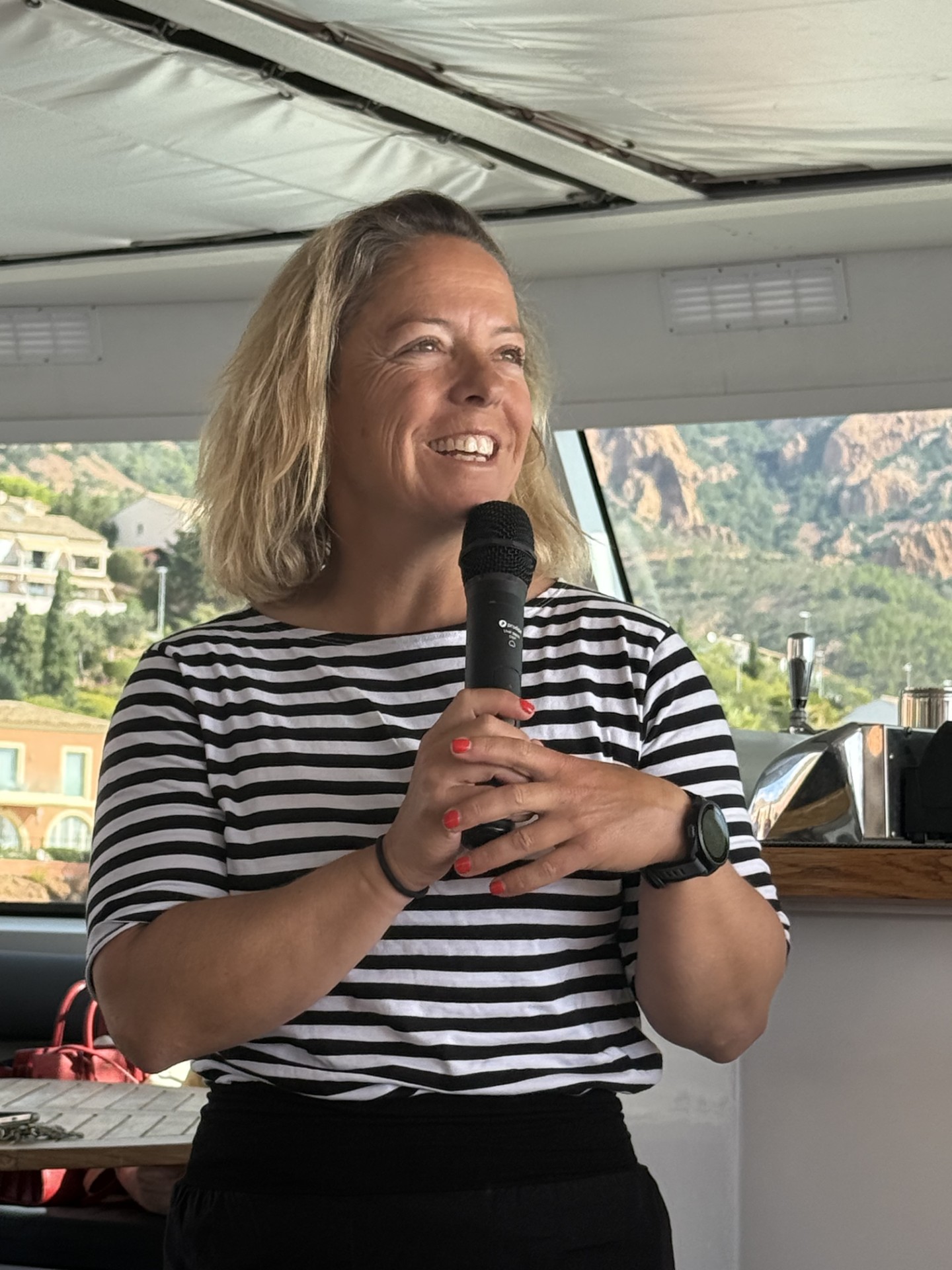

 When it comes to adopting artificial intelligence in the business world, Nil Larom, founder of Insaight, stands out for his pragmatic and human-centered approach. With over fifteen years of experience in international market strategies in the technology sector, he helps companies of all sizes refine their AI and generative AI adoption strategies, while encouraging a smooth transition for their teams. Based in Singapore but active globally, he has driven projects for companies like IBM and LG Electronics. Nil Larom is also president of La French Tech Beijing, an organization that fosters collaboration between France and China in the tech startup ecosystem. The organization works with companies and associations to enhance exploration of the Chinese tech sector and facilitate networking for French entrepreneurs in China.
He shared with us his vision on the opportunities and challenges related to generative AI, while presenting concrete solutions to meet companies’ needs.
Modernizing Businesses with AI
“We already have one and a half billion white-collar workers. Technology is advancing faster than humans, and governments aren’t keeping up. This reality will potentially lead to massive job losses and requires skill reorientation. Training employees is the priority so they remain relevant in the face of increasing automation.”
To avoid the worst, he advocates for a structured program: redefining roles, automating repetitive tasks, and enabling employees to focus on value-creating activities and competitive differentiation. “We need to equip teams so they gain competence and confidence,” he explains.
Nil has worked with diverse clients: large corporations, chambers of commerce, and public relations or marketing agencies. A typical case in a large enterprise involves modernizing the human resources department of a global financial technology company. Their immediate goal: improve the quality and speed of recruiting qualified engineers, before proceeding to other applications within their department. Four sessions were dedicated to covering AI fundamentals, relevant case studies, interactive workshops, and practical demonstrations.
Another typical case, at the SME level, involves modernizing a small public relations agency. The objective was clear: become an “AI-first agency.” To achieve this, they needed to maximize AI use to outperform competitors while enhancing service personalization and quality.
The project unfolded in several stages. First, Nil and his team assessed existing processes to identify areas for automation, such as campaign management, research, customer data analysis, and report creation. Next, they trained staff in generative AI to produce tailored content while maintaining human control over personalization.
Once the tools were integrated, they worked on redesigning internal procedures to ensure all departments used AI consistently. This included establishing clear protocols for interaction between AI and teams to maximize efficiency without compromising quality.
The results were immediate. The agency reduced time spent on repetitive tasks by 30%, while increasing customer satisfaction through enhanced personalization. “This type of transformation shows how a small structure can compete with larger players simply by adopting the right technologies and emphasizing the human factor,” Nil summarizes.
Humans at the Heart of AI
While generative AI enables work automation, Nil emphasizes the importance of human intervention. “Too many employees use AI randomly, which risks making their work generic. This inadvertently leads them to exclude themselves from the market. The lack of consistency also harms companies, which have no method to supervise either the quality or the progress of AI adoption within their ranks. Humans must be present at the beginning of a task to determine the framework in which AI will be used, as well as at the end to judge the result and verify the required parameters.”
To address this, Nil promotes targeted training: learning to use AI to increase productivity while preserving originality and enhancing added value for clients, both internally and externally. He gives the example of editorial teams that combine AI with writing skills to create personalized and impactful content.
Insaight doesn’t just provide theoretical advice. They design solutions tailored to each client’s specific needs. Whether it’s customized training and development of a modernization strategy or integration of tools into step-by-step operational procedures, his team of AI specialists handles everything. A key aspect of his work is measuring results. “Every project includes pre- and post-training assessments to ensure companies can measure improvements tangibly,” Nil specifies.
Education as a Cornerstone
Nil firmly believes that education is the cornerstone of AI sustainability in business. He is currently working on a program that will combine free and paid training, targeting the needs of both small and large companies.
His approach also includes comparing AI models from East and West. By collaborating with international organizations, he explores technological ecosystems to determine best practices adapted to each region.
Advice for SMEs?
For Nil, AI cannot simply be a tool that replaces humans, but rather a lever that strengthens their capacity to innovate. “Companies must focus on solutions that differentiate them from their competitors while empowering their teams,” he concludes.
As 80% of online information is expected to be AI-generated by the end of 2025, Nil insists on the importance of producing unique and authentic content. His work with Insaight reflects this philosophy: combining technology and humanity to create a sustainable future.