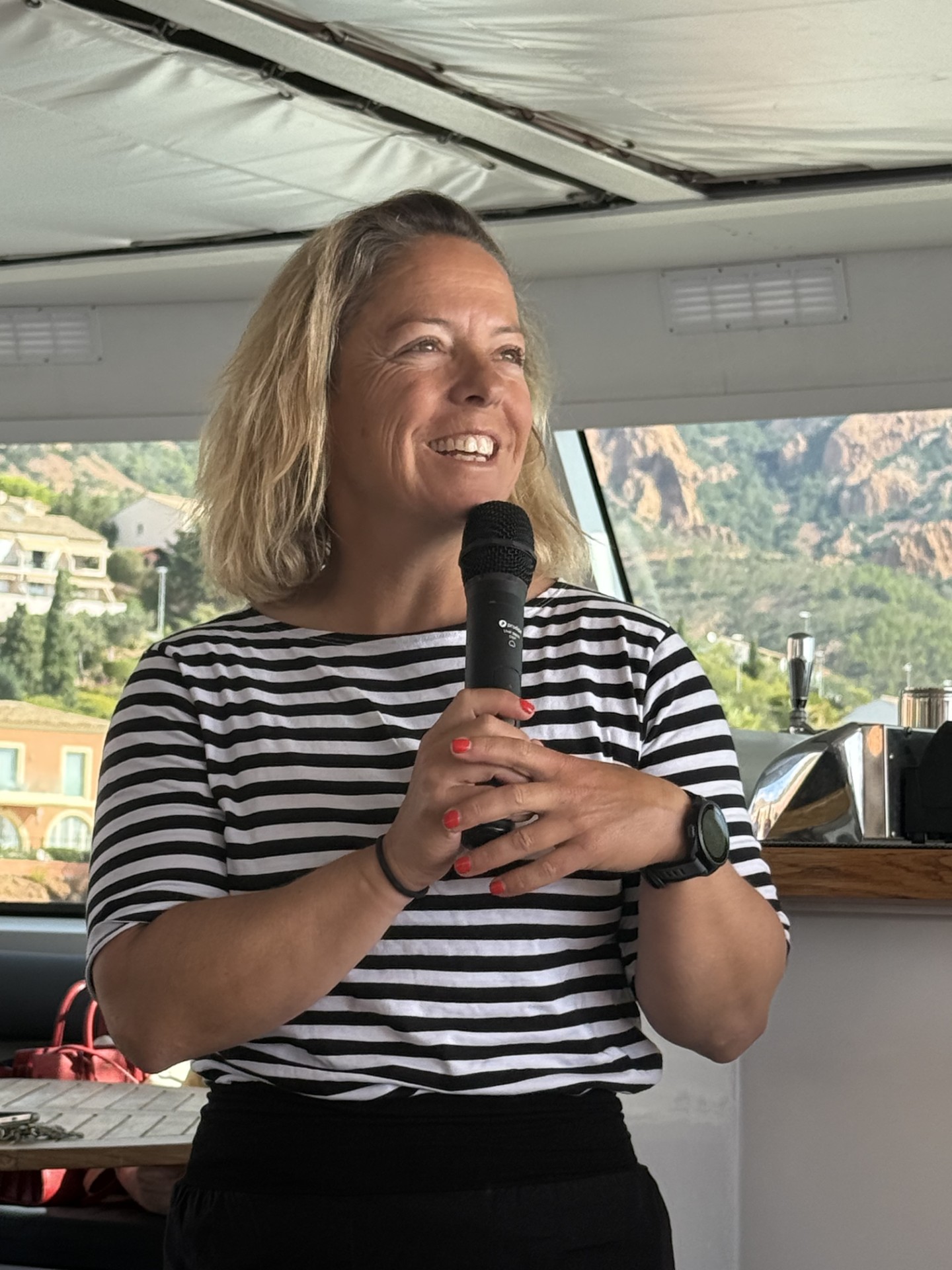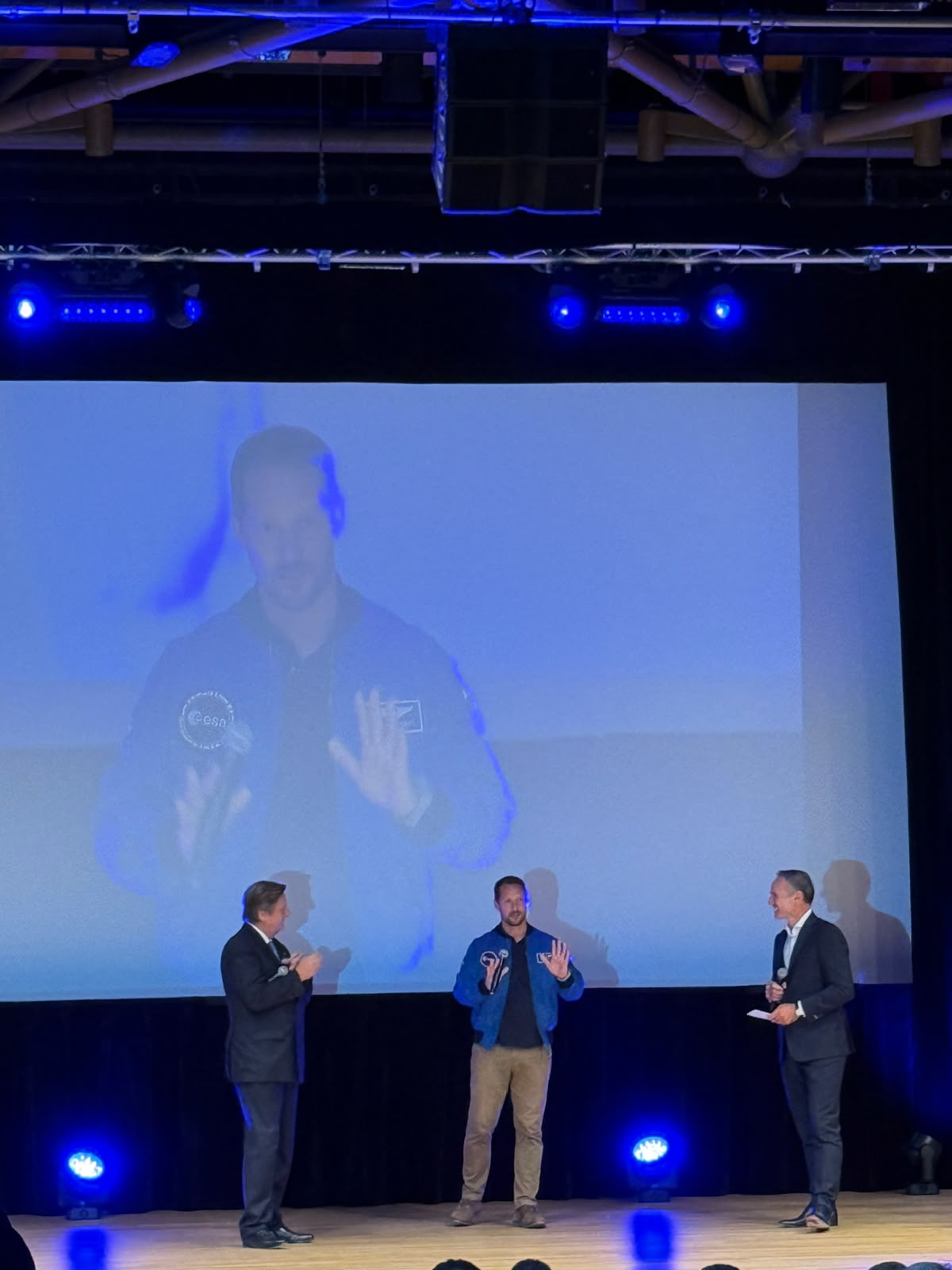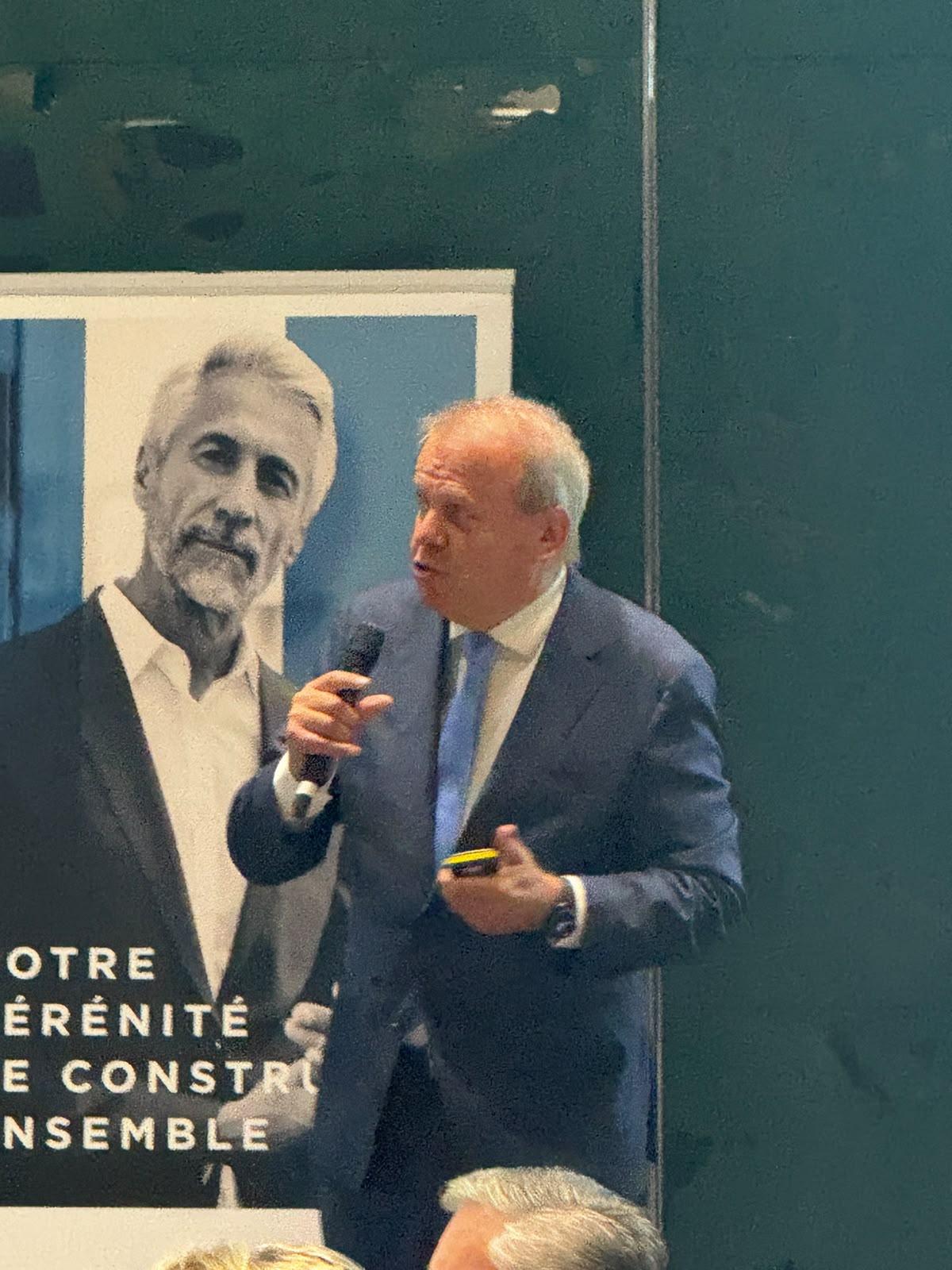
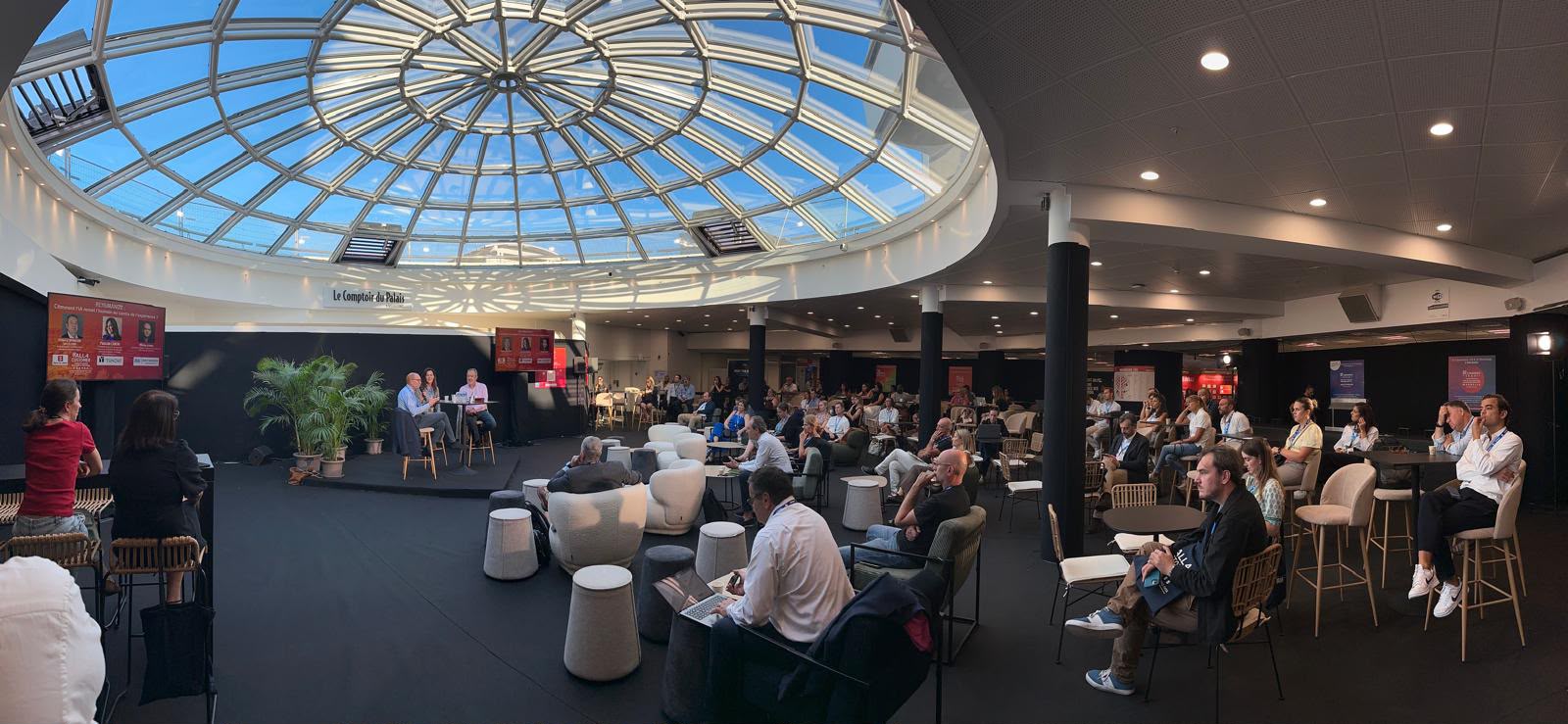
In Cannes, at the All4Customer Meetings 2026, Olivier Cohn, CEO of Best Western France, defended a pragmatic conception of artificial intelligence: automate what can be automated to restore value to moments when human presence becomes essential. His intervention raises a question that extends far beyond hospitality: as AI becomes commonplace, where will the real differentiation between companies lie ?
“We must digitalize everything we can digitalize, and humanize everything we have digitalized.”
The formula chosen by Olivier Cohn summarizes the line he defends in the face of artificial intelligence acceleration. On September 16, 2026, at the Palais des Festivals et des Congrès in Cannes, we gathered with Thierry Spencer for the plenary conference “REHUMANIZE: how AI puts humanity back at the center of experience.” The subject might seem paradoxical. The more companies automate customer relations, the more they must precisely determine the moments when human intervention becomes essential.
CEO of Best Western France, Olivier Cohn observes this transformation with the perspective of twenty-six years spent in hospitality. He has witnessed the succession of the Internet, booking platforms, mobile, and now artificial intelligence. With each of these disruptions returns the same question about the place that will remain for humans. Olivier Cohn reverses the question:
“the challenge is to determine the moments when humans become indispensable.”
This shift is essential. It is no longer about defending humans against technology, but about deciding where each produces the greatest value.
Not all interactions have the same value
The example he gives is deliberately simple. A guest looking for their Wi-Fi code at two in the morning wants an immediate answer. An assistant can perfectly provide it. But when a room is not ready, when a situation becomes complex, or when a guest needs reassurance, the nature of the interaction changes. “They want to be heard,” summarizes Olivier Cohn. Information is no longer enough. It requires understanding a situation, its context, sometimes its emotional character, then providing a response that no longer relates solely to accuracy.
This distinction seems fundamental to me. For several years, companies primarily sought to identify what they could automate. AI now forces us to ask a complementary question: in which situations does human intervention create particular value? The approach defended by Olivier Cohn therefore does not consist of artificially preserving human presence everywhere. It leads to automating the repetitive and the immediate to reserve more human attention for situations that require listening, understanding, or discernment.
Eighteen points that question the race to automation
Olivier Cohn shared during his intervention a figure that catches attention: 73.6% satisfaction when AI and humans intervene in the journey, versus 55.6% in a 100% AI journey, an 18-point gap.
“This is not an opinion on the place of humans. It is a measurement,” he emphasizes.
These figures must nevertheless be interpreted with necessary methodological caution. Without having the complete protocol, sample size, and precise measurement conditions here, they do not allow generalizing the superiority of a hybrid model to all situations. They do, however, raise a strategic question: does the maximum automation rate really constitute the right performance indicator? A high rate can reflect technological success without guaranteeing a satisfactory customer experience.
Olivier Cohn formulates the alternative differently:
“The challenge is not to choose between technology and humans.”
It is about determining what can be entrusted to technology so that humans can bring greater value. This logic shifts the debate from substitution to orchestration.
The handoff becomes a strategic issue
It is from this reflection that I proposed during the conference another reading framework, that of the “human guarantee.” It does not mean that an advisor should control every response produced by artificial intelligence. It consists of guaranteeing that a person can take over when the complexity, risk, ambiguity, or vulnerability of the situation requires it.
Three dimensions seem particularly useful to me: the complexity of the situation, its level of risk, and its strategic or relational value. A simple, documented, and low-risk request can be automated. When these dimensions increase, the transition to human must become possible. Still, this transition must actually work. A customer transferred to an advisor should not have to restart their entire story. The context, information already gathered, and reason for transfer must follow the conversation.
I proposed in this regard a still exploratory indicator: the “missed transfer rate,” that is, situations in which AI should have handed off but did not. This measurement would shift attention from the automation rate alone to the quality of articulation between AI and collaborators.
Time saved does not reinvest itself
This is probably the point on which our analyses most directly converge. Olivier Cohn summarizes his approach in a few verbs: automate the repetitive, simplify what can be, respond immediately when the request is simple, then use the time saved to better welcome, listen, advise, and reassure. He particularly insists on a phrase that should catch the attention of leaders:
“Time freed by technology does not reinvest itself.”
This phrase touches the heart of organizational transformation. A company can use the productivity gains generated by AI to reduce its costs, absorb more volume, improve its margins, train its collaborators, develop new services, or strengthen customer relations. Technology creates a possibility, but it does not decide the destination of this capacity. As Olivier Cohn says:
“It is a management decision.”
This is precisely the conviction that runs through my work within EntrepreneurIA: “Artificial intelligence creates capacity. Organizations create value.” An hour saved does not automatically become an hour of value. It becomes so when the organization chooses what it wants to do with it, organizes this reinvestment, and measures its effects.
Best Western, or the difficulty of transforming without imposing
This responsibility takes on a particular dimension at Best Western France. The network supports more than 335 independent hoteliers. Olivier Cohn makes it clear: these are entrepreneurs who cannot be brought into a transformation simply because it was decided from headquarters. You must “demonstrate its usefulness, provide concrete solutions, and allow everyone to appropriate them.”
The cooperative model thus highlights a reality often underestimated in artificial intelligence projects: technological transformation relies as much on appropriation as on solution performance. In an organization composed of independent entrepreneurs, the ability to demonstrate value, convince, and bring out concrete uses becomes a condition for success.
This observation aligns with what I observe through my interviews with entrepreneurs and leaders. The difficulties of AI projects are rarely exclusively technological. AI often acts as a revealer of the real organization: imperfect data, complex processes, poorly defined responsibilities, insufficiently documented business knowledge. An AI culture therefore does not only consist of learning to use tools. It requires knowing what is delegated, what is controlled, and who retains decision-making responsibility.
Fewer human interactions, but more humanity?
As simple requests are handled by automated systems, human collaborators will mechanically recover a higher proportion of complex situations: exceptions, misunderstandings, complaints, disputes, or emotional situations. Automation can thus reduce the number of human interactions while increasing their average difficulty.
Olivier Cohn summarizes this paradox with a particularly strong formula:
“Fewer human interactions, perhaps. But much more humanity in each interaction.”
Behind this phrase emerges a profound transformation of customer relations professions. Collaborators will probably less often deliver standard information and more often understand a situation, exercise their judgment, manage an emotion, or make a decision in an uncertain context.
This requires training them, but also giving them the necessary autonomy. Without adapted skills and decision-making margins, the company could automate easy situations while concentrating complexity on inadequately prepared teams. Rehumanizing the experience therefore does not mechanically result from introducing AI. It is an organizational choice.
When technology becomes commonplace, women and men make the difference
Olivier Cohn’s conclusion is probably the most important. AI will progress, become more efficient and more accessible. As companies have comparable technologies, it will also become “probably less differentiating.” From then on, he asks, what will make the difference? His answer is immediate: “Women and men.”
He specifies what he means by that: their ability to understand a situation, to have the right attention, and to create that little something that a guest will remember long after leaving their hotel. This vision is profoundly consistent with hospitality, but it extends beyond this sector. As AI standardizes access to certain technological capabilities, differentiation could shift toward the quality of relationship, judgment, and attention.
My analysis extends this intuition to the organizational terrain. For this human quality to truly express itself, the company must create the conditions that make it possible: skills, autonomy, governance, process quality, and context circulation between AI and collaborators. Technology can free up capacity. It does not alone create attention, discernment, or trust.
At the end of the conference, Thierry Spencer asked me if Olivier Cohn corresponded to what we call, in our book, an “EntrepreneurIA.” I answered positively. Not for the place given to AI at Best Western, but for the approach: starting from concrete problems, experimenting, measuring created value, and knowing what we do not wish to delegate.
The debate is therefore no longer only about knowing how far we can automate. It consists of determining what we want to automate, what we do with the time thus freed, and which moments of the relationship we want to preserve. Olivier Cohn ultimately formulates this ambition as a reflection on “the relationship we want to build with our customers.” This is probably where the real challenge of AI’s next phase lies: not only in what machines will know how to do, but in the choices organizations will make with this new capacity.