ENTREPRENEURIA | ANALYSIS
Robotics, digital twins, predictive analysis and knowledge transfer: what the first EntrepreneurIA interviews teach us about value creation in industry.
Since the arrival of ChatGPT, conversational assistants and content generation tools have occupied a large part of the debate on artificial intelligence. In companies, this attention is understandable: these applications are accessible and their effects are immediately visible. But they do not sum up the ongoing transformations, particularly in industry.
In a factory, technical equipment or infrastructure, AI can analyze images, interpret sensor data, predict failure or adjust an operation. It then intervenes in environments where an error can compromise quality, disrupt production or affect safety. The challenge is not to produce a convincing answer, but to contribute to a reliable decision or action.
My interviews for EntrepreneurIA led me to explore these uses in very different sectors. Inbolt, Akila, XXII, Bioceanor and Les Ateliers de France provide five complementary insights. The projects have neither the same maturity nor the same objectives. Yet they allow us to ask a common question: under what conditions does artificial intelligence become useful for industrial work?
Inbolt: adapting the robot to production reality
In my interview with Rudy Cohen, co-founder of Inbolt, we addressed a well-known limitation of industrial automation: the difficulty of evolving robots programmed to repeat precise trajectories. When the position of parts varies, a new configuration may be necessary. This rigidity complicates the automation of operations where conditions change.
Inbolt develops a solution that combines 3D vision and algorithms to guide robots based on what they observe. Images are interpreted to adapt movements to the actual position of parts. The objective is to make certain operations more flexible while respecting pace and precision constraints. In 2026, the company announced a new funding round, confirming the continuation of its development.
Scaling remains a distinct issue from technical demonstration. A production line cannot interrupt its operations with every model or parameter change. Teams must be able to diagnose a defect, regain control and understand why a system proposes a correction. For a manager, the question relates as much to deployment organization as to technology performance.
This case reminds us that AI does not make the requirements of the industrial environment disappear. Response time, measurement reliability, movement safety and integration with existing equipment remain decisive. A robot that can recognize a situation only constitutes progress if this capability translates into a measurable improvement in operations.
Akila and XXII: data to better operate infrastructure
Monaco–Monte-Carlo station constitutes another observation field. During my interview with Fabrice Morenon, head of SNCF Hubs & Connexions, we examined the uses of computer vision in analyzing passenger flows. XXII’s solutions make it possible to exploit information from images to better understand traffic and organize certain aspects of operations.
The digital twin project conducted with Akila follows a complementary logic. It brings together a representation of the infrastructure and data related to equipment, maintenance or energy. Its value does not lie solely in three-dimensional visualization: it lies in the possibility of bringing together previously separate information and helping teams interpret what is happening in the field.
In a feedback report published in October 2026, SNCF Hub & Connexionx reports operational benefits and announced energy savings of 6 to 7%. These results are those presented by the partners and not an independent measurement. They nevertheless show the type of benefit an operator seeks to establish: better know a building, adjust settings and improve decisions. Here again, sensors and models are not enough. Reliable data and teams able to use them are needed.
Bioceanor: predicting water evolution in aquaculture
With Samuel Dupont, co-founder of Bioceanor, we addressed artificial intelligence in an environment where physical and biological variations can have immediate consequences. The company combines sensors and predictive models to monitor water quality in aquaculture farms. Monitored parameters include dissolved oxygen, temperature, pH or turbidity.
The interest is not just to display a measurement. It is about anticipating its evolution early enough to allow the farmer to act. Samuel Dupont described to me an episode in Chile during which an oxygen drop would have been anticipated forty-eight hours in advance. This example comes from his testimony and should not be presented as an independently audited result.
Since this interview, Bioceanor continues its activities and notably presents measurement, forecasting and data analysis offers. The case is interesting for a simple reason: the choice of AI stems from an operational problem. Sensor quality, biological knowledge and the operator’s ability to react matter as much as model performance.
Les Ateliers de France: industry also relies on expertise
The interview with Sébastien Cossin, executive at Groupe Ateliers de France, leads to very different ground: heritage restoration and art crafts. These projects involve numerous specialties, with significant coordination and traceability constraints. AI can help analyze reports, bring information together and spot certain discrepancies in intervention monitoring.
But our exchange mainly raised the question of transmission. Certain gestures are mastered after years of practice. Their learning goes through observation, materials and experience, all elements difficult to recreate in a procedure. Les Ateliers de France document techniques using videos, photographs and written materials. Uses of AI to facilitate access to this professional memory are being considered; this is a development perspective and not an already generalized system.
This reflection also concerns industrial companies facing the departure of experienced employees and the scarcity of certain qualifications. AI does not replace a professional’s expertise. It can, under certain conditions, help organize knowledge and support its transmission. It is a question of skills as much as technology.
From technical capability to industrial value
These examples do not demonstrate that all industrial companies already derive significant gains from AI. They rather show the diversity of problems to which it can be applied: robot flexibility, station operation, farm monitoring or site coordination. Their comparison reveals several common conditions.
The first is defining the need. A technology only has value if the company knows how to specify what it seeks to improve. The second relates to data: in industry, these often come from old equipment, sensors, business software and heterogeneous documents. Their quality and context of use directly influence results.
The third condition is organizational. Between a convincing pilot and sustainable deployment, model maintenance, cybersecurity, operational safety, responsibilities and team ownership must be addressed. Integration costs can weigh more than those of the algorithm. Benefits must also be measured without automatically attributing them to AI when several changes occurred simultaneously.
The economic assessment deserves to be addressed without shortcuts. A reduction in energy consumption may be linked to a change in settings, improved maintenance or a change in activity volumes. The measurement must therefore define a point of comparison and explain what was taken into account. Suppliers have an interest in documenting their performance; client companies must be able to discuss the assumptions and limitations.
For French SMEs and mid-caps, this reading is particularly useful. It invites starting from a circumscribed industrial problem, defining indicators, then testing solutions under representative conditions. Large groups, startups and suppliers can contribute to these projects, but the industrial client’s constraints must remain at the center.
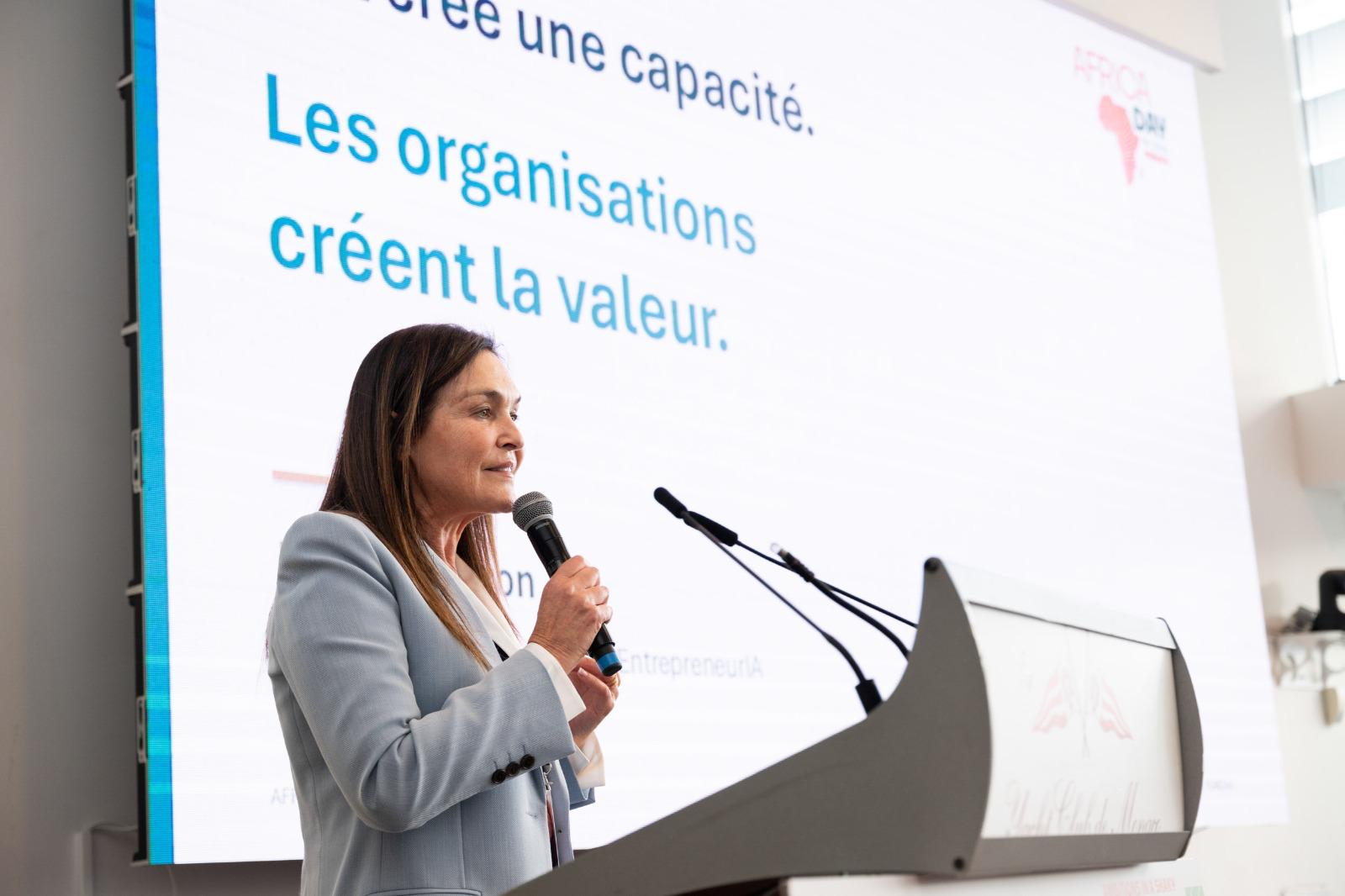
One idea runs through my interviews: artificial intelligence creates a capability. Organizations create value. In industry, this distinction is essential. A prediction is only of interest if it enables action; a more adaptable robot must improve an operation; a data system must facilitate a decision. Abandoned, redirected or pilot-stage projects deserve to be examined as seriously as successes.
EntrepreneurIA – Industrial AI: continuing the investigation with manufacturers
These first interviews made me want to deepen how artificial intelligence transforms industrial activities. After publishing L’EntrepreneurIA: Conseils d’entrepreneurs, I am launching a new series of interviews, EntrepreneurIA Industrial AI, with priority given to French companies.
I wish to meet industrial leaders who use AI in their operations, but also entrepreneurs who develop the technologies implemented. When possible, their testimonies will make it possible to compare the supplier’s vision with the results observed at their client’s. The investigation will focus on gains, difficulties, skills and organizational choices, without presuming its conclusions.
Executives who wish to share their experience, as well as people who can recommend a startup, SME or industrial partner, can contact me. The objective is to make concrete initiatives visible and transmit useful lessons to other entrepreneurs. Industrial AI is not limited to chatbots: it deserves to be studied where it acts on production, equipment and human work.
Pascale Caron | AI Strategy Advisor | International Keynote Speaker | Co-author of EntrepreneurIA