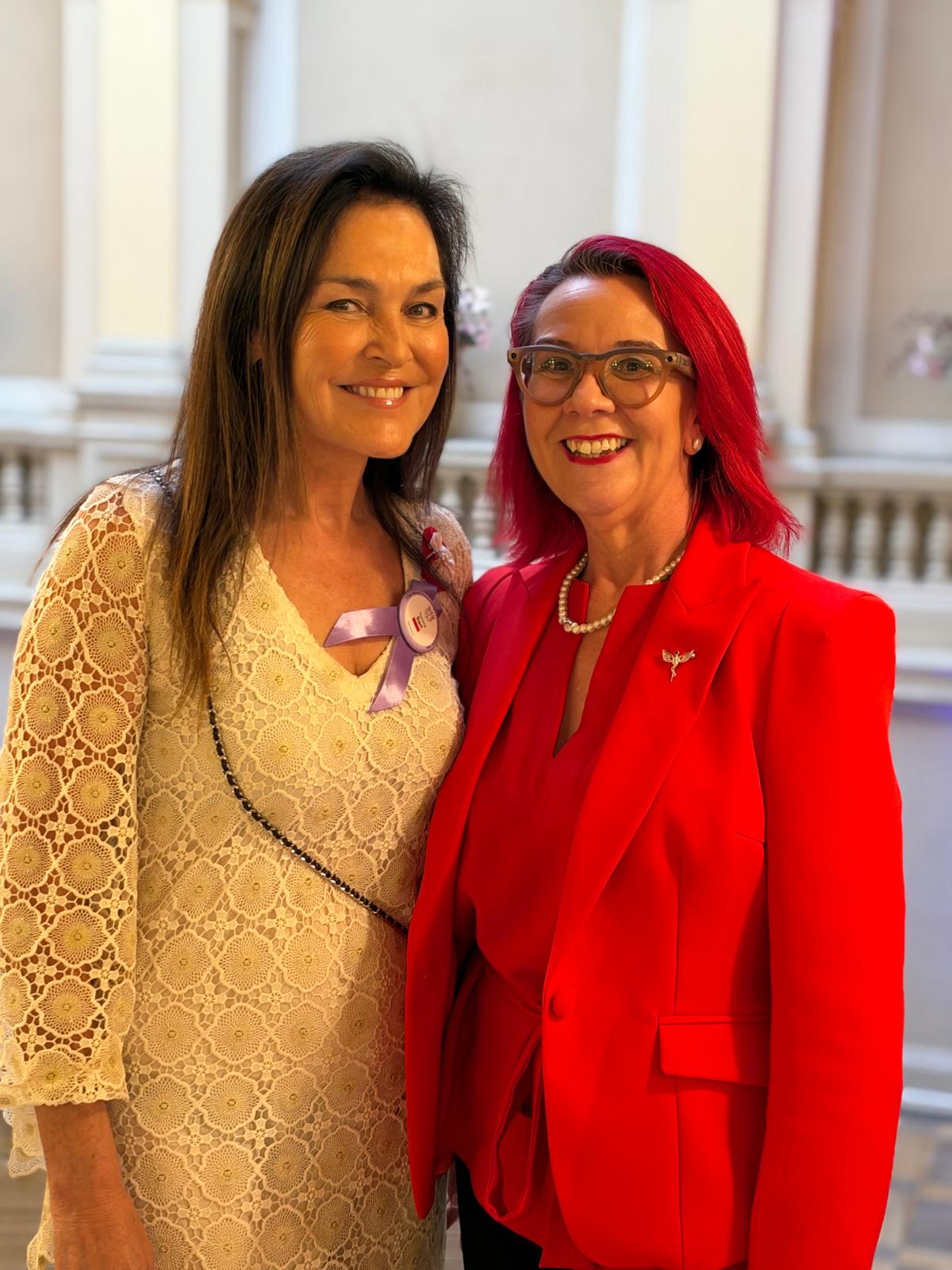
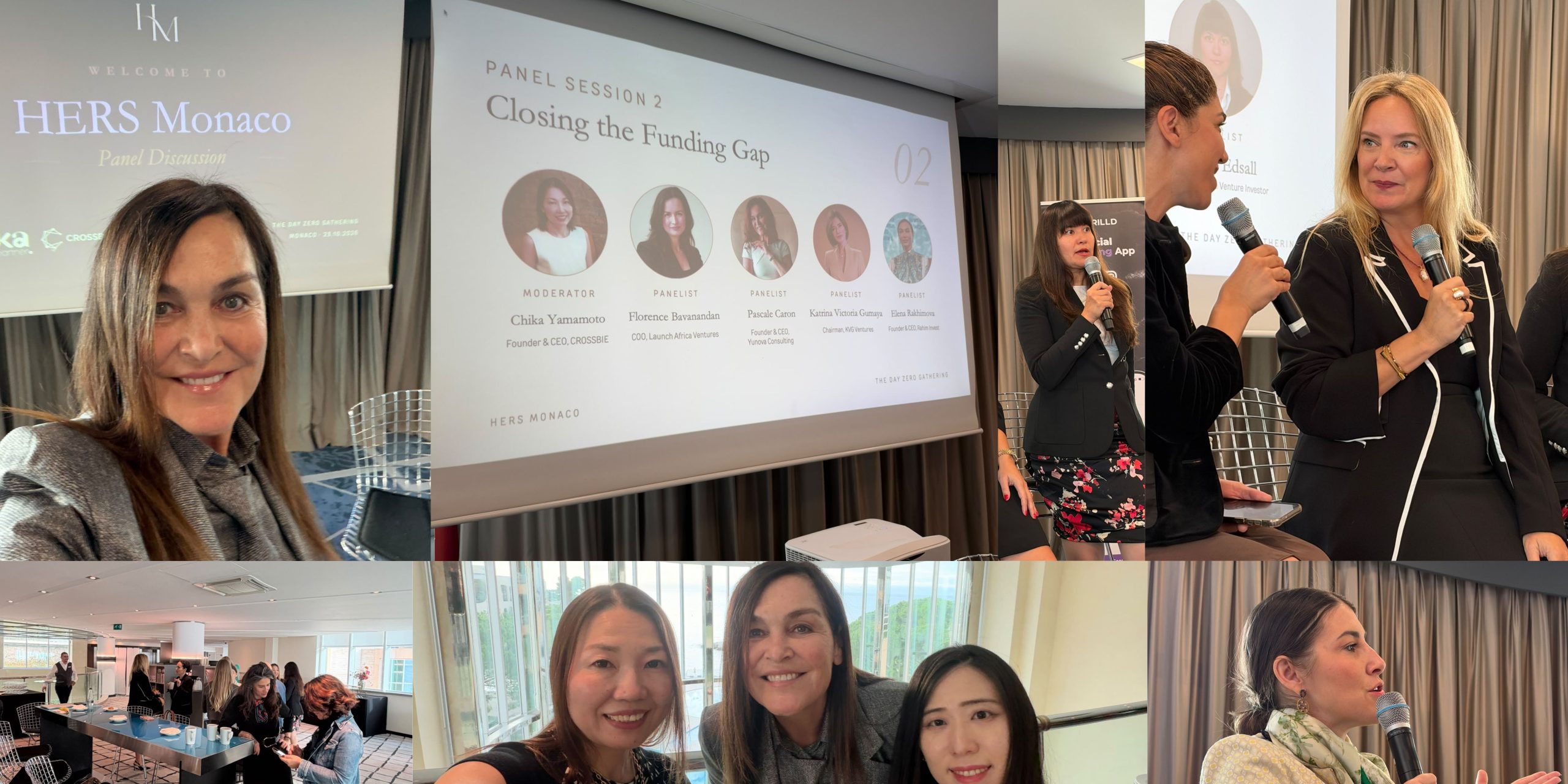
On October 23, 2026, I participated in the first edition of HERS Monaco and the panel “Closing the Funding Gap.” Two roundtables, several international investors, entrepreneurs, and one shared question: why does access to funding remain so difficult for many female founders? The discussions quickly showed that the issue goes beyond the mere availability of capital. Networks, reputation, governance, financial literacy, and artificial intelligence are now reshaping the conditions under which a company can access investors and build credibility.
HERS Monaco, or the need to go beyond numbers alone
When discussing funding for women’s entrepreneurship, the debate usually begins with statistics. Amounts raised, share of venture capital allocated to female founders, number of funded startups, or proportion of women in decision-making bodies are all regularly observed indicators.
These indicators remain essential for measuring existing gaps, but they alone cannot explain the underlying mechanisms. This is precisely what interested me during this first edition of HERS Monaco. The discussions very quickly moved beyond the mere question of capital availability. They focused on how it circulates, on the criteria used to select entrepreneurs, but also on the relationships and trust mechanisms that often precede an investment decision.
The first panel, titled “The Billion Spot,” was moderated by Maissa Ballout Shamshoum, CEO of Hasoub, with Georgia Pont Garcia, co-founder and partner at Alkimia Capital, and Ksenia Edsall, an investor specializing in early-stage companies. The second, “Closing the Funding Gap,” in which I participated, was moderated by Chika Yamamoto, founder and CEO of CROSSBIE. I spoke alongside Florence Bavanandan, COO of Launch Africa Ventures, Katrina Victoria Gumaya, president of KVG Ventures, and Elena Rakhimova, founder and CEO of Rahim Invest. The backgrounds and geographical experiences were different. Yet, a common observation gradually emerged: a company can be solid, have a good product and a real market, yet still fail to reach the investors capable of funding it.
Between the quality of a project and access to capital exists an entire system of relationships, reputation, and signals that must be learned and decoded.
“The room before the room”: understanding what happens before the pitch
An expression used during the first panel particularly struck me: “The room before the room.” It refers to those informal spaces where many things are decided before an entrepreneur even officially enters the meeting room. An introduction by a recognized person, a lunch, a conversation at a conference, a recommendation, or a mutual contact can profoundly change how a pitch will be received. The pitch is therefore not always the beginning of the relationship. It may be just one step.
This reality is not unique to women’s entrepreneurship. It concerns the entire economy of trust. However, it becomes problematic when access to financial networks remains concentrated around relatively closed circles. Entrepreneurs already embedded in these networks then have an advantage that goes beyond the mere quality of their project. Georgia Pont Garcia and Ksenia Edsall particularly emphasized the need to understand investors’ expectations. They advised better preparation of valuations, mastering financial aspects, and building teams capable of reassuring about execution capacity. But the responsibility cannot rest solely on female founders. It would be too simple to conclude that they simply need to learn to network better or promote themselves more. Investors must also question the channels through which they identify the projects they fund, as well as the weight of their habits and networks in their own decisions.
Funding is first and foremost a relationship of trust
The second panel extended this reflection by delving deeper into the concrete practices of investment.
Katrina Victoria Gumaya emphasized greatly how she builds her professional relationships. When she attends a conference, her goal is not to leave with the largest possible number of contacts. She identifies in advance the few people with whom she genuinely wants to engage and dedicates time to understanding their background, interests, and way of working. This approach is particularly interesting in an environment where networking is often reduced to quantitative logic. However, accumulating business cards or LinkedIn connections is not enough to create a relationship of trust.
In environments where significant capital circulates, reputation is built over time. It relies on recommendations, the consistency of a career path, the quality of past interactions, and the ability to create a relationship that is not immediately transactional. Katrina Victoria Gumaya used an expression that sums up this approach well: being a “multiplier” for others, that is, someone who can help multiply their capital, network, knowledge, or opportunities.
This vision seems particularly relevant to me. It reverses the usual logic of networking. The question is no longer just about who can help us, but also what value we can bring to a relationship.
Reputation becomes a strategic asset
The discussions also highlighted how much reputation often precedes negotiation.
Before investing in a company, investors seek to understand the person leading it. They examine their background, sometimes question their former partners, observe how they managed previous responsibilities, and seek to determine whether they inspire trust.
Katrina Victoria Gumaya mentioned the halo effect, this bias that leads to granting additional credibility to an entrepreneur because they have already achieved significant success. Yet, past success does not guarantee the success of a new project. Conversely, a still relatively unknown entrepreneur may have an extremely solid model. This tension between reputation and objective analysis raises an essential question: how do we identify potential when it doesn’t resemble the profiles we already know?
Biases do not always take the form of explicit discrimination. They can simply result from our tendency to trust more the people, backgrounds, and models that are familiar to us. This is precisely why broadening networks and diversifying funded profiles constitute an economic issue as much as an equity matter.
Women must master financial rules as much as their product
Another important topic focused on how some female founders approach negotiation. Several speakers mentioned women who are sometimes too cautious in their valuation or less inclined to firmly defend their terms. Again, generalizations must be avoided. It would be too easy to explain funding gaps by an assumed lack of confidence among women. A negotiation depends on context, balance of power, experience, and cultural environment.
However, one conviction seems difficult to dispute: a female entrepreneur must master financial mechanisms with as much precision as she masters her product, service, or market. Valuation, dilution, shareholder structure, governance, due diligence, preparation for future rounds: these topics directly determine the company’s trajectory.
A funding round is not a reward. It constitutes a strategic decision that sometimes commits the company for several years.
Not all investors pursue the same objectives
The discussions also highlighted the diversity of investor profiles. Business angels, venture capital funds, family offices, or institutional investors do not operate with the same constraints or the same time horizons. Expectations regarding returns, governance, risk, or growth can be very different. The geographical context also plays a role.
Katrina Victoria Gumaya shared several observations from her international activities, particularly on the differences she encounters between the United States, Europe, and Asia. Certain valuations considered acceptable in Silicon Valley may seem particularly aggressive in other markets. Conversely, some investors place greater importance on revenues already generated, the quality of financial documentation, or the traceability of figures.
This is obviously not about turning these observations into geographical stereotypes. However, they show that an international funding strategy also requires genuine cultural intelligence. The same project cannot always be presented in the same way to all investors.
Choosing your investor is a governance decision
This diversity raises another question that entrepreneurs sometimes neglect when seeking to raise funds: is the investor they are trying to convince really the right partner for their company? Obtaining capital is not an end in itself. An investor can influence governance, accelerate a strategy, open markets, facilitate recruitment, or bring an international network. They can also, in some cases, impose priorities that do not necessarily correspond to the company’s initial vision.
The choice of an investor must therefore be thought of as a governance decision.
This dimension directly relates to the issues I observe in my consulting activities. Funding modifies an organization’s decision-making structure. It influences its room for maneuver and sometimes even its culture.
The right question is therefore not just: how much can this investor provide? We must also ask what they can bring beyond capital.
Artificial intelligence enters the investor-entrepreneur relationship
This is where I wanted to bring another dimension to the debate. We talked a lot about reputation, credibility, and preparation. However, these three elements are today profoundly affected by artificial intelligence. For a long time, before meeting an executive or studying a company, we would conduct a Google search, consult their website, LinkedIn profile, or articles published in the press.
Today, more and more professionals directly use ChatGPT, Claude, or other response engines to prepare for a meeting or obtain an initial synthesis. They can ask who the executive is, what their company does, who their competitors are, what risks are associated with their sector, or what public information exists about their background.
For entrepreneurs, this evolution is far from trivial.
An investor can now arrive at a meeting with an already constructed representation of the company, produced by artificial intelligence from information available on the Internet. However, this information may be outdated, incomplete, contradictory, or simply misinterpreted. It is in this context that I mentioned GEO, or Generative Engine Optimization. The issue is not simply about trying to “appear in ChatGPT.” It more broadly concerns how a company organizes, structures, and makes verifiable the information about itself.
In other words, digital reputation is progressively becoming a matter of information governance. Leaders must now ask themselves not only what Google finds about them, but also what AI systems understand about their company.
AI facilitates entrepreneurship but does not eliminate the difficulty of execution
Artificial intelligence is also transforming the conditions for business creation. Some tasks that previously required larger teams can now be accelerated. Prototyping, document production, certain market analyses, or software development can be accomplished more quickly and with limited resources. This evolution helps reduce some barriers to entry.
But it can also create an illusion: that building a company has become easy because it has become simpler to produce a first version of a product. Between a rapidly developed prototype and an organization capable of delivering a reliable, secure, maintainable, and profitable service, the distance remains considerable.
This is a distinction that runs through all my work on artificial intelligence.
Artificial intelligence creates capability. Organizations create value.
The same principle applies to startups. AI can increase their capabilities, accelerate their experiments, and reduce certain costs. It will not replace their strategy, governance, or ability to execute.
What over a hundred EntrepreneurIA interviews have taught me
When I started working on EntrepreneurIA, I chose not to approach artificial intelligence solely through technologies or announcements from major industry players. I wanted to start from the field and understand what was really happening in companies. Over a hundred interviews with entrepreneurs allowed me to concretely observe their uses of AI and the difficulties they encounter. They also allowed me to analyze the transformations they are undertaking and the decisions necessary to move from experimentation to value creation. This work gradually led me to a conviction: technologies evolve extremely quickly, but entrepreneurial fundamentals remain surprisingly stable.
A clear strategy, a competent team, a real market, appropriate governance, trustworthy partners, and execution capacity remain decisive.
HERS Monaco reminded me how much this observation also applies to funding. Capital can accelerate a company. It cannot alone correct a fragile business model, failing governance, or poorly defined strategy.
From funding gap to value creation
The initial question at HERS Monaco concerned women’s access to funding. It remains fundamental.
But the discussions show that the answer cannot be limited to creating new programs, new networks, or new funds.
We must simultaneously work on access to decision-makers, financial preparation, investment criteria, reputation, governance, negotiation skills, and now the quality of information available in digital environments.
Women can help open more doors to other women. Female investors can share their networks. Female entrepreneurs can pass on their experiences. But men must also be part of this transformation.
The goal is not to replace one closed network with another. It is to enable more competent entrepreneurs to access the resources needed to build solid companies.
This is ultimately what I take away from this first edition of HERS Monaco. The real issue is no longer just about giving more visibility to women entrepreneurs. It is about transforming this visibility into credibility, this credibility into trust, this trust into capital, and this capital into value creation.
It is at that moment that progress becomes truly measurable.