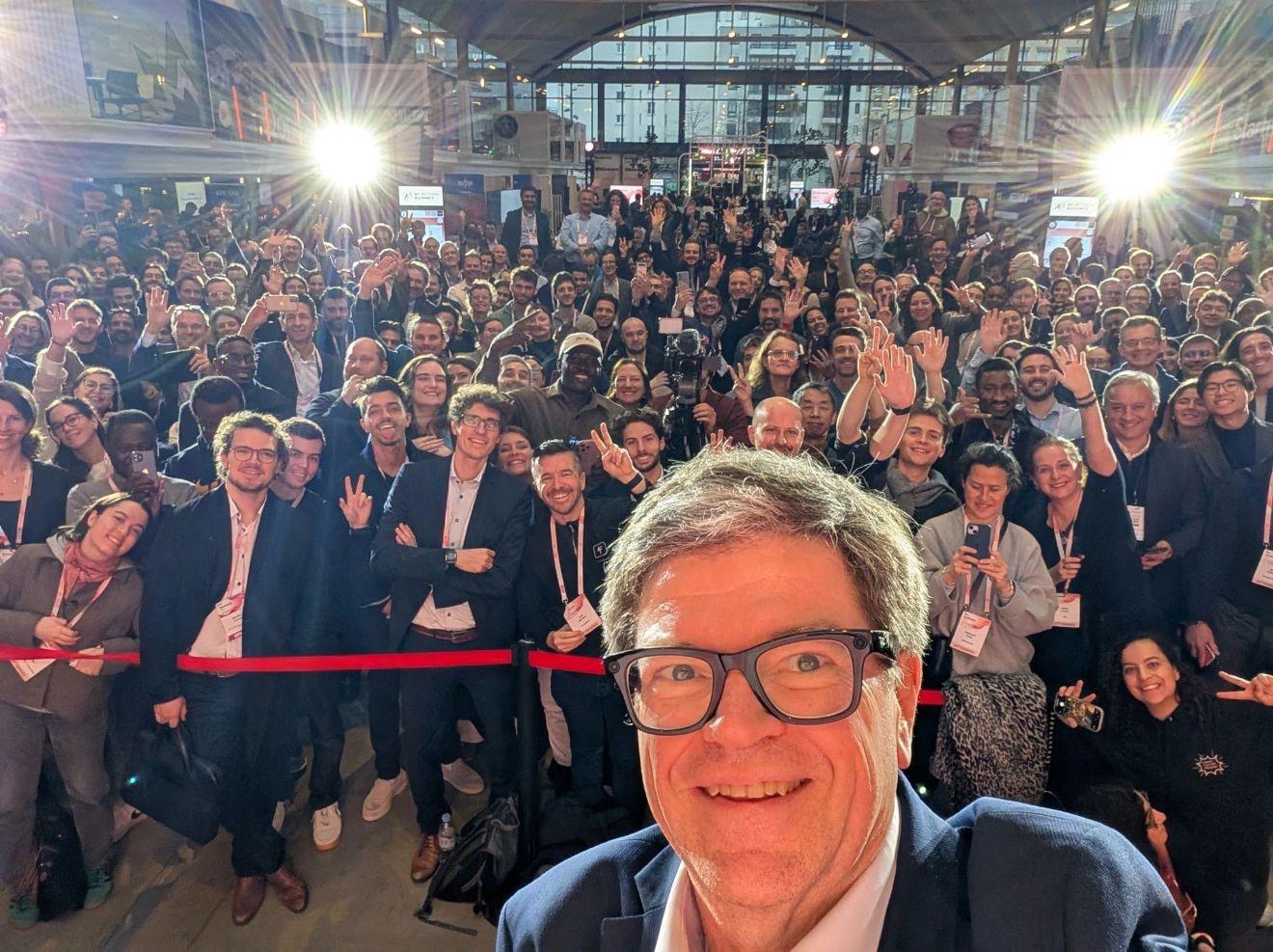
On February 11, 2025, Station F hosted the “Business Day” of the AI Action Summit, bringing together a dynamic ecosystem of innovators, decision-makers and government representatives. This day, dedicated to the impacts of AI on businesses and various sectors of activity, highlighted the new economic dynamics and regulations necessary in the era of artificial intelligence. The event attracted massive participation, with 5,000 participants expected, far exceeding the 3,000 available seats at Station F. The enthusiasm for AI was palpable, with some participants waiting up to two hours to access the site.
One of the main objectives of this conference was to create bridges between startups, large corporations and investors in order to maximize the impact of AI on economic development. Networking sessions and thematic workshops were organized to foster exchanges and partnerships.
The event was orchestrated by Bpifrance, France Digitale, Numeum and Station F, with the support of the Directorate General for Enterprises and the French Tech Mission. This collaboration brought together a rich and diverse ecosystem, including startups, SMEs, large corporations, investors and financial institutions, all gathered to discuss concrete uses of AI.
A New Narrative for AI in France
 In his opening address, Éric Lombard highlighted the current dynamics of the AI sector in France. The massive investment of 109 billion euros announced the day before by the President of the French Republic demonstrates the growing attractiveness of France for international investors.
The Minister of Economy emphasized the evolution of the discourse around AI, which is no longer perceived solely as a threat to certain industries, but rather as a driver of innovation and economic transformation. He cited as an example the success of Le Chat by Mistral AI, a generative AI model that quickly established itself as a standard in the field.
The minister also mentioned the strategic meeting held at the Élysée Palace with President Emmanuel Macron, bringing together investors and AI leaders, in order to structure a solid and competitive ecosystem. He emphasized that France is now asserting itself as one of the European leaders in artificial intelligence, thanks to public policies favoring innovation and entrepreneurship.
Bernhard Kluttig, German State Secretary for Economic Affairs and Climate, then took the floor to put into perspective the European positioning vis-à-vis American dominance in the field of AI. He recalled that the United States currently dominates the main innovation indicators: number of scientific publications, private investments, patent filings and computing infrastructure.
Faced with this state of affairs, he insisted on the necessity of a dual approach. First, a competitiveness strategy by strengthening investments in research and development, fostering access to capital for startups and developing a culture of innovation. Second, clear and effective regulation: avoiding market concentration and guaranteeing equitable access to necessary resources (data, infrastructure, talent). He also welcomed the initiative of 109 billion euros announced by Emmanuel Macron to strengthen the AI ecosystem in Europe, while emphasizing that this investment must imperatively translate into concrete actions.
Key Themes
Three main themes structured the day’s discussions:
- AI and use cases: presentation of concrete examples of innovation where AI plays a central role in the transformation of processes and services.
- Ecological transition: debates on the environmental impact of AI and how it can be used to promote sustainable practices.
- Artistic creation: exploration of AI’s role as an ally of artists, particularly in generating new forms of expression and facilitating the creative process.
 Notable Interventions
Among the day’s highlights, President Emmanuel Macron announced an ambitious plan to triple the number of young people trained
each year in AI professions in France. The goal is to train 100,000 talents per year. This initiative aims to strengthen France’s position on the international AI scene and to meet the growing demand for skills in this field.
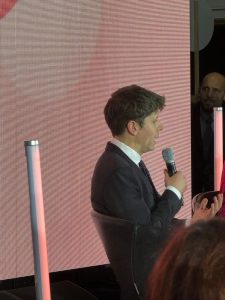
Iconic figures from the sector, such as Sam Altman, CEO of OpenAI, and Yann LeCun, Chief AI Scientist at Meta, captivated the audience. They shared their visions on the future of AI and the challenges to be met.
Several panels and conferences took place in succession on multiple stages in parallel. Below you will find summaries of those I attended.
AI, Regulation and Economic Impact
Fair play in AI Markets: a toolbox in need for an update?
Winning with AI: How competition fuels innovation — A European Vision for Artificial Intelligence
AI Excellence in France: The French Tech Value Chain at the AI Summit
What Economic Models for a World Dominated by AI?
 International Reach
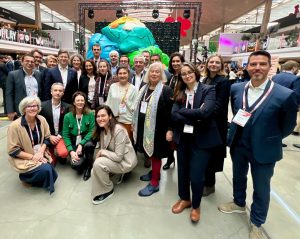
The event attracted French, European and global economic actors, fostering cross-border cooperation. Foreign Trade Advisors of France came from countries such as Singapore, Malta, Ireland, United Kingdom, Germany, India, Madagascar, Monaco and France.
Government Presence and Inspiring Speeches
The day was marked by the presence of members of the French, German and Dutch governments. On the French side, Laurent Saint-Martin, Éric Lombard, Clara Chappaz, Pascal Cagni and Senator Olivier Cadic delivered inspiring speeches, emphasizing the importance of AI for the future of France and Europe.
Afternoon Highlights
President Emmanuel Macron reiterated the importance of accelerating innovation and AI adoption in Europe. Among the notable announcements:
- Construction of a datacenter in Hauts-de-France: this initiative aims to strengthen the region’s technological infrastructure and support AI development in France.
- Massive investments: a commitment of 109 billion euros in private investments.
- Support for Startups: Highlighting the rise of French AI startups, with emblematic examples such as Mistral AI, illustrating the dynamism and innovation of the French ecosystem.
Key Priorities for France
The President also emphasized the need to make AI sustainable, insisting on the importance of developing technologies that are environmentally friendly and beneficial to society. He also emphasized facilitating access to qualitative data to train AI models based on European Union values, in order to properly reflect our worldview.
A Turning Point for AI in Europe
The Business Day confirmed that Europe is at a strategic turning point for artificial intelligence. France and Germany, in particular, seem ready to take on the challenge of technological sovereignty and regulation. However, the road remains fraught with obstacles: concentration of infrastructure, war for talent, access to data and effective public investments. The coming months will be crucial to see if Europe succeeds in building a competitive AI ecosystem, where startups, large companies and public institutions collaborate for ethical and sustainable innovation.