Founded in 2011, Cirkwi quickly established itself as a major player in the management and distribution of digital tourism content in France, Belgium, and Switzerland. The company offers tools for tourism professionals such as tourist offices, travel agencies, ministries and sports federations, and tourist accommodations. Among its 1,500 notable partners are the National Geographic Institute (IGN), the Belgian Ministry of Tourism (Wallonie Belgique Tourisme), Tarn Tourisme, the French Hiking Federation (FFR), Savoie Mont Blanc, and Mont Saint-Michel. Cirkwi’s clients use its solutions to structure and distribute their tourism information, walks and hikes, sports or cultural routes, all geolocated.
The challenge? Leveraging local databases into interactive and immersive tools, making it easier for tourists and residents to discover the regions.
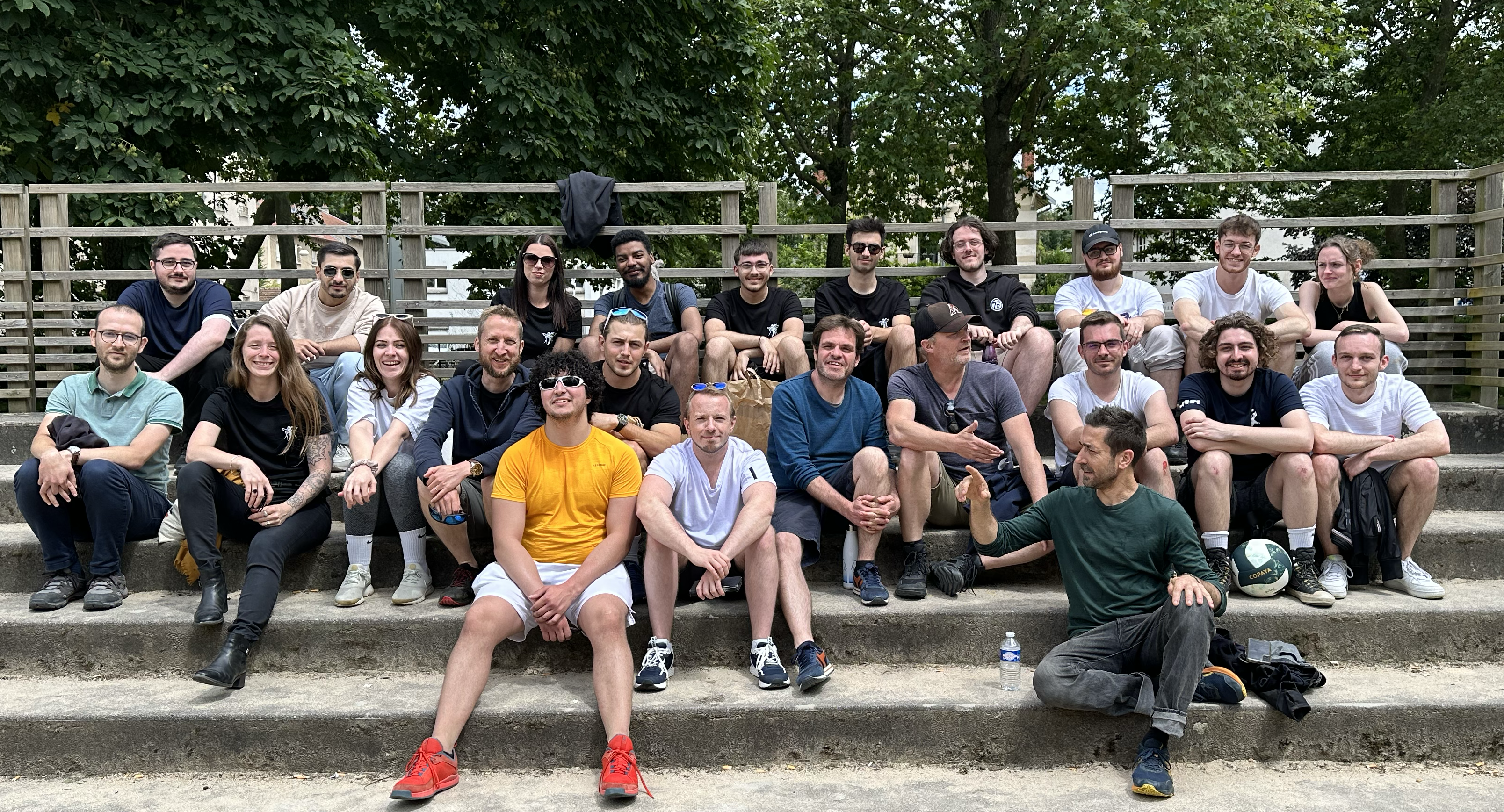
Behind Cirkwi, a team of around 20 people, led by Manon Lorang, CEO, and Sylvain Caucheteux, President. Sylvain previously led marketing and sales teams at European and global leaders in the tourism industry, including Club Med, Pierre & Vacances – Center Parcs, and Belambra Clubs. This extensive experience has enabled him to acquire deep expertise and knowledge of tourism markets, which he has leveraged to develop Cirkwi.
The Progressive Introduction of AI at Cirkwi
Although Cirkwi was not initially designed around AI, it has progressively integrated this technology to improve its services and optimize its processes. “We are not a company built around AI. We have over 14 years of experience and have seen the evolution of technologies. Today, we use AI as a tool to enhance our offering and optimize our processes.”
The adoption of AI has taken place in several stages and covers different areas:
- Data structuring and enrichment: “Our clients provide us with data that is sometimes raw or poorly organized. AI helps us structure this information and make it more easily usable.”
- Automatic generation of marketing content: “AI allows us to transform structured data into attractive and understandable descriptions for users. What used to take hours is now done in minutes.”
- SEO optimization: “We have 12 million visitors per year on our platforms. To maximize our visibility, we use AI to generate content tailored to search engines.”
- Communication improvement: Automation of newsletter writing, social media posts, and CRM reports. This has resulted in considerable time savings.
- Customer support automation: “We have integrated a chatbot that provides instant answers to our users’ frequently asked questions, while relieving us of certain repetitive tasks.”
Human and Cultural Challenges Related to AI Integration
The implementation of AI at Cirkwi did not happen without challenges. Surprisingly, it was the developers who were sometimes among the most reluctant at first. To facilitate this transition, Cirkwi implemented several internal initiatives:
- Weekly sharing sessions: “Every week, we bring together all teams, from accounting to marketing, to share experiences on using AI and exchange best practices. This was a major turning point for AI adoption within the company.”
- Encouraging experimentation: “We encouraged everyone to take ownership of AI tools, even for small daily tasks. This demystified the technology and allowed everyone to embrace it.”
- Implementation of a Proof of Concept (POC) process: Cirkwi promotes rapid trials to test and validate new ideas.
Thanks to this collaborative approach, AI is now adopted and used daily in all departments of the company. Developers now use it as an assistant for coding and solving technical problems.
Measurable Impact and Benefits
The integration of AI at Cirkwi has had several positive effects:
- Improved productivity: “Our teams work faster, and above all, they focus on higher value-added tasks. What used to take 10 hours can now be done in 2 hours.”
- Boosting internal innovation: “AI has unleashed a form of creativity among our employees. Now everyone has the right to innovate, propose ideas, and test them quickly.”
- Reduced employee stress: “Automating certain administrative tasks has genuinely reduced the mental burden on our employees. They can focus on more interesting subjects.”
Sylvain Caucheteux also emphasizes that AI has introduced a new dynamic within the teams. “We have seen a real change in our employees’ mindset. There is more emulation and a general desire to continuously improve processes.”
Advice for Entrepreneurs Looking to Adopt AI
Drawing on his experience, Sylvain Caucheteux shares some recommendations for companies considering AI integration:
- Start with concrete use cases: “Don’t try to revolutionize everything at once. Identify a repetitive task and optimize it with AI.”
- Structure your data: “A well-organized database is the key to getting the most out of AI. Otherwise, you get inconsistent results.”
- Involve all teams: “AI should not be reserved for technicians. Everyone can benefit from it if properly trained.”
- Favor a bottom-up approach: “Let your employees experiment and propose their ideas. Innovation often comes from the field.”
- Celebrate successes: “Every productivity gain, even minor, should be highlighted to encourage adoption of these tools.”
AI as a Lever for Excellence
Cirkwi’s experience shows that AI is a tremendous tool for improvement and innovation, provided it is well integrated into the company culture. “AI does not replace our teams, it makes them better: it allows access to ‘the best version of oneself.’ It raises everyone’s level and accelerates our capacity for innovation.”
This pragmatic and progressive approach to AI is a source of inspiration for companies looking to initiate their digital transformation. More than just a tool, AI becomes a growth engine and a catalyst for positive change within organizations.