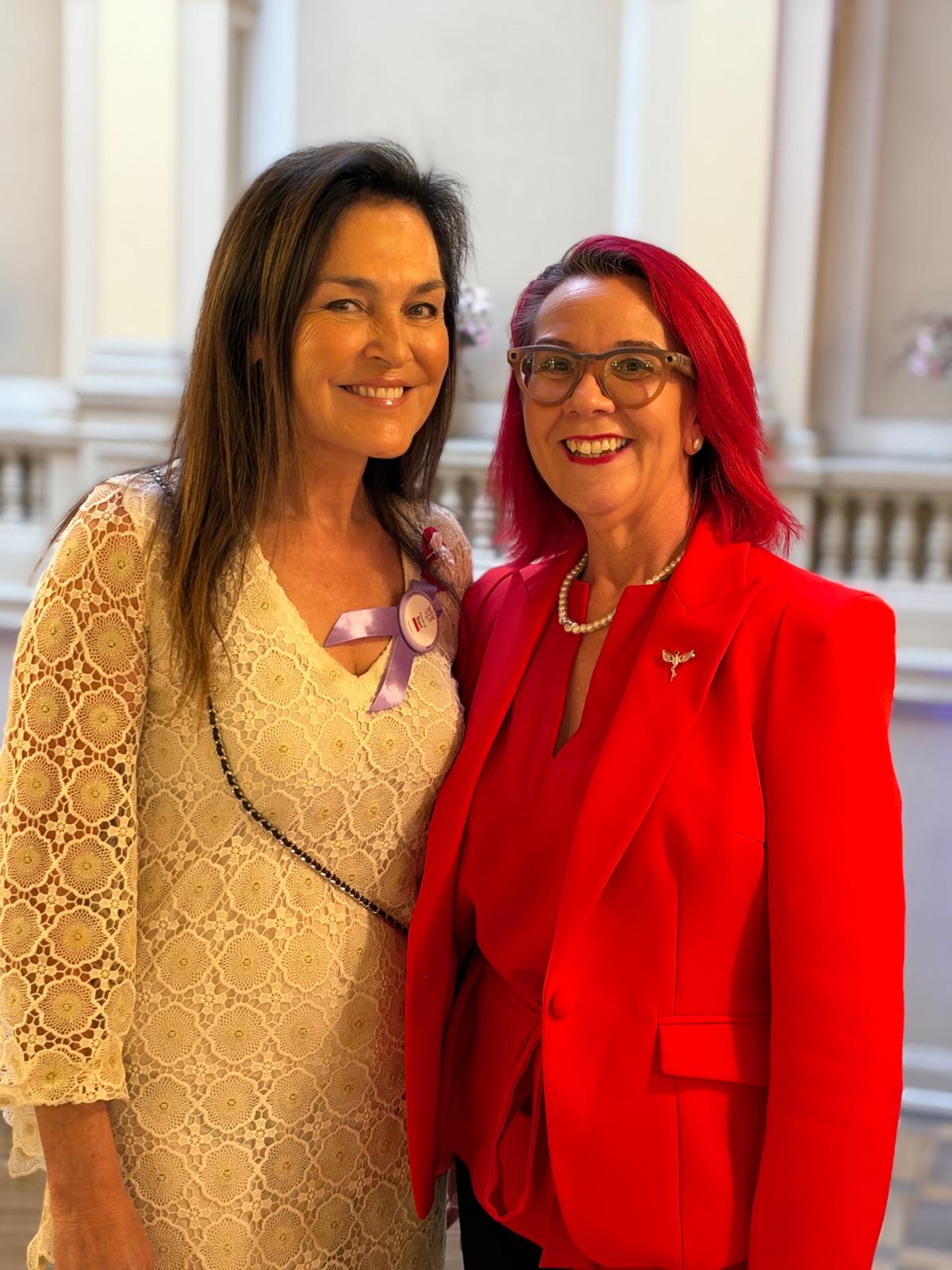

Laurence Vanin holds a doctorate in political philosophy and epistemology. She is qualified to supervise research in section 72 on the theme of “Ethics of relationships with connected objects and robots.” She held the position of director of the “Smart City: Philosophy & Ethics” chair at Université Côte d’Azur, where she explored the ethical and philosophical implications of smart urban transformations.
Currently, she serves as Director of the Bureau of Chairs and Patronage at the National Gendarmerie Research Centre (CRGN). There, she leads the scientific college “Philosophy, Ethics and Epistemology of Experience” within the Digital Humanities (HuNum) Chair at CRGN.
As an essayist, Laurence Vanin has enriched the intellectual landscape through the publication of numerous works. A passionate speaker, she regularly delivers lectures accessible to the general public, addressing varied themes that blend philosophy, humanities, and contemporary issues.
Her philosophical reflection is marked by a philosophy of action. Boris Cyrulnik considers her the “philosopher of resilience.” Her work emphasizes the need to preserve individual responsibility and authenticity in human actions in the face of challenges posed by a constantly evolving world.
Can you explain your new activities?
I hold the position of Head of the Bureau of Chairs and Patronage at the National Gendarmerie Research Centre (CRGN). My main role is to seek patrons to finance projects developed by the centre. This includes funding the organization of days dedicated to the themes of the HiGeSet and HuNum Chairs, as well as the production of podcasts and publications from our publishing house. We have several innovative programs underway, notably the use of drones to locate missing persons. We are also developing analysis laboratories to operate in contaminated environments affected, for example, by radioactivity. Another aspect of our ongoing work concerns the reconstruction of historical or strategic scenes using artificial intelligence. We collaborate with a history chair: we analyze battles or riot scenes and train gendarmes in intervention strategies under realistic conditions. We are also conducting a project focused on territorial resilience, as well as a chair entitled “Digital Humanities.” The latter concentrates on technological aspects related to artificial intelligence, such as algorithms, computing systems, and cybersecurity. In parallel, a component dedicated to the humanities explores philosophical, ethical, and epistemological dimensions of these experiences. I lead this college, which allows me to capitalize on all the experience I gained while directing the “Smart City: Philosophy & Ethics” chair. What I built during my career finds a new direction here.
What is your perspective as a philosopher on Artificial Intelligence?
Today, artificial intelligence can be conceived in two main ways. The first is that of useful AI, which optimizes certain processes and facilitates users’ lives. It manifests through practical tools that, although often invisible, provide valuable services to individuals and communities. Take, for example, booking a train online, tracking delays in real time, or optimizing electricity consumption. This discreet AI fulfills an essential function by relieving humans of repetitive or complex tasks. Without it, such tasks would be virtually impossible to manage alone on a global scale. In this sense, this AI is a valuable asset.
The second conception of AI relates to its use by consumers. There are different degrees of understanding of tools, and this is where a philosophical problem emerges. Many individuals use these technologies without truly understanding how they work. This raises questions about inclusivity, as digital illiteracy—the inability to use or understand digital technologies—is still widespread. Many are unaware of the underlying mechanisms of the AIs they manipulate, thus creating a situation where the connected object, such as a phone or computer, becomes an abstraction, an area of opacity. Not everyone is able to understand how algorithms work or how service provisions associated with their uses function, for example, through the cloud. Take a common example: those who claim to have everything on their phone don’t realize that in reality, their data is hosted in the cloud, an external and intangible space. The object is merely an intermediary, dependent on subscriptions to function. This abstraction of the object makes users vulnerable to risks such as scams or phishing. This illustrates the urgency of awareness and training work to support individuals in using these tools.
How can technologies be made more transparent and inclusive?
This question is also crucial. For example, OpenAI, despite its name, operates as a black box. Users often have no visibility into its internal mechanisms. This opacity reinforces the need to develop learning opportunities to help people better understand the systems they use, recognize risks, and avoid potential abuses. In this context, initiatives like Institut EuropIA play a key role. Since its creation, this institute has worked to educate individuals, taking into account the specific needs of different groups, including elderly populations, often confronted with the forced dematerialization of services such as bill management. It is essential to provide them with a minimum level of training so they can adapt. I am convinced that everyone, regardless of age or level of knowledge, is capable of understanding these issues, provided we take the time to explain them clearly. This work of education and acculturation is fundamental to enabling everyone to benefit from technological advances while limiting inequalities and vulnerabilities.
How can we preserve our freedom in the face of algorithms?
The second observation about artificial intelligence lies in its role in traceability. For the philosopher that I am, the idea of being traced or traceable profoundly nuances our conception of freedom. This limitation is not only a consequence of our choices of interaction with technology but also a constraint imposed by the objects themselves. For example, not activating geolocation may limit access to certain applications or features. Thus, AI generates constraints that shape our behaviors and daily lives, to the point that we become predictive beings, defined by our digital interactions. An essential question flows from this observation: who am I if I disconnect? What happens to my personality, my desires, or my choices when my actions are increasingly influenced by algorithms? For example, ordering sunscreen online can trigger a series of suggestions—from beach towels to dream destinations—that reduce my freedom to imagine another use, such as going to the mountains. This funnel phenomenon, which narrows the field of possibilities rather than broadening it, seems problematic to me from the perspective of individual freedoms.
Originally, the Internet was perceived as an open door to a vast universe of knowledge and exchanges. But today, its use often takes precedence over its potential for openness. Imagination becomes impoverished when information becomes an algorithmic product, preformatted by systems that guide us almost automatically in our choices.
Will AI transform the notion of learning?
One of the dangers of generative AI lies in its ability to “pre-chew” learning. The more we entrust tasks to artificial intelligence, the less we actively engage in these learning processes. This affects all domains, whether manual or intellectual professions. For example, in research work, reading, analyzing, and synthesizing reports are laborious but formative steps. Similarly, in craftsmanship, carving wood requires perseverance, but this practice forges skills. If everything is prefabricated or automated, how can we integrate these different training stages and develop critical thinking?
The question then becomes: what substitutions can we find to prevent AI from supplanting human learning? Effort, even laborious, is an integral part of the process of acquiring and constructing knowledge. It is therefore urgent to rethink how we train individuals. Teachers themselves must be educated to understand and integrate these issues. Today, they face new challenges, such as detecting whether an assignment was written by a student or produced by generative AI. This time spent verifying the origin of work could be better used to reconsider modes of transmission, to encourage creativity and critical thinking among learners. It is important to emphasize that there is no pessimism in this analysis. The philosopher’s role is to assess the situation, not to alarm, but to establish foundations for reflection. If AI improves through deep learning, it is crucial to also value human deep learning, which cultivates intellectual and emotional skills. The key lies in harmonizing technological evolution with human happiness. We must transform these challenges into opportunities to rethink learning and restore their proper place to effort, creativity, and critical thinking. Our ability to coexist with AI while preserving our humanity and autonomy depends on it.
How do you see the evolution of education, inclusive and critical, in the technological era?
I think that the notion of transmission, as well as the way courses are taught and individuals are trained, will have to evolve profoundly. We must include all social strata, whether young people from disadvantaged areas, people living in rural areas, or those more technophilic from highly specialized backgrounds. The goal is to integrate everyone into this educational dynamic, with a genuine concern for inclusivity. This presupposes education that contributes to the development of critical thinking. The idea is to support new technological uses while avoiding the pitfalls of intellectual laziness, where one would rely excessively on the machine on the grounds that it is faster. One solution could consist of using technology to develop other skills, and thus encourage reflection and analysis. It is by cultivating this critical thinking that we can train individuals capable of positioning themselves freely in relation to the machine.
Should we restrict or encourage the use of technology among young children?
I think that in early childhood, it is necessary to severely limit screen exposure to promote the development of sociability. They must learn to concentrate and build their intellectual faculties before being exposed to social networks or overly diverse digital content. As they grow older, even if learning takes place via computer, uses must remain simple and supervised, favoring basic skills such as French and mathematics (adding computer science) or understanding the tools themselves. Once these solid foundations are acquired, more complex applications can be gradually integrated, showing young people how to spot fake news or detect automatically generated texts, so that they develop critical vigilance.
We have a moral responsibility toward humanity: it is not enough to transform the world with new technologies without accompanying this change with appropriate education. We must teach how to use these tools but also warn against their limitations. AIs are not infallible; they can be biased or produce errors. Without training in detecting inconsistencies or problematic content, individuals risk not noticing them. The danger is sliding into unwanted totalitarianism, imposed by the AIs themselves, through automated decisions that influence our lives. To avoid this scenario, AIs must be transparent and trustworthy, which requires collective, transdisciplinary, and global work.
What is your opinion on regulation and ethical issues related to artificial intelligence?
On the international stage, collective awareness is essential. Europe has the opportunity to play a model role by developing exemplary AIs that could inspire other regions of the world. Even if some countries do not immediately follow this model, virtuous AIs will, in the long term, have a positive global impact. Exchanges between cultures and technologies will allow individuals to compare their respective systems. Those who feel abused by opaque and non-frugal AIs will seek to return to more authentic models, more environmentally respectful. Europe stands out for its reformist approach and its concern for regulation, unlike the GAFAM, which are more expedient in this matter. China, meanwhile, remains opaque and invades the market with AIs and APIs that are often very competitive but poorly controlled. This accentuates the urgency for Europe to strengthen its frameworks and assert leadership in this area. If we succeed, this could establish a new global standard for future generations, combining technological progress with respect for fundamental human values.
That’s why, in my view, specific labels will eventually exist: EU-certified, American, Russian AIs, etc. We are still in the early stages, but everything is moving at a speed that exceeds that of reflection. Modernity comes to us with its constant transformations: our phones change constantly, everything evolves rapidly. But at some point, our minds must catch up with this pace. If we don’t succeed, this risks slowing down systems or leading us toward domination of connected objects over humans. A world where they would govern humans would be dramatic; we would then be alienated by technology.
However, I firmly believe that humans, aspiring to autonomy, will avoid this scenario. We must prioritize human autonomy that is responsible and enlightened. This opens up a true field of action and innovation. I am optimistic: I do not criticize AIs, but I highlight their weak points and areas where they can pose problems. I have confidence in engineers. When confronted with challenges, they find brilliant solutions, and if the challenge is ethical, it can be a source of great opportunities that benefit users. In France, we have excellent talent capable of perfecting AIs while taking into account the ideas that we, philosophers or ethicists, can submit to them. But then we must have the courage to take the time to put them into practice and find solutions to anticipate future existential crises. For this, ethics must not be mere empty rhetoric. Too often, when I am invited to address the subject, I find that my remarks, even if relevant, disturb market requirements and are quickly ignored. Conversely, some ethicists fall into excessive catastrophism that does not serve the cause either. This divide between techno-optimists and techno-pessimists is a fundamental error. We must move beyond these oppositions.
So how can we combine technological innovation with respect for fundamental human values?
As a philosopher, I would like to participate in concrete projects and be able to say: this product is excellent, but here is one aspect to improve. If a safeguard is already in place, that’s wonderful. Otherwise, this can be an opportunity to challenge engineers to review certain points without necessarily questioning their entire process. The key lies in transdisciplinarity: engineers and philosophers must dialogue to build bridges, because these technologies, whether concerning health, connected objects, or other fields, always involve major ethical issues. We must guarantee a balance to protect future generations. Living under permanent constraint or facing incessant ethical dilemmas would make individuals unhappy. Artificial intelligence is a tool, an extension of ourselves to accelerate certain tasks. But it must never compromise our human dignity, creativity, or autonomy. It is also essential to recognize the limits of AIs. They operate on algorithms, a combinatorial of already existing data. They cannot create like a human, with their spontaneity and originality. They also do not master subtlety or emotional nuances. They merely mimic them in a simulacrum. That is why we must clearly differentiate their creations from ours, for example by clearly labeling content generated by AI. This would make uses more transparent and strengthen trust. From an ethical perspective, essential reflection is necessary, and I am ready to join commissions and working groups on the subject. Artificial intelligence integrates into all aspects of our daily lives, whether in home automation, on every street corner, in our bank accounts, etc. But the traceability it offers can quickly evolve intrusively. Where can we find space to preserve our privacy?
We risk becoming “glass” citizens, constantly under AI surveillance and transparent to systems. There is a crucial difference between the public, private, and intimate spheres. The latter must remain a domain reserved for authentic human relationships: exchanging with one’s spouse, talking to one’s children, or petting one’s pet without fearing that a connected device is recording these moments. The idea that smart speakers or software could capture these moments raises legitimate concern. A striking example is when you consult a computer and discover that it offers you a recipe related to an informal conversation you thought was private. This shows that words can be recorded without your knowledge, even within the intimate setting of your home. However, AIs can also make a valuable contribution, particularly in terms of security. They can be crucial in emergency situations, for example to locate people in a burning building and facilitate the work of rescue services. But these benefits must be balanced by essential cybersecurity precautions.
We also have a role to play as citizens. We must remain vigilant and express our expectations regarding AIs, participate in this collective project, and thus strengthen social bonds. In addition, we must reaffirm fundamental rights, such as the right to disconnect or to preserve an intimate sphere, far from any technological intrusion.
The future of AIs must be built by common agreement, taking into account human needs, ethics, and sustainability. By ensuring that technology remains in service of individuals, and not the reverse, we can derive the best from it to build a balanced and harmonious society. There will always be ill-intentioned individuals, and it is crucial to protect our children from these threats. We have custody of souls for future generations. For example, if one is in the privacy of one’s living room, nudity must never become an involuntary offering to a stranger observing through an intrusive technological system. This also implies protecting the youngest from dangers such as child criminality and malicious people who exploit the vulnerabilities of the most fragile.
For creators of artificial intelligence, this constitutes an ethical imperative: to design systems that integrate mechanisms allowing access to be cut off in case of threat, to interrupt intrusions, and to protect users. Failing this, the consequences for the community could be dramatic. People, facing repeated attacks or scams, would be pushed to subscribe to increasingly expensive insurance. They might also reject this society shaped by technologies. This would lead to price increases and unsustainability for many. It is therefore imperative to anticipate these issues, adopt ethical reflection upstream, and establish solid foundations to optimize the use of AIs, rather than banning them. This also involves control. The new uses that AIs bring inevitably generate new risks. They must be anticipated and addressed to ensure serene adoption of technologies. This requires a structured and thoughtful approach, where human experience remains at the center of analysis.
How can we reconcile digital use with authenticity in human relationships?
It is not enough to stop at school education; it must be comprehensive. It begins at school but continues at home, on the street, and within society as a whole. Parents, teachers, citizens: everyone has a role to play in transmitting fundamentals that allow each individual to become autonomous without being vulnerable or unhappy.
This also implies educating toward sincerity and authenticity. We live in a world where image, often deceptive, takes on an excessive place. When young people seek to resemble their filtered version on Instagram, to the point of resorting to cosmetic surgery, this shows how destructive this disconnection from reality can be. A relationship based on a false image or fake news compromises the very foundations of sincerity and truth. It then becomes essential to distinguish moments of digital connection from authentic moments of human relationships. For this, we must train teachers on these issues, but also make parents accountable and engage society as a whole. It is a collective duty, where everyone has a role to play in guiding, advising, and supporting, in order to build enlightened autonomy and a future where humans remain at the center of interactions.