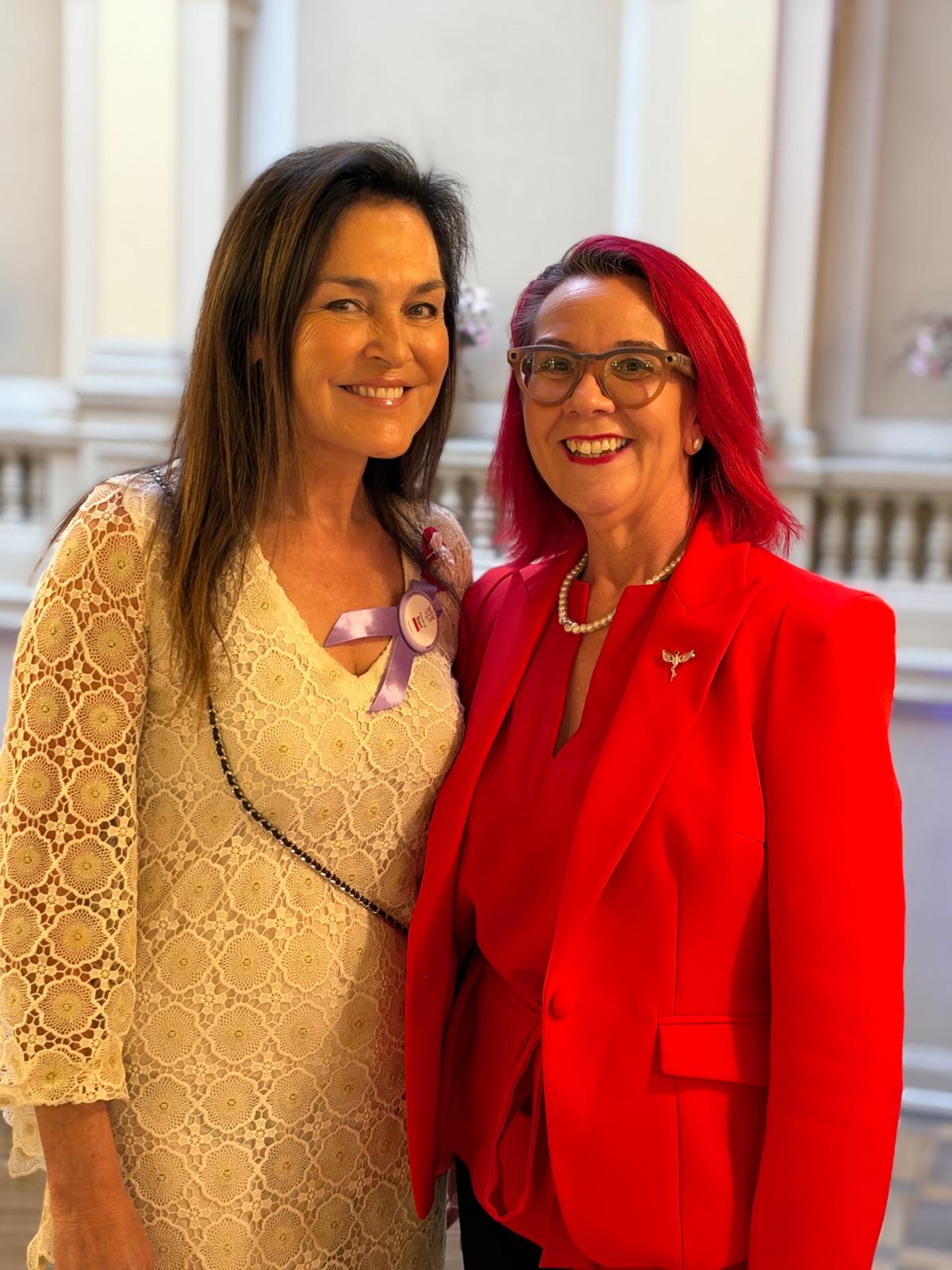
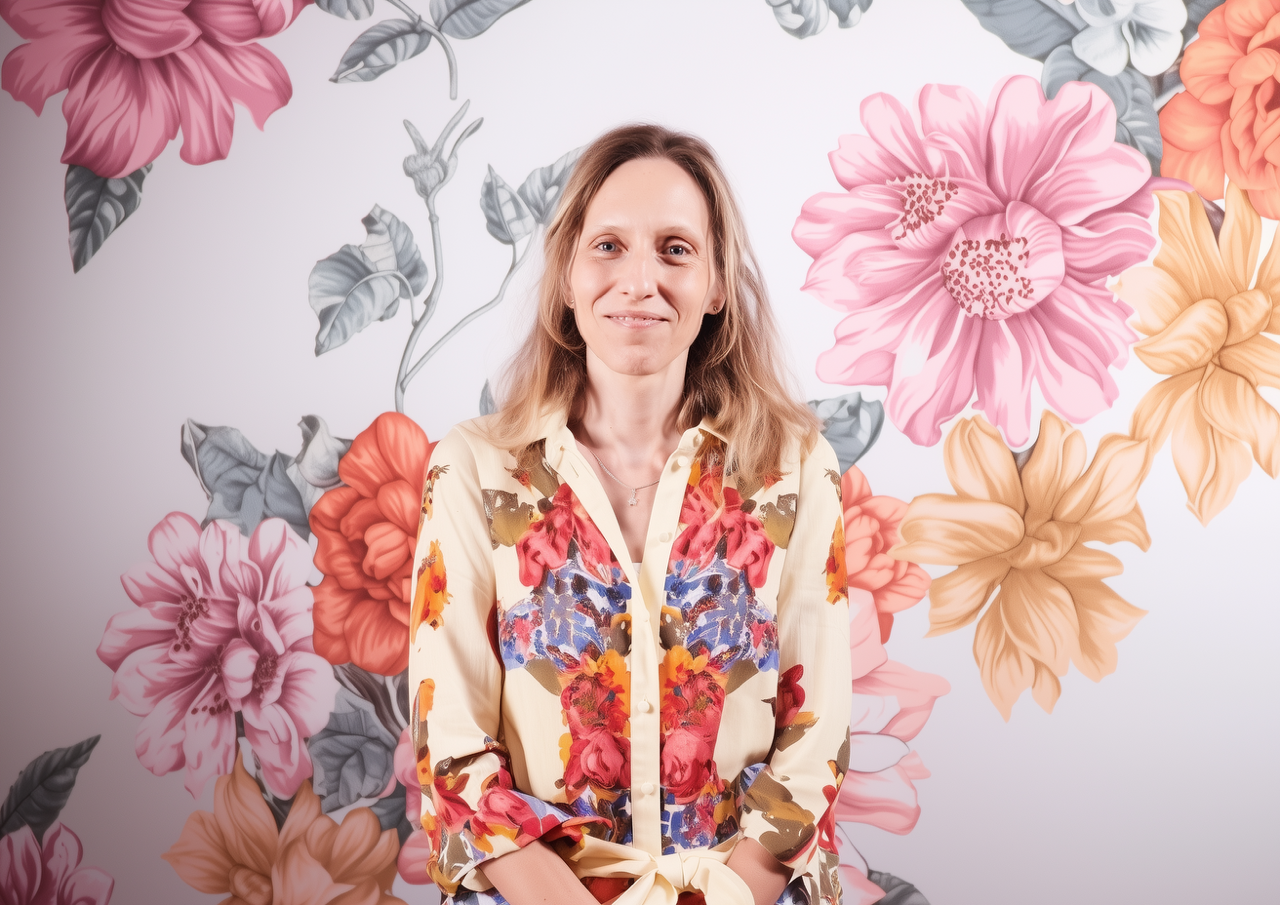
A leading figure in innovation in France, Morgane Soulier embodies a unique vision of digital transformation. At the crossroads of business, art and technology, she skillfully combines her roles as entrepreneur, speaker, consultant and artist. A graduate of EM Lyon, Sciences Po Paris and HEC, she made her mark during Facebook’s early days at Orange. She then supported Netflix’s arrival in France, founded a connected health startup, and today leads Now Futures, a consulting firm dedicated to major contemporary digital issues.
Editorialist, author of the book Metaverse, comprendre le monde qui vient (Grasset), she also explores artistic creation through AI, with exhibitions in New York, Berlin and Madrid. Meet an explorer of futures, rooted in reality. Morgane Soulier’s universe is a fascinating alchemy of intersecting passions, deep convictions and an extraordinary ability to anticipate societal changes.
During our interview, she shared with rare generosity the guiding principles that structure her journey. I invite you to discover this conversation, in all its human and intellectual richness, to paint the portrait of a woman who combines boldness, sensitivity and rigor.
A life guided by two common threads: connection and innovation
“The guiding thread of my life is first and foremost connection,” she affirms from the outset. Meeting people beyond one’s original circle, exposing oneself to other realities, opening one’s mind, fighting against prejudice. This taste for otherness permeates her entire commitment.
The second foundational axis: innovation. Not technological innovation at all costs, but a curiosity for new practices, a desire to understand emerging trends and make them accessible. “I’ve always loved appropriating changes to then educate others about them,” she says.
A journey marked by pioneering initiatives
As early as 2007, Morgane Soulier participated in Orange’s digital transformation by creating the group’s first Facebook page. She then supported Netflix’s arrival in France. She founded her first company in digital strategy when Instagram was emerging.
Her journey took a major turn when she faced health problems. From this personal experience came FEELEAT, a connected health application designed to support patients suffering from diseases affecting nutrition. She paired it with an interface for healthcare professionals, a podcast, a magazine… Nearly 5 million people reached.
From care to the stage: speaker and author
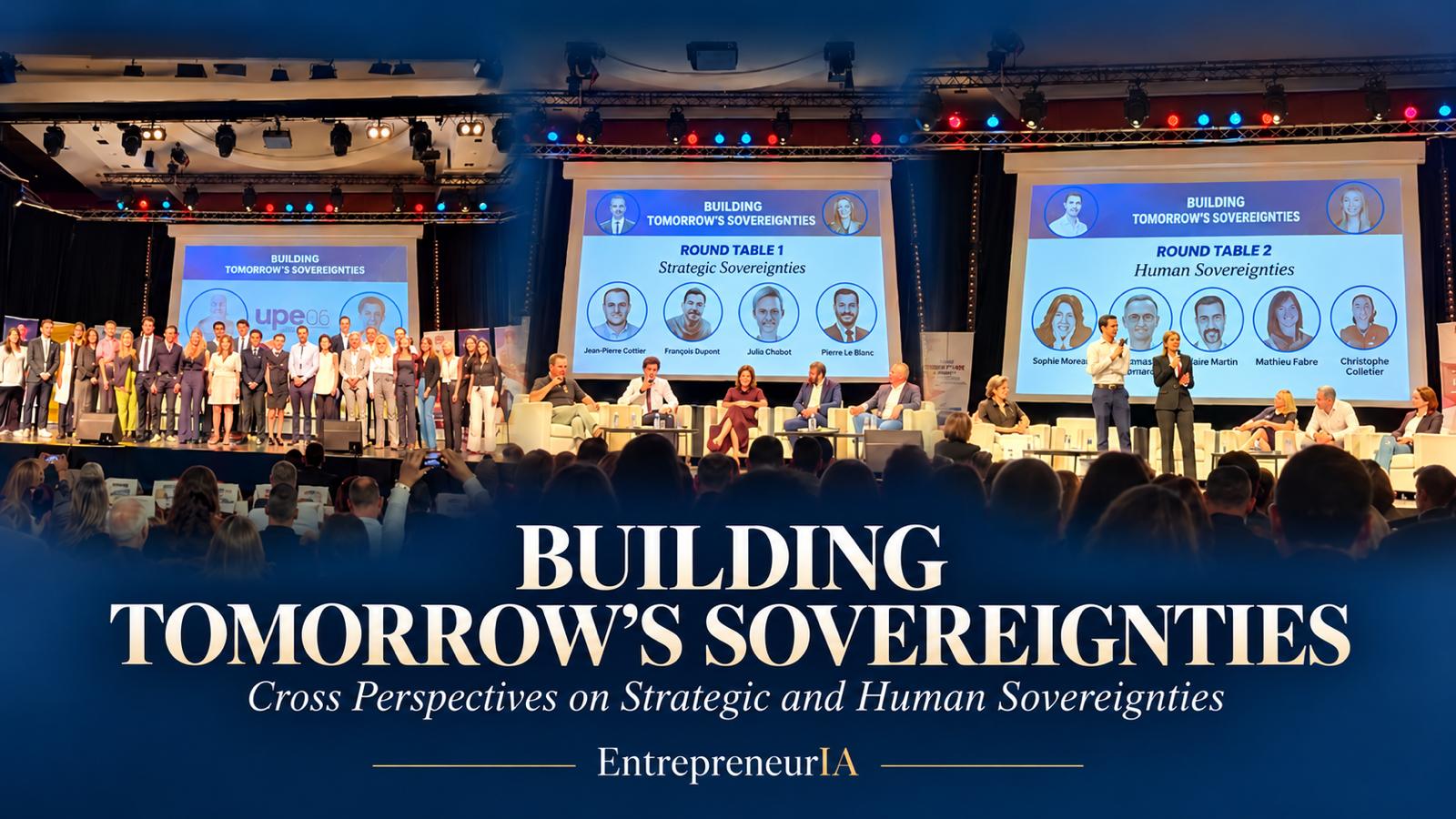
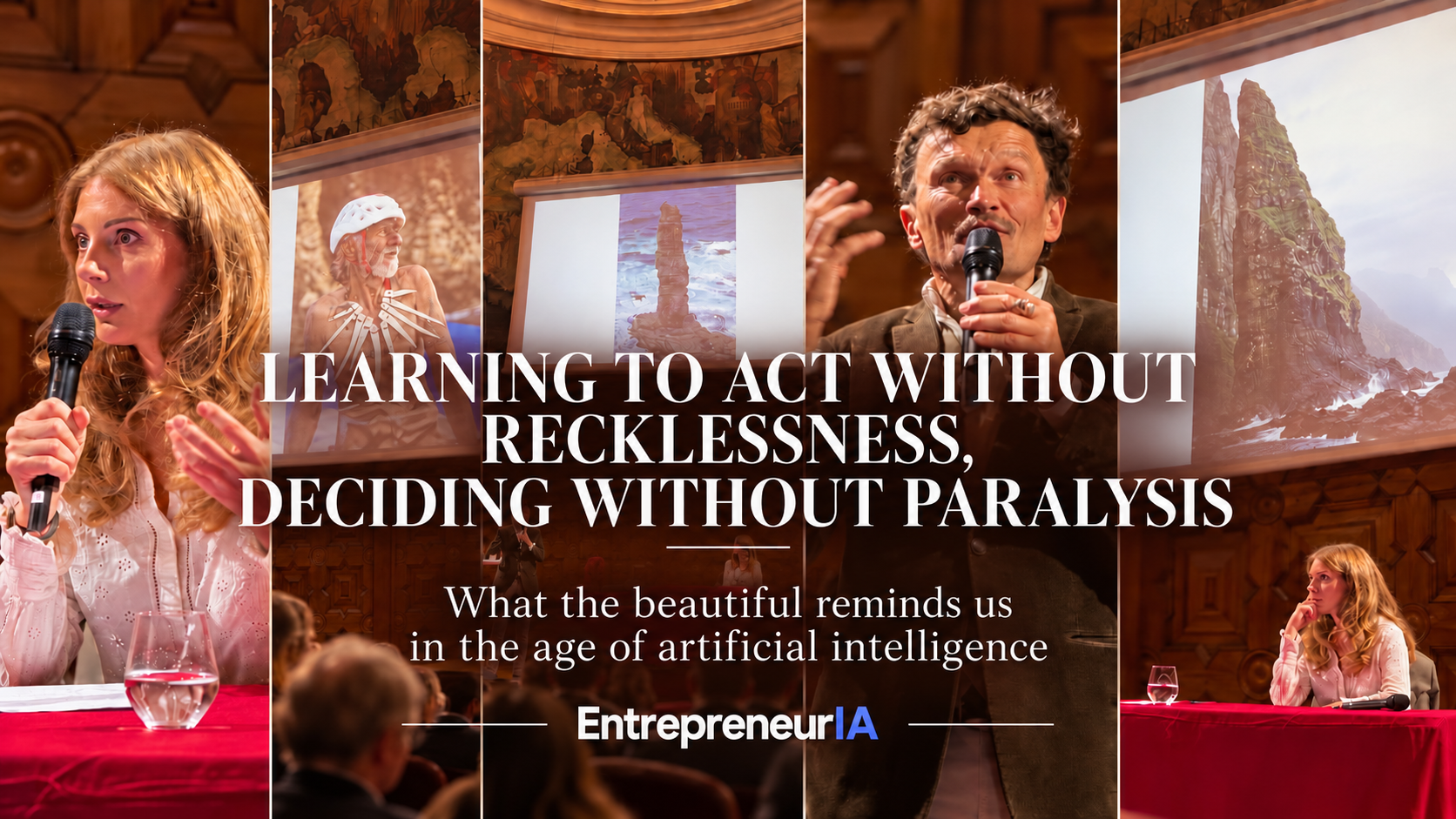
This project propelled her onto the public stage. Sought after for conferences, she pursued further training and published a book with éditions de l’Observatoire: Métaverse, comprendre le monde qui vient. She also writes columns for Harvard Business Review, Le Point, L’Express. Today, she speaks to companies to raise awareness about generative artificial intelligence, for all sectors of activity, arguing that we are all affected by this profound transformation. She nonetheless maintains a strong appetite for the health and gastronomy sectors.
A transmission method centered on meaning
“I never go into the technical sphere,” she specifies. She advocates for widespread AI literacy: understanding the history of the Internet, the dynamics of innovation, the role of AI in transforming professions. A structured approach built around awareness, general knowledge and critical thinking.
Her message to companies: “AI won’t take your job, but someone who knows how to use it better will.”
An artistic exploration made possible by AI
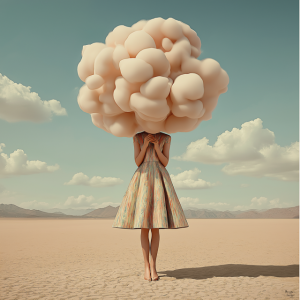
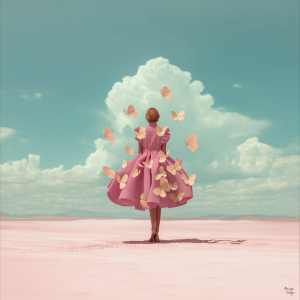 Curious to understand the tools she teaches, she began creating images via AI. Very quickly, her artistic universe took shape. Hyper-realistic visuals became emotional works. Exhibited in New York, Berlin, Madrid, she is represented by international galleries.
Her process is based on fine printing on Hannemühle paper, mounted on Alu-Dibond, framed in American box frames. In Mougins, the Art de Claire gallery now exhibits her creations, with an opening scheduled for September 26.
An emotional and embodied art
“People are amazed. They don’t expect to be moved by images created by AI.” For Morgane, the work only takes shape through human intention. AI is a tool, not an end in itself. She speaks of a “new form of art.”
She creates visual universes for brands, works as an artistic director. For her, it’s a reinvention of the relationship to creation, where every word in a prompt matters. A way to restore the nobility of language.
Morgane emphasizes the importance of the human-machine partnership. AI is not a threat if it’s used to amplify our capabilities. However, she worries about a generation that would use these tools without critical thinking. “We must teach how to ask the right questions.”
On the environmental impact of AI: a clear-eyed position
“Yes, a query on ChatGPT is energy-intensive. But who talks about the time spent navigating 30 Google pages to find an answer?” she asks. She advocates for a full-cost reading of environmental impact.
 She cites IPCC experts, including François Gemenne, who affirm that digital technology could solve the greatest ecological challenges. She calls for vigilance without falling into confirmation biases. “We must live with our times, but keeping our critical thinking.”
Faced with the fears of some artists, she offers an open reading: “Photography didn’t kill painting. AI won’t kill creation. It enriches it.”
Morgane embodies a generation of visionary women. Her trajectory is that of a bridge-builder, a mediator between worlds. The world of business and that of art, the world of care and that of innovation, the technical universe and that of emotion. She shows that one can think with rigor, create with boldness and transmit with benevolence.
She concludes: “AI is an opportunity, if we put it at the service of our intelligence. It’s not a substitute, but an amplifier of our creativity.”
A message both inspiring and urgent, at a time when the tools we invent are reshaping our humanity.
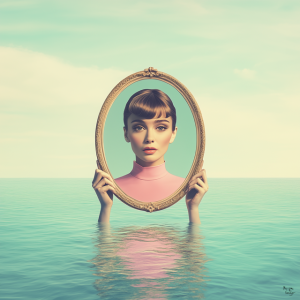
The works presented in this article are for sale at L’Art de Claire Galerie – Mougins