
Nathalie Mindus, CEO of Mindus: an international trajectory to rethink women’s access to tech
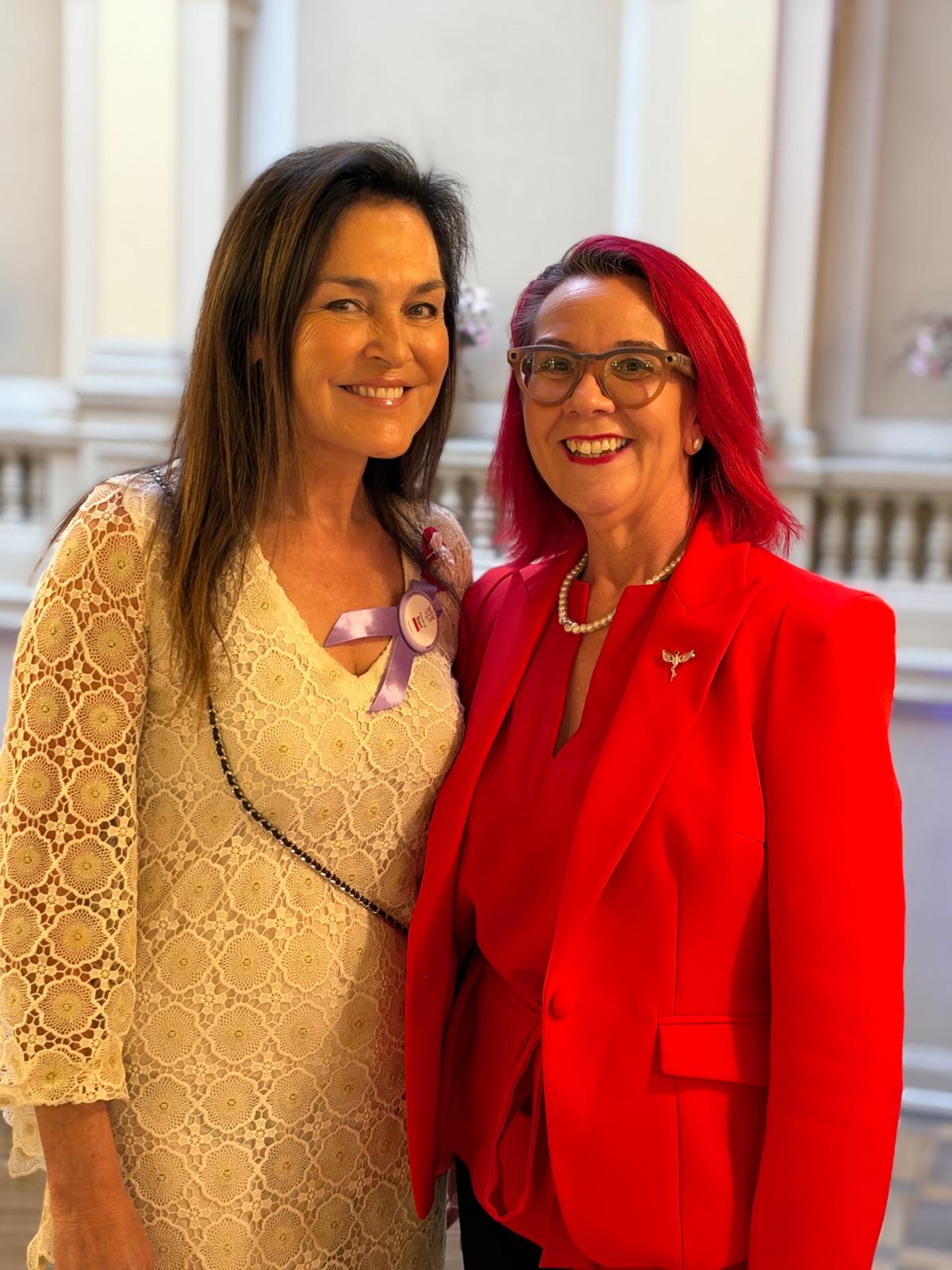
At a time when technology is redefining economic and social balances, certain paths shed unique light on ongoing transformations. Nathalie Mindus’s journey stands out as a particularly revealing case study. She will be invited to speak at a round table organized at MonacoTech as part of Digital Women’s Day on April 17th. She embodies an atypical trajectory, both non-linear and deeply coherent, which challenges a still widely held belief: must you be an engineer to work in tech?
Her path provides a nuanced, and above all strategic, answer. I had the pleasure of discussing this with her.
An identity shaped by cultural hybridization
Nathalie Mindus was born in Rwanda, in a profoundly international family environment. Her parents, originally from Shanghai, left their country at a young age so that her father could pursue his studies in France. Having become a professor of international law at the Sorbonne, he then engaged in diplomatic missions. This trajectory imprinted a culture of intellectual rigor and openness to the world.
Her childhood continued in Sweden, where she grew up and built most of her academic path. “I arrived in Sweden at the age of five. I completed all my studies at the French lycée,” she specifies. This addition of dual culture, French and Scandinavian, structures her relationship to knowledge and action. She evolved in an international environment, within a lycée attended by children of diplomats and leaders, in a multicultural context she describes as a true “cocoon.” This cultural hybridization constitutes a guiding thread. It foreshadows the way she would approach technology: as a space of intersection, translation, and interconnection.
Law as an intellectual matrix, then as a rupture
Her orientation toward law follows the continuity of her family environment. There, she developed structuring skills. “Law is very good because it helps you synthesize, analyze, and take a step back,” she emphasizes. But this discipline also revealed its limitations. Confronted with the reality of its functioning, she perceived its areas of ambiguity. “I found that there was no justice… everything is in the interpretation,” she explains. This realization marked a rupture. She chose not to practice.
Entry into tech through exposure and learning
Unlike conventional trajectories, Nathalie Mindus did not enter tech through training. She entered through gradual immersion.
Her partner, whom she has known since the age of five, passionate about technology from childhood, developed complex software solutions very early on. She observed this universe without immediately mastering its codes. “He was already in tech at ten years old… me, I understood nothing at first,” she confides. The turning point came in 2005, when together they created their first company as publishers of innovative software. She decided to become actively involved in the development of pioneering technological solutions. This shift marked an evolution in posture, from observation to action.
Being the “Decoder” as a strategic lever in the company Mindus
Her role within Mindus is not based on technical development, but on the ability to create a link between new technology and usage. “I developed the way to decode what he does… at first, people understood nothing, a tech that challenges the status quo of digital,” she explains. In a complex technological environment, this function becomes central. It makes innovations understandable, adoptable, and usable. It positions Mindus as a strategic player in the ecosystem, at the interface between engineers, companies, and users.
Toward responsible and societal tech: the DNA of Mindus
Over the years, the thinking carried by Mindus has evolved toward a systemic approach to technology. The challenge is no longer limited to performance but integrates environmental impact.
“The internet is not free… it consumes enormously,” she reminds us. This awareness led to a strategic repositioning: designing solutions capable of reducing energy consumption, optimizing bandwidth, and limiting digital pollution. This vision fits into the emerging field of sustainable tech, where technological performance is inseparable from environmental responsibility.
The technology developed by Mindus is based on a structuring principle: drastically reduce the consumption of digital resources without compromising performance. Concretely, it enables the creation of so-called “lightweight” applications, minimizing the use of bandwidth and terminal memory. Most of the processing is optimized server-side, which limits the volume of data to be transferred and extends device lifespan. This approach not only improves accessibility—particularly in areas with low connectivity—but also significantly reduces the carbon footprint of applications, an issue still largely underestimated in the digital economy.
Beyond optimized connectivity at lower cost, accessibility is no longer subject solely to material resources. It now includes low-memory devices and their users, opening access to knowledge, education, health, and all services. Digital is a human right.
B Corp, Earthshot, and UN: international recognition of Mindus
Mindus‘s commitment goes beyond discourse. It translates into concrete recognition. The company is B Corp certified, a demanding international label that values organizations integrating social and environmental criteria into their business model. This certification attests to a profound transformation of practices, well beyond declarative logic.
In this continuity, Mindus was also nominated for the Earthshot Prize 2026, an international distinction rewarding innovative solutions to environmental challenges. This nomination positions the company as an emerging player in responsible tech on an international scale.
Breaking news!!! Nathalie was selected among the 25 finalists for The WE Empower UN SDG Challenge 2026: the first global competition since 2018, celebrating women entrepreneurs whose projects advance the United Nations Sustainable Development Goals. The expected impact: supporting inspiring models that demonstrate that innovation can be inclusive and sustainable.
Tech as an open ecosystem: a message for women
Beyond her journey, Nathalie Mindus carries a structuring message. Tech is accessible. “I’m not tech… but I can bring a lot to tech,” she affirms. She emphasizes a key point: technology is not limited to code. It mobilizes a diversity of skills. It constitutes an open ecosystem.
This vision opens perspectives for women, often held back by a restrictive representation of technological professions.
Diversity and AI: a strategic challenge for the future
Her position is clear. “What I advocate is diversity,” she affirms. This statement raises a central question. Can technology designed without diversity be relevant?
In a context where artificial intelligence amplifies existing biases, the answer seems obvious. Diversity becomes a condition of systems quality. AI is based on data. It is essential that women also contribute to creating an AI that represents us all. She also emphasizes training. “You need to be trained in AI for your profession,” she stresses. The challenge is to augment skills, not replace them. This also applies to the use of AI in private life.
A trajectory that opens the field of possibilities
Nathalie Mindus’s journey, from her birth in Rwanda to her commitment in Monaco within Mindus, via Sweden and international environments, traces a coherent and inspiring trajectory. It shows that tech is not a closed domain, but a space in reconfiguration, accessible to those who accept to engage with it. It opens a strategic perspective: that of a more inclusive, more responsible technology more connected to real-world issues.