
Some trajectories highlight a reality often obscured in discussions about technology: innovation does not always arise from technical expertise, but from a concrete problem, experienced, observed, and unresolved.
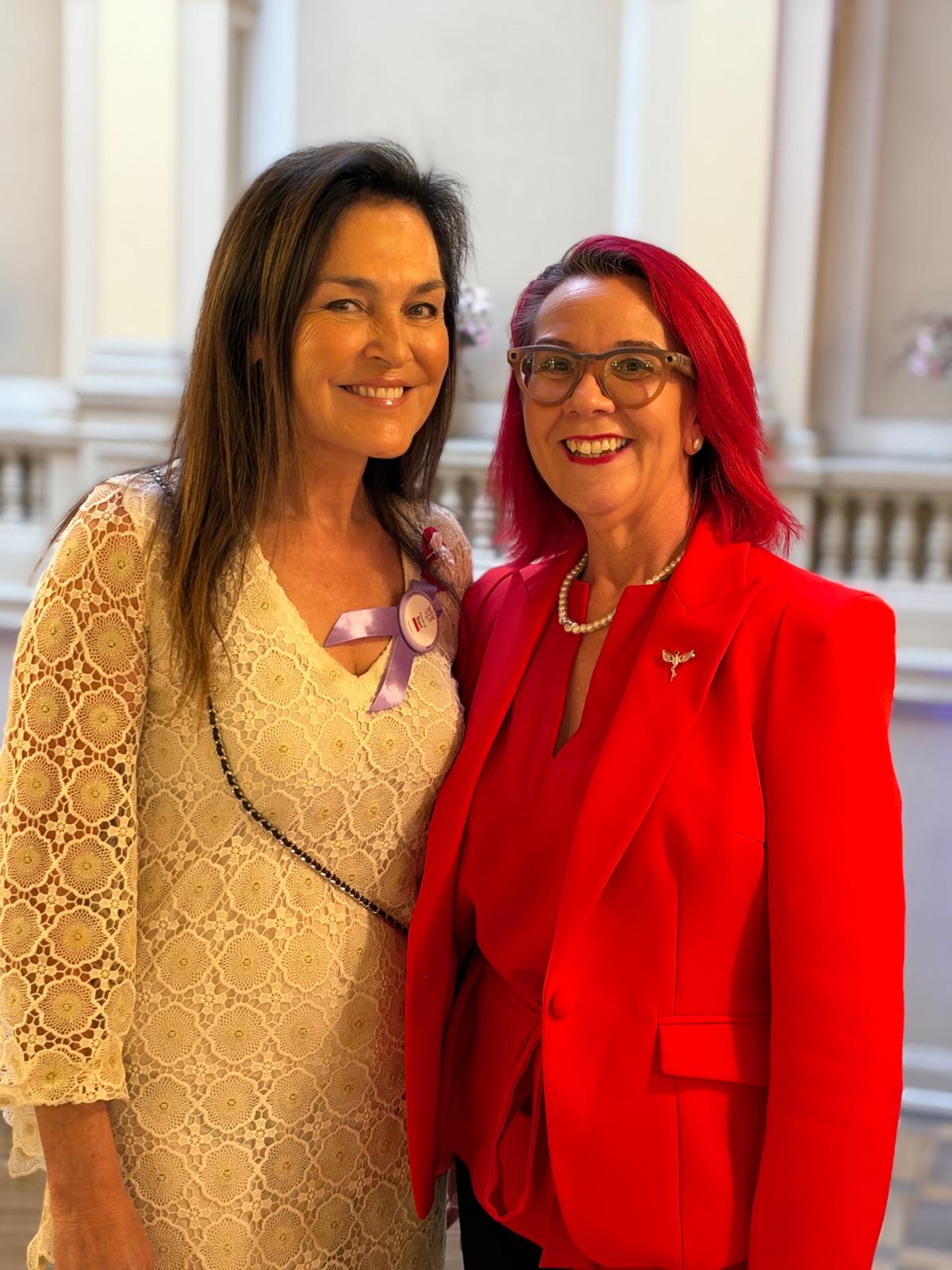
The journey of Claire Ferandier Sicard, founder and CEO of ETYC, incubated at MonacoTech, follows precisely this logic. Nothing originally destined her to create a digital platform. Trained in psychology, she began her career in a world far removed from tech, that of yachting, where she worked for eight years. It was in this context, in direct contact with operations, that a structuring question arose. How can we reduce the environmental impact of these activities, when no truly suitable tool exists?
“After a few years, I asked myself how to reduce our impact. I found no suitable solution, so I decided to create it.“
The first response is not technological. It is educational. Claire Ferandier Sicard trained in the ISO 14001 standard and designed programs for crews, with the ambition of structuring an environmental approach. The objective is clear: define actions, monitor their implementation, embed these practices over time. But very quickly, a limitation appeared. The tools used, essentially Excel or Word documents, allowed neither rigorous monitoring nor genuine team engagement. “We had no feedback. It didn’t work,” she notes.
It was at this point that digital became essential, not as an initial ambition, but as an operational necessity.
The ETYC platform was born from this constraint. It structures environmental actions progressively, organizing them around items corresponding to a boat’s various impacts. Each action implemented unlocks another, in a logic of continuous progression. Crews must provide evidence, which is then verified. At the end of the year, a comprehensive evaluation is conducted, validating the actions actually implemented. “They have to upload evidence. Then we verify and validate,” she explains.
The platform does not merely measure. It guides. It supports professionals who, most often, do not know where to start or which actions to prioritize. “Generally, they don’t know what to do or how to do it. We guide them,” explains Claire Ferandier Sicard. This dimension is essential. It transforms a subject often perceived as constraining into a structured and actionable approach.
Artificial intelligence comes into play in a second phase. It is not at the heart of the project, but it accelerates its development. Used notably through tools like Copilot, it enables faster platform construction and opens up prospects for functional improvement. “It allowed us to go much faster,” she emphasizes. The positioning, however, remains measured. AI is not presented as an end in itself, but as a lever serving a clearly identified need.
ETYC’s development follows a progressive timeline. The project began in 2019, took shape over the years, particularly after training at Cambridge in sustainability management, then reached a decisive milestone with the creation of a structure in 2024. The platform itself has been deployed with initial clients, including a yachting company that has integrated about ten boats. This progression illustrates a reality often absent from entrepreneurial narratives: that of a long timeline, made up of adjustments, experimentation, and constraints.
Because behind the technology, the challenges remain profoundly operational. Funding, structuring, development choices determine the project’s trajectory. Like many startups, ETYC operates in an environment where each decision commits limited resources, requiring constant trade-offs between ambition and feasibility.
New challenges
Today, the model is expanding. Initially designed for yachting, it is being adapted for other sectors, particularly hospitality and organizations engaged in ISO 14001 approaches. The challenge is to transform environmental impact management into a collective process, involving all teams rather than a single manager. “The idea is that it’s no longer just one person managing CSR, but the entire organization,” she specifies.
The environmental impact of digital
Another aspect deserves highlighting. From the design stage, ETYC integrates reflection on the environmental impact of digital itself. The use of expertise in “sustainable digital” reflects a commitment to consistency, in a context where digital tools themselves are being questioned for their footprint.
This journey highlights a dynamic that goes beyond ETYC alone. It shows that innovation can emerge from field experience, that technology can be mobilized as a response rather than as a starting point. Digital adoption does not rely solely on initial training, but on the ability to structure a problem and provide a solution.