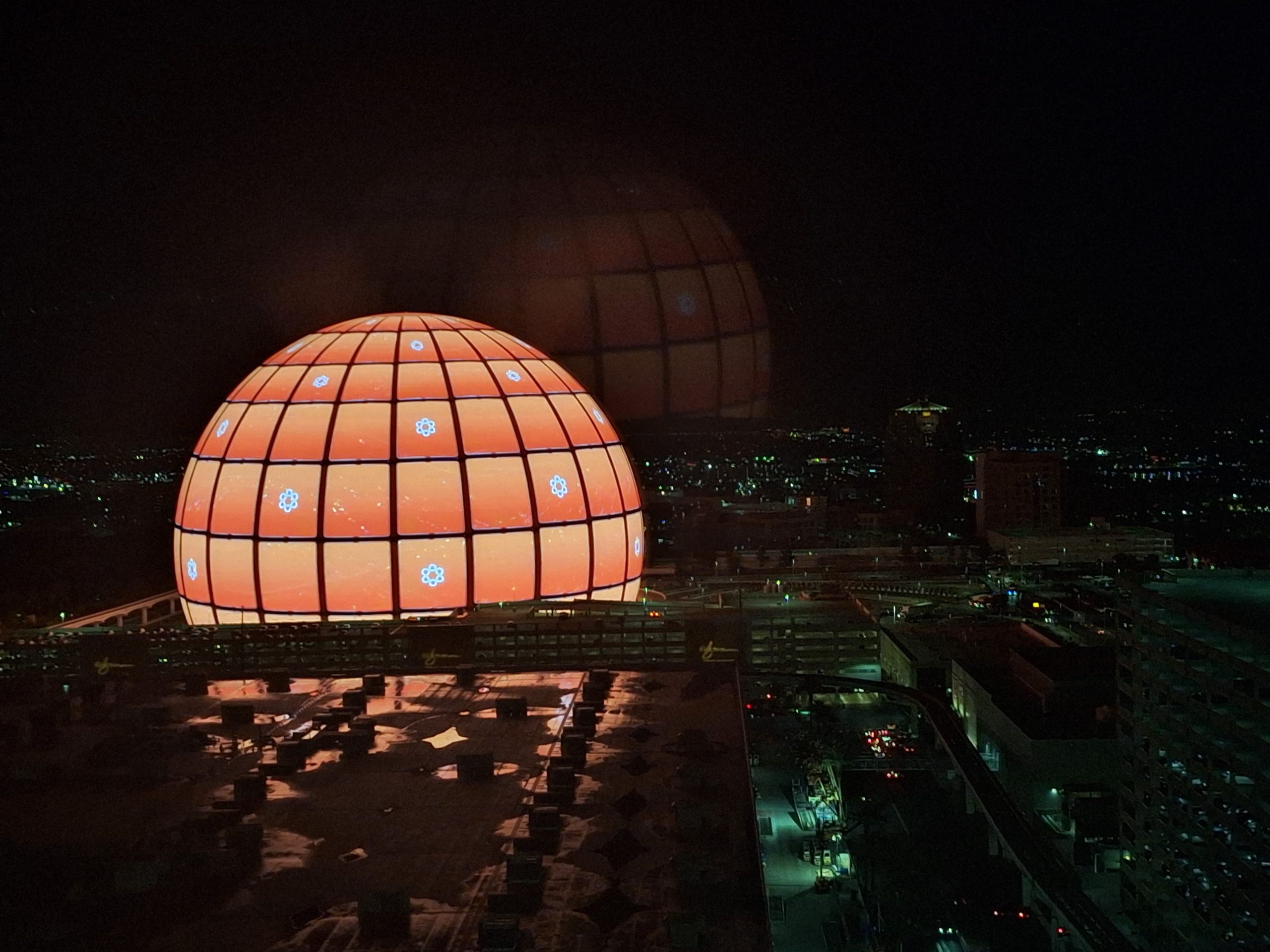
Las Vegas, early January. The tech world gathered here for what remains, year after year, the stage for a global showcase of innovation. However, this 2026 edition of the Consumer Electronics Show marks a notable shift. Fewer vague promises. More concrete proof. Less showmanship. More industrial trajectories.
In this new composition, artificial intelligence ceases to be a subject of purely cognitive fascination to become an embedded, operational, physical reality. Robotics leaves the realm of gadgetry for that of value chains. Energy, discreet until now in innovation narratives, now imposes its limits. All within a context of subdued yet omnipresent geopolitical rivalries.
A transitional edition: innovation between tension and execution
CES 2026 is not just another trade show. It closes a cycle of technological hyper-promises often unfulfilled and inaugurates a new era: that of trade-offs. Technology no longer presents itself as an end in itself, but as a lever to be articulated with industrial, economic, and energy constraints. Artificial intelligence becomes a critical subsystem within much broader architectures.
The shift of the show’s heart toward the new CES Foundry — a space dedicated to AI and quantum computing — is not insignificant. It reveals a strategic pivot: the truly structural questions are no longer those of the interface but those of computing power, energy optimization, and infrastructure resilience.
Embedded AI: from simulation to the real world
The major lesson from this CES lies in the operational shift by AI. We’re no longer just talking about generative models or virtual assistants. What’s emerging this year is embedded AI, meaning the ability to run algorithms in physical objects: cars, robots, medical devices, household appliances.
Nvidia strikes hard with Alpamayo, an open-source platform for autonomous driving, already adopted by Mercedes-Benz. More than the product, it’s the ecosystem that needs attention: local computing, software integration, safety standards, interoperability.
On the ground, Zoox creates a sensation with its autonomous shuttles circulating freely on the Strip. The experience is very real, as is the queue to test the vehicle. But cohabitation between human-driven cars and autonomous vehicles remains a friction point. The algorithm doesn’t solve everything. The city itself isn’t ready yet.
Robotics: visual breakthrough, functional inertia
CES 2026 also marks a visual breakthrough. Robots are everywhere. In the halls, at the booths, sometimes even in hotels. They put on a show, of course. They fold, serve, play, clean. But beyond the surprise effect, a technical reality emerges: slowness. Lack of execution optimization. The gap between marketing promise and actual use.
Symptom case: CLOiD, LG’s butler robot. It talks, grabs, folds, organizes. But it sometimes takes two minutes to accomplish a trivial task. Here we perceive the gap between isolated technical performance and genuine utility in a domestic environment. For robotics to become part of our lives, it will need to gain fluidity, responsiveness, and action efficiency.
The storytelling is changing. Gone are the anxiety-inducing speeches about replacing humans. The line is clear: robots don’t do things instead of us, they assist. They’re teammates, not competitors. A communication strategy designed to facilitate adoption — and defuse tensions.
Atlas, industrial humanoid: the real turning point
More discreet but infinitely more structural: the return of Atlas, Boston Dynamics’ humanoid robot, now developed for Hyundai. The objective isn’t entertainment, but the factory floor. By 2028, Atlas must participate in vehicle construction under extreme conditions, with heavy loads and increased autonomy.
Boston Dynamics isn’t working alone. Nvidia and Google DeepMind are involved. The challenge is to make this machine fully operational in an industrial environment, which requires much more than simple mobility or pattern recognition capabilities. This involves fine coordination, proven robustness, optimized maintenance, and compliance with certification standards. Coordination, robustness, maintenance, and certification have become essential prerequisites.
In this alliance, we see a convergence: that of cognitive AI and physical robotics. An inflection point. Jensen Huang speaks of a “ChatGPT moment for robotics.” The phrase is well chosen. This is no longer a laboratory subject. It’s a factory floor subject.
Hardware, consumption, energy: the return of physical realities
CES 2026 reminds us of an obvious truth: AI consumes. A lot. Too much.
Forvis Mazars emphasizes it: energy is becoming the strategic constraint. The cost per watt, datacenter cooling issues, model and hardware efficiency are reconfiguring priorities.
Gone is the dream of dematerialized innovation. The future requires energy, architectural, and logistical trade-offs. It’s not the technology that’s lacking. It’s its sustainability. Batteries are improving, but no breakthrough is in sight. Datacenters are exploding in consumption. The energy wall is real.
In this context, players capable of articulating power, efficiency, and stability will gain the upper hand. AI won’t be slowed by abstract ethical questions, but by very concrete field realities: saturated networks, excessive bills, physical limits.
Lenovo and China: the other major show of force
Far from technical debates, another power dynamic is at play. That of industrial powers.
Lenovo establishes itself as the Chinese flagship. Spectacular presentation, keynote at the Sphere, prestigious guests, visible hardware innovations (notably its rollable PC screen).
China isn’t coming to align. It’s coming to make a mark. Lenovo doesn’t just show products, it builds a global narrative, in a context of trade tensions with the United States.
By contrast, giants like Samsung or Sony are reducing their presence. Others shift to parallel events, more private, more controlled. CES becomes a strategic theater, where absence is sometimes as significant as demonstration.
French Tech: health, prevention, and longevity
In this ensemble, French Tech continues to hold its ground, without flamboyance, but with real coherence.
About a hundred startups were present this year, mainly concentrated at Eureka Park.
The clearest dynamic is that of preventive and connected health.
Among the most notable examples:
- Allergen Alert, and its pocket laboratory for food allergies;
- Withings, with a new Body Scan scale capable of analyzing 60 biomarkers in less than two minutes;
- Y-Brush, which adds to its rapid toothbrush an olfactory technology capable of detecting over 300 pathologies through breath.
What’s emerging is a French specialization in sensors, measurement, and health applications. A demanding market, heavily regulated, but also promising long-term. French Tech is playing to its strengths here: fine integration, engineering quality, links with healthcare systems.
What this CES tells us: the future is becoming industrialized
CES 2026 didn’t offer a major visual shock or conceptual breakthrough. This wasn’t an edition of promises. It was an edition of landing.
Landing of technologies in reality.
Landing of discourse in business models.
Landing of AI in objects, systems, places.
Landing of innovation within its own limits.
AI becomes infrastructure.
Robotics becomes interface.
Energy becomes governance.
The question is no longer what technologies can do.
But what we’re capable of doing with them, here and now.
Sources
Maddyness, Maxence Fabrion
“IA, robots, French Tech …: on fait le bilan de ce CES 2026 à Las Vegas”, published January 11, 2026
Forvis Mazars – Insights CES 2026
“Insights Recaps CES 2026: ce qu’il faut retenir”
Consumer Technology Association (CTA)
Official press releases on attendance, exhibitors and new areas at CES 2026
Business France, CES 2026 file
“La French Tech au CES 2026 : une délégation tournée vers la santé, la prévention et la longévité”
(Information cross-referenced with the Eureka Park program)