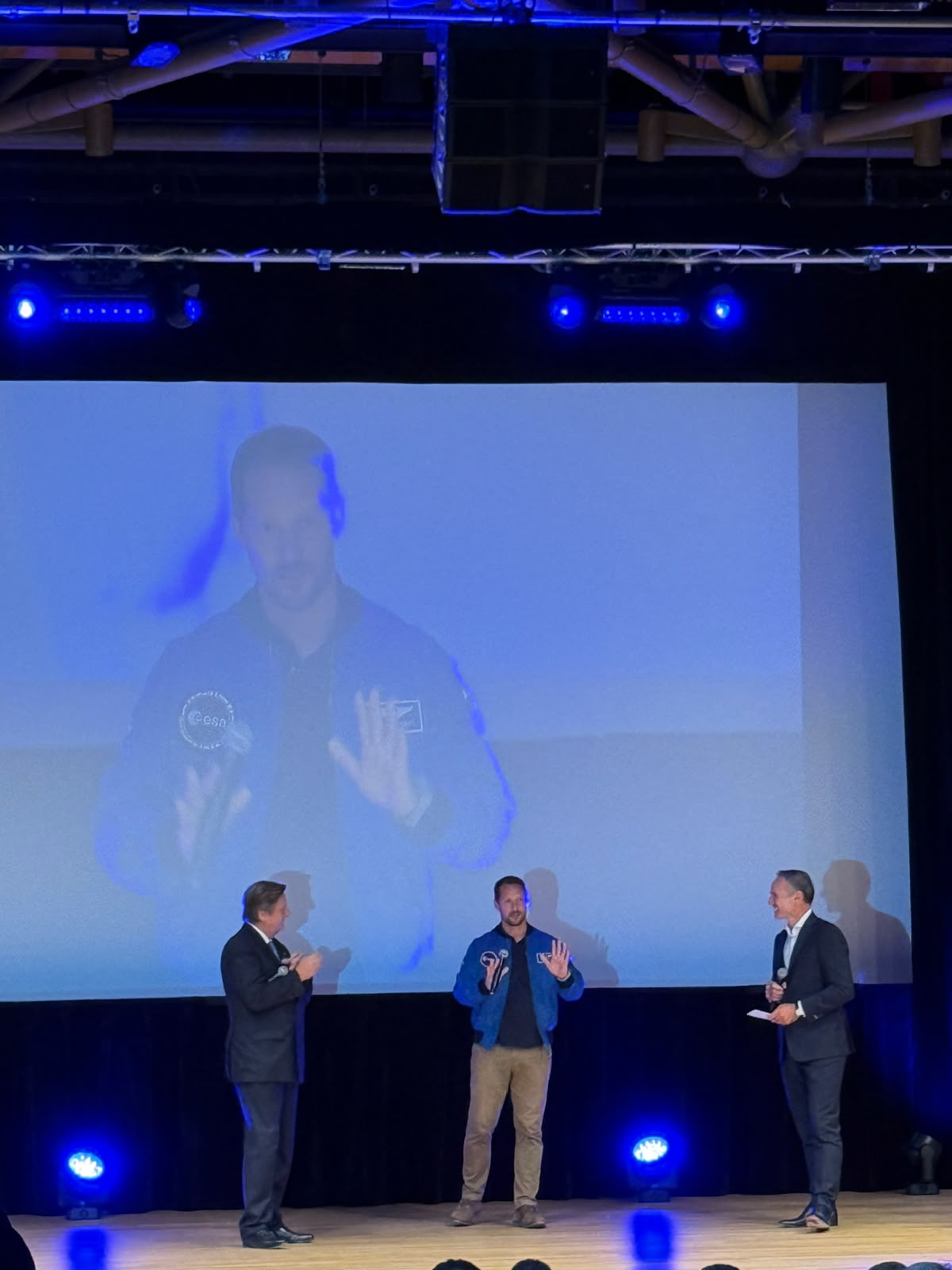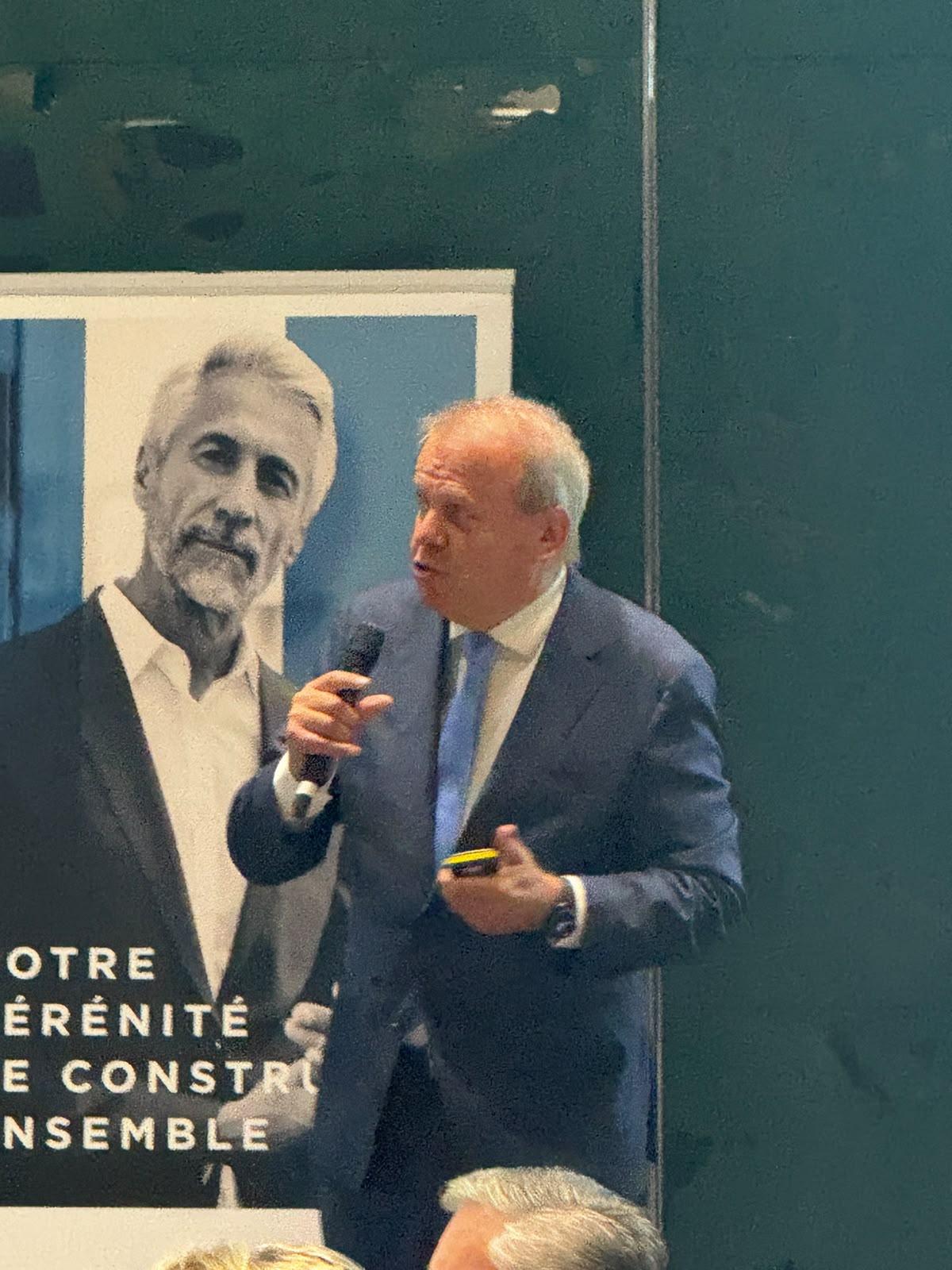
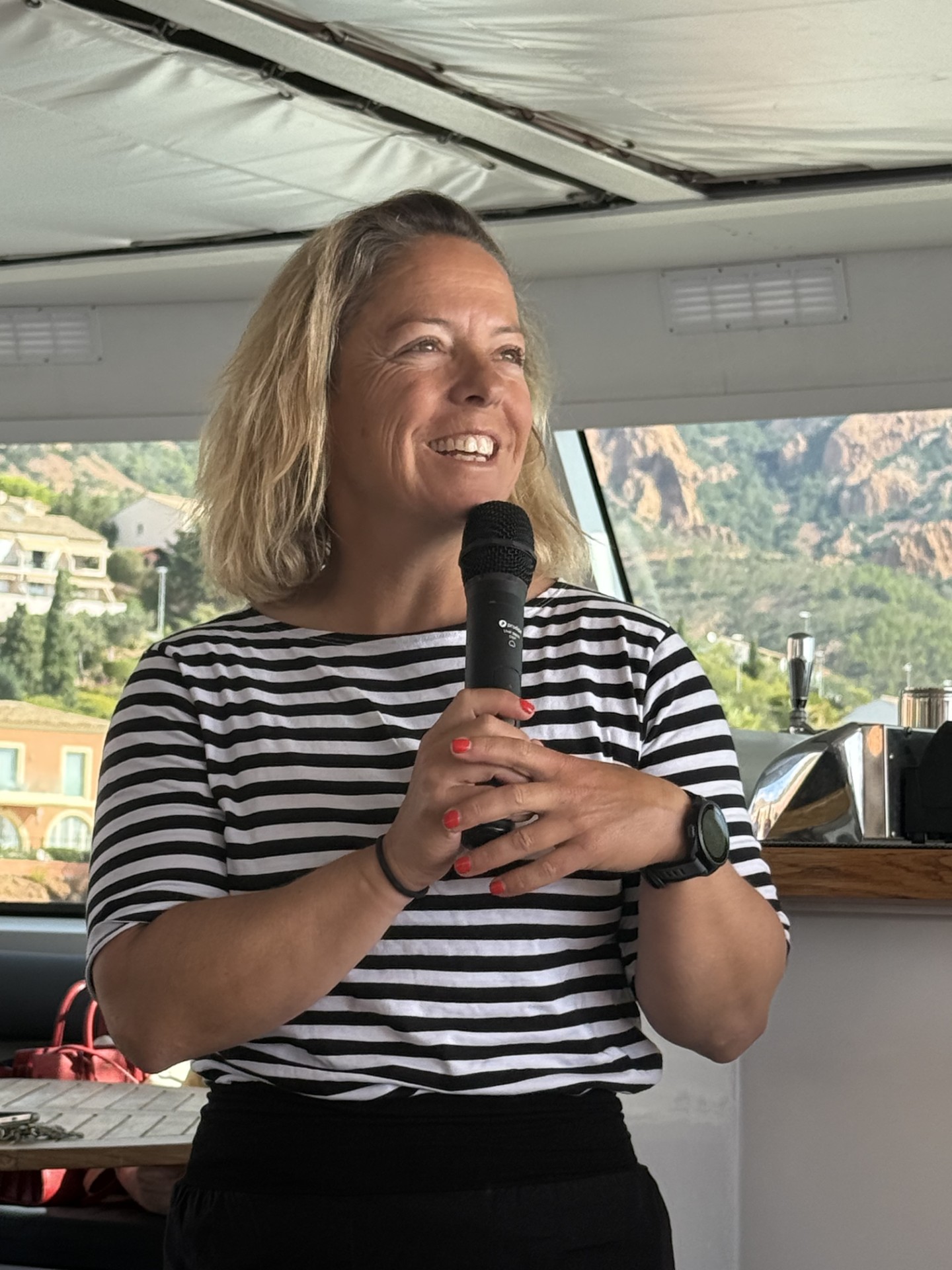
At the five-year anniversary of FCE Var Estérel, chaired by Claire Le Gouill, sailor Alexia Barrier shared a journey where sports performance intertwines closely with entrepreneurship, leadership, and managing uncertainty. Building a project without having all the resources, making decisions under pressure, knowing when to change course, forming a team, and preserving energy to endure over time—here’s what I took away from this inspiring moment.
When visible performance hides everything that precedes it
A few weeks before the start of the 2026 Route du Rhum, Alexia Barrier could have focused her talk on records, crossings, and pure performance. Her story reveals a more complex reality. Before the starting line, you have to secure funding, convince people, structure, recruit, prepare the machine, and keep a team mobilized for months, sometimes years.
Behind the sailor thus appears an entrepreneur, head of a racing stable and leader of projects whose budgets run into millions of euros. Her journey goes beyond the sports narrative. It questions how ambitious projects are built when resources are limited, results uncertain, and the path still to be invented.
One question ultimately runs through her entire talk: how do you move forward when you know the destination, but not yet the route that will get you there?
A dream big enough to become a bearing
Alexia Barrier grew up in Nice and discovered the sea at a very young age. Yet one scene is enough to understand what drives her.
At twelve years old, she watches the start of the Vendée Globe on television. She decides that one day, she will participate in this solo around-the-world race, without stops and without assistance.
“At twelve years old, when I see that on TV, I tell myself: OK, I’m going to be a Vendée Globe skipper.”
She keeps this ambition to herself. She has just experienced her first sports disappointment in basketball and fears that adults will explain to her why this new dream is also unattainable.
This anecdote retrospectively illuminates a large part of her journey. Alexia Barrier does not present ambition as a certainty of success. Rather, she describes it as a bearing powerful enough to guide decisions, even when the route to reach it remains unknown.
Nearly three decades later, she will indeed take the start of the Vendée Globe. In between, there will be years of sailing, seeking funding, projects built then abandoned, opportunities seized and difficulties overcome. But the essential point is elsewhere: the bearing has not changed.
A one-way ticket and no return ticket
A second anecdote probably sums up the entrepreneurial dimension of her journey better than lengthy explanations.
At 23, Alexia Barrier is looking for her first sponsor. She has few means and practically no network capable of opening the doors of large companies. A former teammate finally gets her a meeting with Roxy’s marketing department in Saint-Jean-de-Luz.
“I have 20 euros in my pocket to finish the month. I buy the outbound ticket. I don’t buy the return ticket because I don’t have the money. I tell myself: we’ll see.”
The scene could be told as a romantic illustration of audacity. It mainly says something about the reality of entrepreneurial beginnings: moving forward with very limited resources when you consider the opportunity worth seizing.
When her contact offers to equip her with clothing, Alexia Barrier responds with her characteristic frankness:
“Honestly, I could go there naked eating seaweed. What I need is money. I don’t need to be dressed.”
Behind the phrase lies an essential skill: identifying what the project really needs. The meeting will lead to her first partnership.
In offshore racing, as in entrepreneurship, performance begins well before the starting line. You have to convince, finance, structure, recruit, and create the conditions that will then allow sports performance to exist.
The Vendée Globe: when plans meet reality
When Alexia Barrier finally takes the start of the 2020 Vendée Globe, she realizes the dream formulated at twelve years old. But what she retains today from this experience goes far beyond the sporting achievement.
Ten days from the finish, she falls inside her boat. The pain is considerable. She will later discover that she fractured her back. Alone at sea, she must nevertheless continue sailing and maintain her lucidity until arrival.
“We have no idea what we’re capable of. As long as we’re not in the situation…”
Above all, she draws from it a reflection on preparation and uncertainty. Before a race around the world, teams imagine possible breakdowns, build procedures, and prepare checklists. But reality almost never follows the scenarios exactly.
“Every time, it falls to the side. Every time, it happens at night, at the worst possible moment.”
The value of preparation is therefore not to eliminate uncertainty. It consists of creating enough skills, reflexes, and resources to be able to react when precisely what had not been anticipated occurs.
In urgency, start by not rushing
One of the lessons most directly transferable to business concerns crisis management. Faced with a major problem, instinct often pushes to act immediately.
Her experience as a sailor has taught her another discipline:
“Even if it’s an absolute emergency situation, take the time to stop and think.”
At sea, a few minutes of reflection can avoid a bad maneuver or an irreversible decision. In the company, she now applies the same principle. Faced with a financial, legal, or operational difficulty, she first seeks to frame the problem, consult competent people, and identify options before deciding.
This reflection time is not an absence of decision. It improves its quality. In organizations facing fast and uncertain environments, this distinction between speed and haste deserves to be retained.
Knowing when to leave a route that has become too comfortable
After the Vendée Globe, Alexia Barrier is offered a new three-year campaign with a more powerful boat. For a professional sailor dependent on sponsors, the opportunity brings rare security.
She accepts. But something doesn’t work. Her real desire is elsewhere: sailing on the big ULTIM trimarans.
She gradually understands that she is pursuing a rational project, but one that is no longer hers. She then makes a radical decision: stop the Vendée Globe campaign and head toward a project for which she does not yet have complete funding or the boat.
“Guys, we stop everything.”
This rupture will give birth to The Famous Project.
The episode raises a particularly interesting question for female entrepreneurs and leaders: at what point does the security of a trajectory itself become a risk when it distances you from the project you really want to build?
The Famous Project: performance as a collective adventure
With The Famous Project, Alexia Barrier decides to form an exclusively female crew for a round-the-world trip on a multihull. She receives 300 applications from around the world. Eight sailors of seven nationalities will ultimately be brought together.
The project attracts comments and skepticism. But rather than dwelling on criticism, Alexia Barrier emphasizes what the experience taught her about the collective. Over the course of the round-the-world trip, the sailors progress, gain confidence, and learn to exploit the boat’s potential more.
For her, success is therefore not measured solely by the stopwatch.
“The best reward, more than telling yourself you’re a record holder, is seeing my crew sublimate themselves over the days.”
This phrase summarizes a conception of leadership that runs through her entire talk. A leader’s performance is not measured only by what they personally accomplish. It is also measured by what others become through contact with the project.
When the captain must decide
One scene is enough to measure what this responsibility means concretely. During The Famous Project’s round-the-world trip, approaching the Azores, the crew must face a violent storm. The mainsail is damaged. Conditions are deteriorating. The priority is no longer the record: the boat and crew must be brought back to land.
The weather unit analyzes the options. No route truly avoids the difficult zone. At some point, the decision can no longer be outsourced.
“You’re the one who decides. No one could make this decision in my place.”
Alexia Barrier chooses to move forward. She also knows that her attitude directly influences that of the crew.
“I’m the captain. As long as I’m lucid and I know what I want to do, I don’t put my team at risk because they know they can count on me.”
Leadership appears here in its most stripped-down form: listen to experts, gather information, assess risks, then accept that at some point someone must decide.
Skills alone are not enough to make a team
The experience of The Famous Project has reinforced her way of recruiting. Her formula surprises in a world of very high performance:
“I never look at CVs or track records. I look at desire, kindness, the desire to learn, and the ability to pass on knowledge.”
It is obviously not about denying the importance of technical skills. On a trimaran launched around the world, they are vital. But individual skills do not guarantee the group’s functioning.
You have to share information, accept learning, pass on what you know, and preserve trust when fatigue and pressure increase. Relational quality then becomes a component of performance.
Alexia Barrier is also interested in the personal projects of her team members. She considers that an employee cannot sustainably live only at the pace of their leader’s project. A particularly current reflection at a time when companies seek to reconcile engagement, performance, and talent retention.
Learning to ask for help
Alexia Barrier is now preparing a new challenge: the 2026 Route du Rhum on ULTIM. This time, she will be alone on a gigantic machine, initially designed to be maneuvered by a crew.
Faced with the scale of the challenge, she decided to accelerate her learning by seeking out those who have the experience she does not yet have. Among them, Loïck Peyron, who knows this boat particularly well.
She humorously summarizes how she approached him:
“You’re not the strongest, but you’re the smartest. Come explain to me how you did it.”
Technical preparers, performance specialists, physical and mental preparation: she builds an ecosystem of skills around her.
In hindsight, she acknowledges that this approach was not always natural to her.
“I’m 46 years old. It took me time to understand that you could ask for help.”
In her story, asking for help is no longer a weakness. It has become a method to progress faster.
Never reach red
The question of performance finally leads Alexia Barrier to particularly familiar terrain for leaders: energy management.
Rather than valorizing the ability to endure exhaustion, she insists on the need to recognize its signs.
“We saw the red flags, we saw all the alarms, the signals, but we didn’t really pay attention to them because we managed to continue moving forward. And there’s a moment when it no longer works.”
Her method comes in three colors: green, orange, red.
The goal is not to know how long you can stay in the red. It consists of detecting early enough the shift to orange. Fatigue, irritability, decreased concentration, loss of energy: at that moment, she acts. Eat, drink, sleep, recover, do visualization, or listen to music.
“I try emotionally never to touch the bottom of the pool.”
The image resonates particularly in the entrepreneurial world. The ability to continue moving forward can become deceptive. Because a person is still functioning, they may consider that they are capable of continuing at the same pace, until the moment when they no longer can.
Sustainable performance therefore consists not only of knowing how to accelerate. It also involves knowing when to slow down.
“My optimism, but not in Pollyanna mode”
When asked what her main mental strength is, Alexia Barrier answers without hesitation: optimism.
She immediately clarifies:
“My asset, I think, is my optimism, but not in Pollyanna mode.”
It is not about thinking that everything will necessarily end well. Her optimism rather rests on the conviction that a solution can be sought, provided you work, surround yourself, and accept adapting the route.
“I look at the horizon and the distant objective rather than the present situation which may be difficult, uncomfortable, and complicated.”
This phrase could summarize her journey. The horizon does not eliminate the storm. It allows you to remember the direction when the storm occupies the entire field of vision.
Audacity is not recklessness
At the end of this meeting organized for the five-year anniversary of FCE Var Estérel, Alexia Barrier’s journey reveals a definition quite distant from the sometimes spectacular image associated with audacity.
Audacity is not the absence of fear. Nor is it permanent risk-taking.
It perhaps consists more of knowing why you are leaving. Of preparing what can be prepared without believing that everything can be anticipated. Of listening to those who know. Of changing course when the project no longer makes sense. Of building a team capable of progressing collectively. Of preserving your energy before reaching the breaking point. And, when the decision can no longer be delegated, of accepting the responsibility of making it.
Alexia Barrier sums it up with a conviction that goes far beyond offshore racing:
“I know what I’m doing, I know where I’m going, and I know how I’m going to do it. I don’t know exactly how I’m going to get there or when I’m going to get there, but I know I’m going to get there.”
For the leaders gathered around Claire Le Gouill on the occasion of the five-year anniversary of FCE Var Estérel, the maritime metaphor then takes on its full meaning.
Leading does not consist of knowing the entire route before leaving port. You must know where you want to go, prepare your organization, choose the right people, observe the signals, accept correcting the trajectory, and maintain enough energy to endure over time.
The rest belongs to navigation.