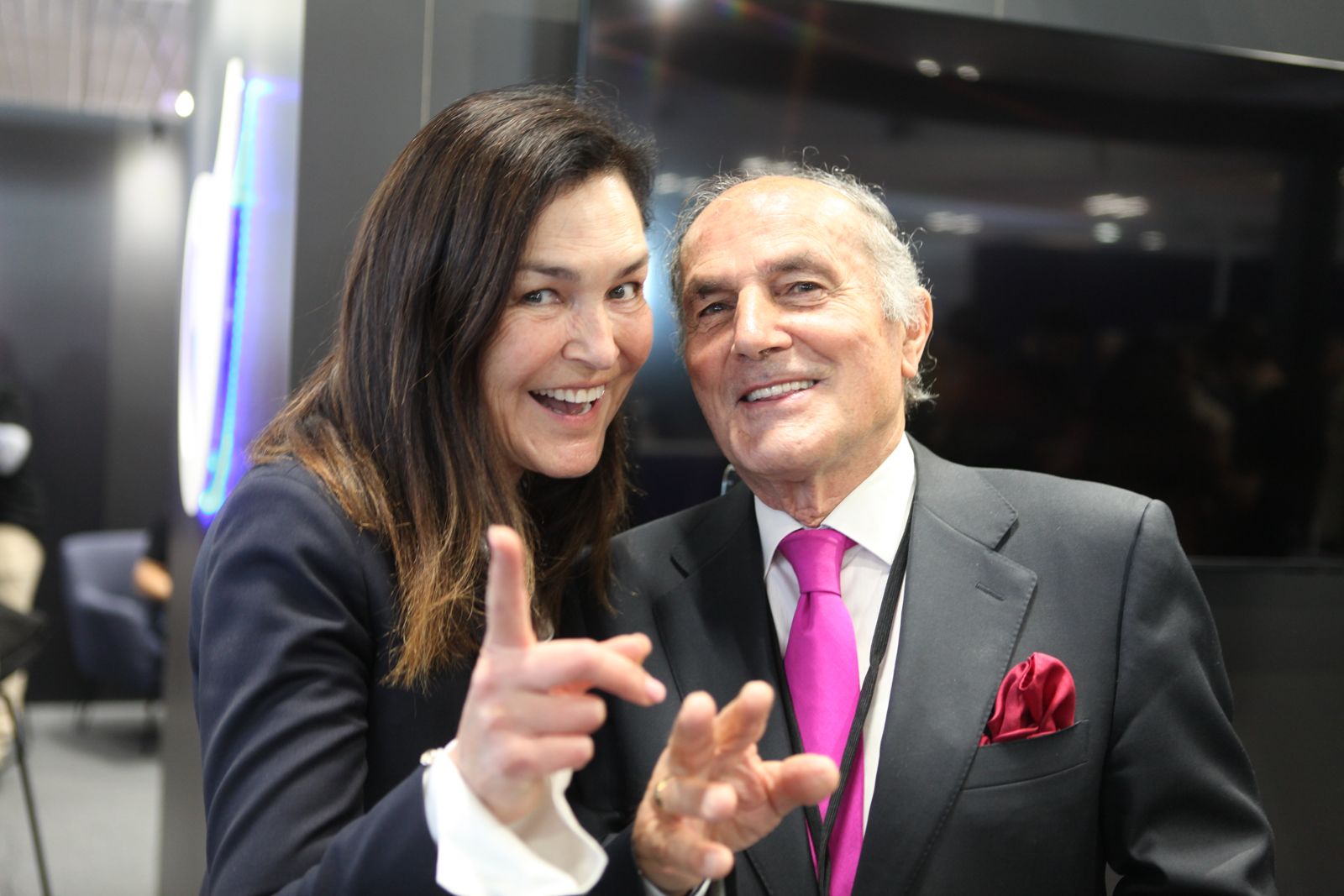
The journey of Marco Landi, a trained engineer and major figure in the global technology industry, illustrates the evolution of challenges related to innovation, global leadership, and ethical artificial intelligence (AI). Marco Landi began with an international career in telecommunications and electronics, before experiencing a remarkable rise at Apple. Today, he embodies committed leadership, driven by a vision of ethical artificial intelligence serving humanity.
Solid Foundations: Education and Early International Responsibilities
A graduate of the University of Bologna in telecommunications engineering, Marco Landi completed his education at INSEAD, one of Europe’s most prestigious management institutes. This dual technical and strategic expertise enabled him to enter the corporate world in a context of growing globalization.
His professional career began at Texas Instruments. There, he climbed the ranks through operational management positions across several continents: Europe, the Middle East, Africa, and Asia. This period was marked by the company’s rapid geographical expansion into emerging markets. He played a key role in adapting products to local cultures and their international development.
This phase laid the foundation for a rare profile: a leader capable of anticipating global dynamics while steering local transformations. Already at that time, Marco Landi developed a vision of technology balancing economic performance and societal impact.
The Rise at Apple: A Strategic Role in a Company in Transition
In 1994, Apple was going through a period of strategic instability. The American company sought to revitalize its European operations. Marco Landi was recruited to meet this challenge as president of Apple Europe. Within months, he succeeded in restoring growth on the continent by restructuring the organization and strengthening ties with local partners.
His success in this position caught the attention of the California headquarters. He was appointed Chief Operating Officer (COO) in Cupertino, a central role in managing global operations. In this position, he oversaw logistics, marketing, sales, and business relationships on a global scale.
But his role went beyond the purely operational dimension. Marco Landi played a key role in Steve Jobs’ return to Apple, a decisive event in contemporary tech history. This strategic maneuver enabled the company to rediscover its innovation DNA and initiated a decade of technological renewal, symbolized by the iMac, then the iPhone.
The Call of Artificial Intelligence: From Tech to Humanistic Issues
After leaving Apple, Marco Landi took a decisive turn: he decided to dedicate his energy to artificial intelligence, not just as technology, but as a societal issue.
In 2019, he founded the EuropIA Institute in Sophia Antipolis. This organization’s mission is to raise awareness among citizens, businesses, and institutions about the ethical challenges of AI. The ambition is twofold: to popularize concepts for the general public and create a multidisciplinary ecosystem that places humans at the center of technological decisions. The institute has become a platform for exchanges between researchers, entrepreneurs, philosophers, lawyers, and artists, uniting often siloed perspectives. EuropIA positions itself as a European voice against the dominant North American and Chinese AI models, often focused on profitability or surveillance.
In this dynamic, Marco Landi launched two major events:
The World AI Cannes Festival (WAICF)
Created in 2022, this annual festival takes place at the Palais des Festivals in Cannes and brings together the main AI players: companies, startups, researchers, institutions, and citizens. It is one of the few events that combines business, academic, and cultural dimensions. Topics addressed include generative AI, digital twins, robotics, and digital sovereignty. WAICF aims to become a European AI hub, promoting sustainable and ethical innovations while providing a showcase for local initiatives.
The World AI Film Festival (WAiFF)
In 2025, Marco Landi continues his exploration of the interactions between art and technology by founding the WAiFF in Nice. This film festival, dedicated to AI’s impact on cinema, questions the creative potential of machines.
One of the flagship projects of this edition is a partnership with Pathé Films and Genario, a French startup specializing in generative AI. Together, they launched a screenplay competition co-written by artificial intelligences, with prizes of up to €10,000. The prestigious jury, chaired by Thomas Bidegain, includes Julie Gayet and Alexia Laroche-Joubert, reinforcing the artistic legitimacy of the initiative.
This approach raises a crucial question: what is the place of human creativity in the age of algorithms? By raising this issue within a festival framework, Marco Landi stimulates a fundamental debate about the future of cultural industries.
A Vision Based on Ethics, Responsibility, and Education
Marco Landi is not just a man of action; he is also an influential voice in the debate on technological evolution. He shares his vision through several books including “Connecting the Dots,” an account of his experience at Apple that highlights organizational transformation challenges. These publications reflect a strong conviction: technology, however powerful, must remain a tool serving the common good, not an end in itself.
Ethics is the common thread of Marco Landi’s commitment. In his speeches and actions, he emphasizes the need for regulatory oversight of AI, but above all, collective awareness. He advocates for explainable, transparent, and inclusive AI that enables citizens to understand algorithmic decision-making mechanisms. He is also interested in the socio-economic impacts of automation, particularly on employment and digital inequalities. This approach reflects a vision of leadership based not only on knowledge or hierarchical position, but above all on the ability to bring ideas together, foster cooperation across different fields, and anticipate major transformations.