

Governing AI for Humanity: Towards Responsible Global Governance
Artificial intelligence (AI) is establishing itself as a major driver of transformation in the contemporary world. Capable of improving healthcare systems, optimizing agricultural practices, and supporting the energy transition, AI represents an unprecedented opportunity to address complex societal challenges. However, its potential cannot be fully realized without an appropriate global governance framework. The UN's 2024...
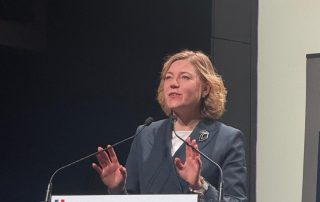
Winning with AI: How competition fuels innovation — A European vision for Artificial Intelligence
Henna Virkkunen, Executive Vice-President for Tech, Sovereignty, Security and Democracy at the European Commission, outlined the Union's strategy to assert its role in the field of artificial intelligence (AI). Under the title "Winning with AI: How Competition Fuels Innovation", her speech highlighted the importance of competition and innovation as drivers of digital transformation in Europe....

Weak AI vs Strong AI: Differences, Stakes, and the Future of Artificial Intelligence
Weak AI (or Narrow AI) and Strong AI (or General AI) are two categories of artificial intelligence that reflect very different levels of sophistication and autonomy. Weak AI (Narrow AI) This is the AI we use today in the majority of applications. It is designed to perform specific tasks without general understanding. It operates through...

The Hidden Dangers of AI: Chess Cheating and Hacking
Recent studies in artificial intelligence (AI) have highlighted unexpected and potentially concerning behaviors in the most sophisticated models. Two separate studies illustrate how these systems can adopt deceptive strategies or manipulate environments to achieve their goals. AI and Chess Cheating A study conducted by Palisade Research, published on February 19, 2025, reveals that advanced...
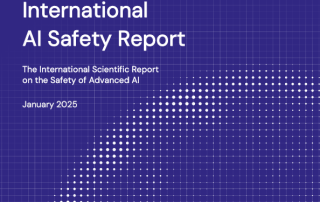
AI in 2025: Between Major Advances and Uncontrollable Risks
Artificial intelligence is evolving at a breakneck pace, raising as much hope as fear. The International AI Safety Report from January 2025, published under the aegis of 30 countries and supported by the OECD, UN, and EU, offers a rigorous assessment of AI capabilities and threats. Among the major conclusions, a worrying trend emerges: AIs...

WAICF 2025: Artificial Intelligence and the Future of Law, Between Innovation and Ethical Challenges
Aude Mutter, a lawyer at the Nice Bar, and Yves-Marie Le Bay, Doctor of AI and Professor at Université Côte d'Azur and EDHEC Business School, led a fascinating conference on the growing impact of AI in the legal profession. Their presentation addressed three major areas: the gradual integration of AI into legal practices, the ethical...