

Jean-Charles Chemin, a RegTech Entrepreneur Serving Notaries
Jean-Charles Chemin is co-founder and president of Legapass, a Nice-based company created in 2021 to secure the transmission of digital and financial assets. An engineer by training who came through the French Tech Côte d'Azur ecosystem, he also chairs the Nice Start(s) Up association, which brings together startups in the region. Legapass initially positioned itself...

MonacoTech Demo Day: Strategic Transition, Sovereign AI and Sustainable Data Centers
The Demo Day evening was both a startup showcase and a pivotal moment for MonacoTech. It marked the culmination of Sandrine Sauval-Chanteloube's four years of leadership. Her tenure shaped the incubator, strengthened its methods, expanded its network and structured an environment conducive to demanding innovation. Yesterday's event sealed this work. It offered a final snapshot...

Brussels Backs Down on AI Regulation: ‘A Gift to Tech Giants’
Barely ten years after the General Data Protection Regulation (GDPR) came into force, the European Commission is considering a major overhaul of Europe's flagship privacy framework. Officially, the objective is clear: to adapt regulation to the new age of generative artificial intelligence and enable European companies to compete with American and Chinese giants. But for...
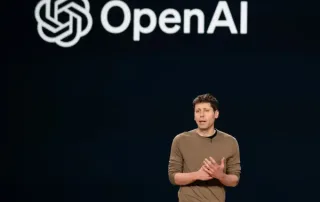
OpenAI Faces the Funding Wall: Why the Economics of Generative AI Are Changing
The headline hits like a warning. "18 months until bankruptcy?" The idea is circulating, driven by an op-ed by Sebastian Mallaby and relayed in France by ZDNet. But the real question isn't whether OpenAI "will disappear." It's more structural. Who can sustainably finance the industrialization of generative AI when demand is growing faster than margins?...
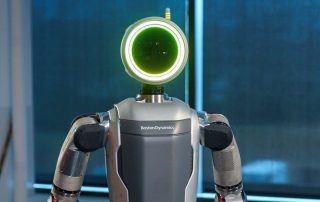
AI and Robots: China Surges Ahead, Europe Watches from the Sidelines
Las Vegas, CES 2026. This year, one topic dominated the aisles: humanoid robotics powered by artificial intelligence. One observation is clear—China is emerging as the major rising force in this sector, while Europe remains marginal. A Dominant Chinese Presence at the Show According to official CES 2026 figures, 21 of the 38 exhibitors dedicated to...
EDF and Generative AI: Scaling Up a Critical Industrial Group
On January 27, 2026, ZDNet revealed a milestone rarely achieved in France. EDF opened an internal generative AI portal to approximately 160,000 employees, multi-LLM, presented as "sovereign," operated in a private environment and designed to industrialize more than 400 business use cases. Behind the announcement, a more structural question emerges: what does "adopting AI" mean...