

The strategic adoption of generative AI in the French Tech: a major lever for innovation
The strategic adoption of generative AI in the French Tech: a major lever for innovation In 2024, generative AI (GenAI) is establishing itself as a key driver of transformation within the French technology ecosystem, particularly among the startups and scale-ups of the Next40 and French Tech 120. Far from being a mere technological advance, it...

Nil Larom from Insaight: Revolutionizing Business with Generative AI
When it comes to adopting artificial intelligence in the business world, Nil Larom, founder of Insaight, stands out for his pragmatic and human-centered approach. With over fifteen years of experience in international market strategies in the technology sector, he helps companies of all sizes refine their AI and generative AI adoption strategies, while encouraging a...

The Rise of Generative AI: Adoption, Priorities, and Challenges for Large Enterprises in 2025
According to a recent study conducted by CB Insights among 50 strategy team leaders from large enterprises, Generative AI is considered the cornerstone of technological innovation in 2024. However, despite its obvious potential, its adoption is still in its early stages, hindered by obstacles such as security, regulation, and resource management. This article provides a...
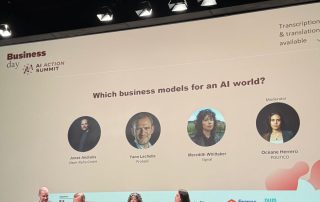
What Economic Models for an AI-Dominated World?
The rapid rise of artificial intelligence (AI) raises a crucial question: what economic models are viable and sustainable in a world where AI becomes ubiquitous? At the AI Summit, the panel "Which Business Models for an AI World?" explored this issue in depth. Moderated by Océane Herrero (POLITICO), this debate brought together key players in...

AI Trends in 2025: Between Revolutions and Challenges
Artificial intelligence is experiencing a dazzling acceleration at the start of 2025, reshaping industries and the global economy. From the rise of generative AI to advances in cybersecurity, and the growing power of China alongside European ambitions, current trends are shaping a future dominated by automation and innovation. Google Cloud and other key industry players...

EntrepreneurIA 2025 Press Review
The use of AI is becoming widespread across various sectors, transforming industrial processes, enriching products and services, and strengthening business competitiveness. This synthesis gathers the main trends of early 2025. Strategic Partnerships to Accelerate Innovation Many companies are forming alliances to integrate AI into their operations. L'Oréal and IBM are collaborating on a generative AI...